
 Food Containers
 Cookware Sets
 Limited Edition Launches
 Bakeware
 Serveware
 Corporate Gifting

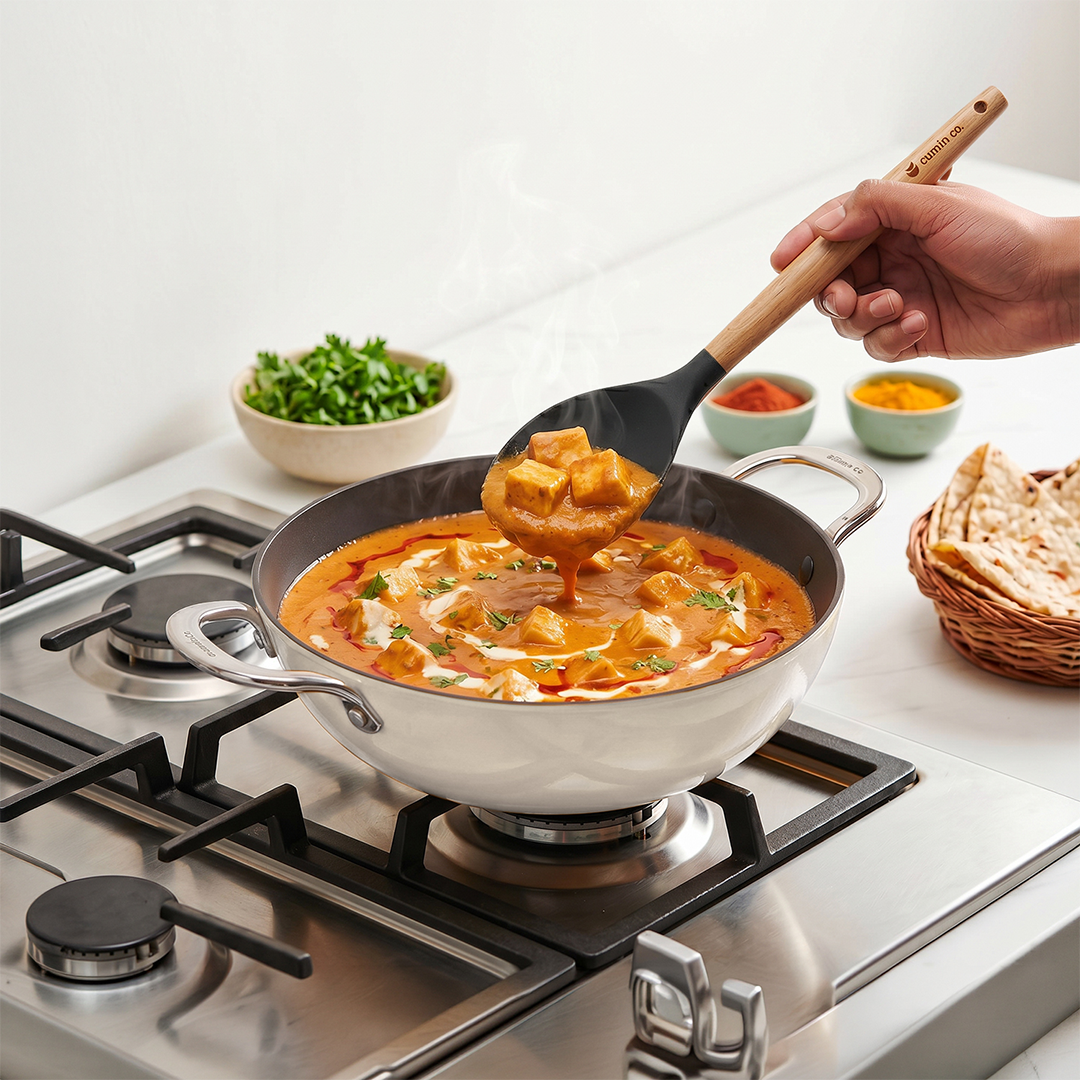
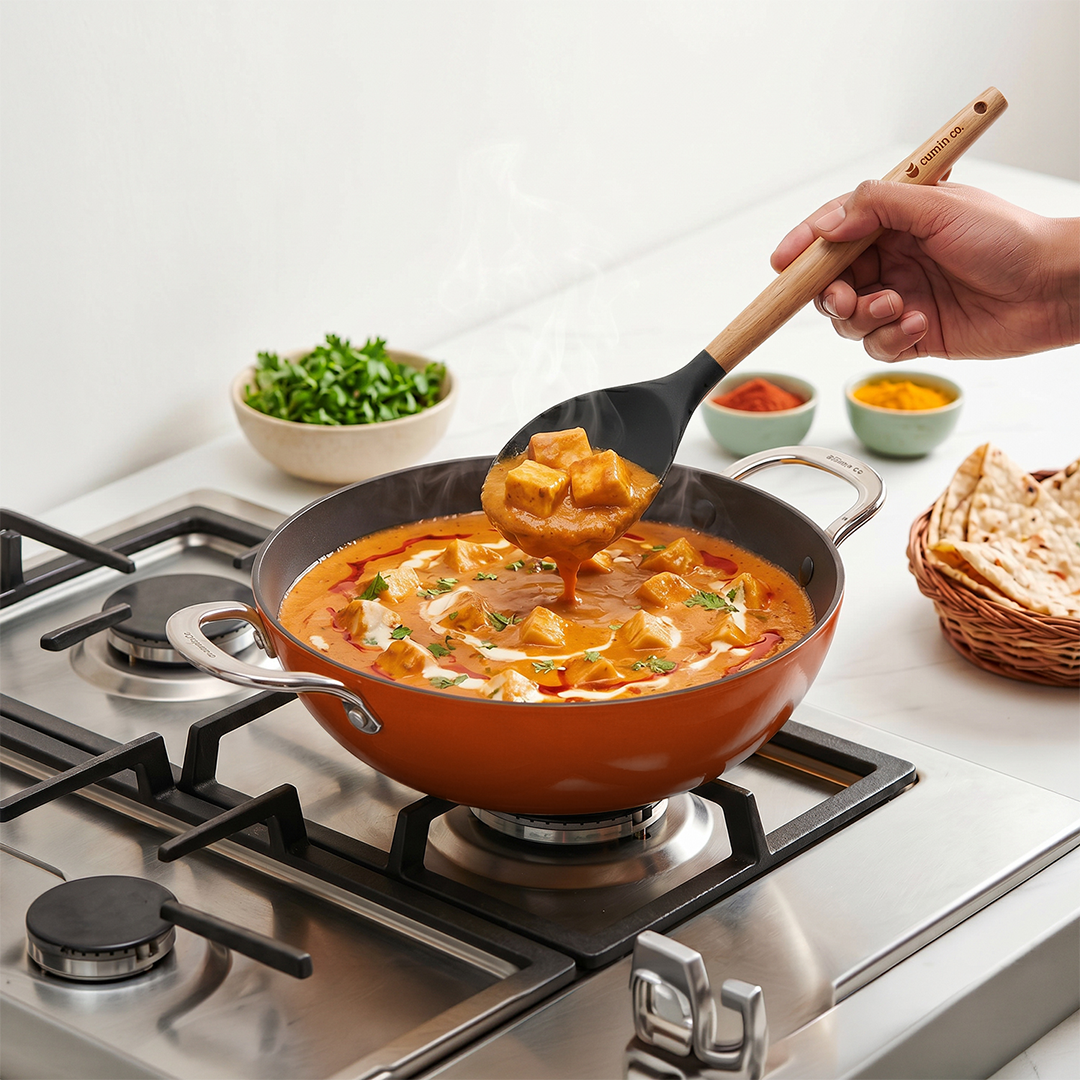
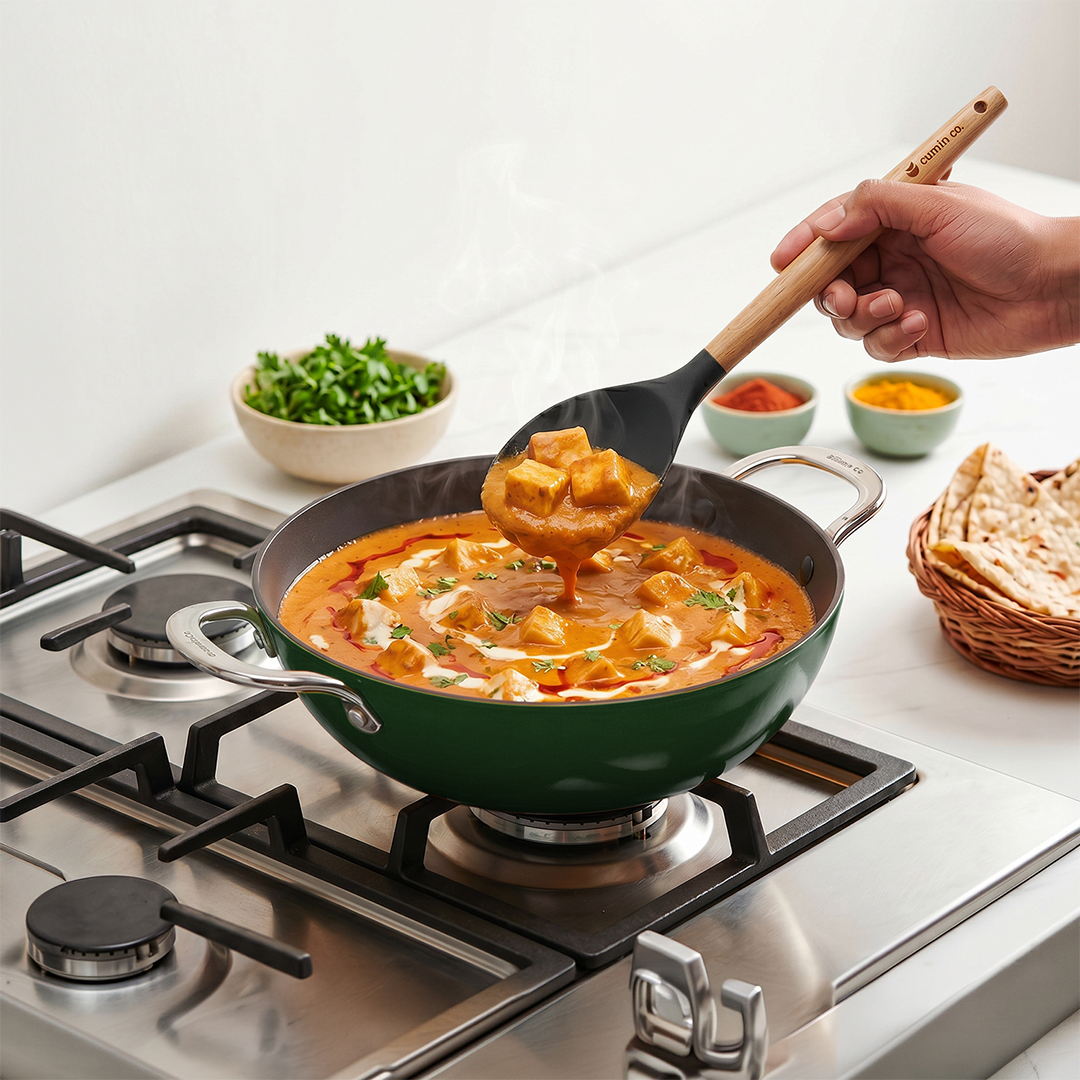
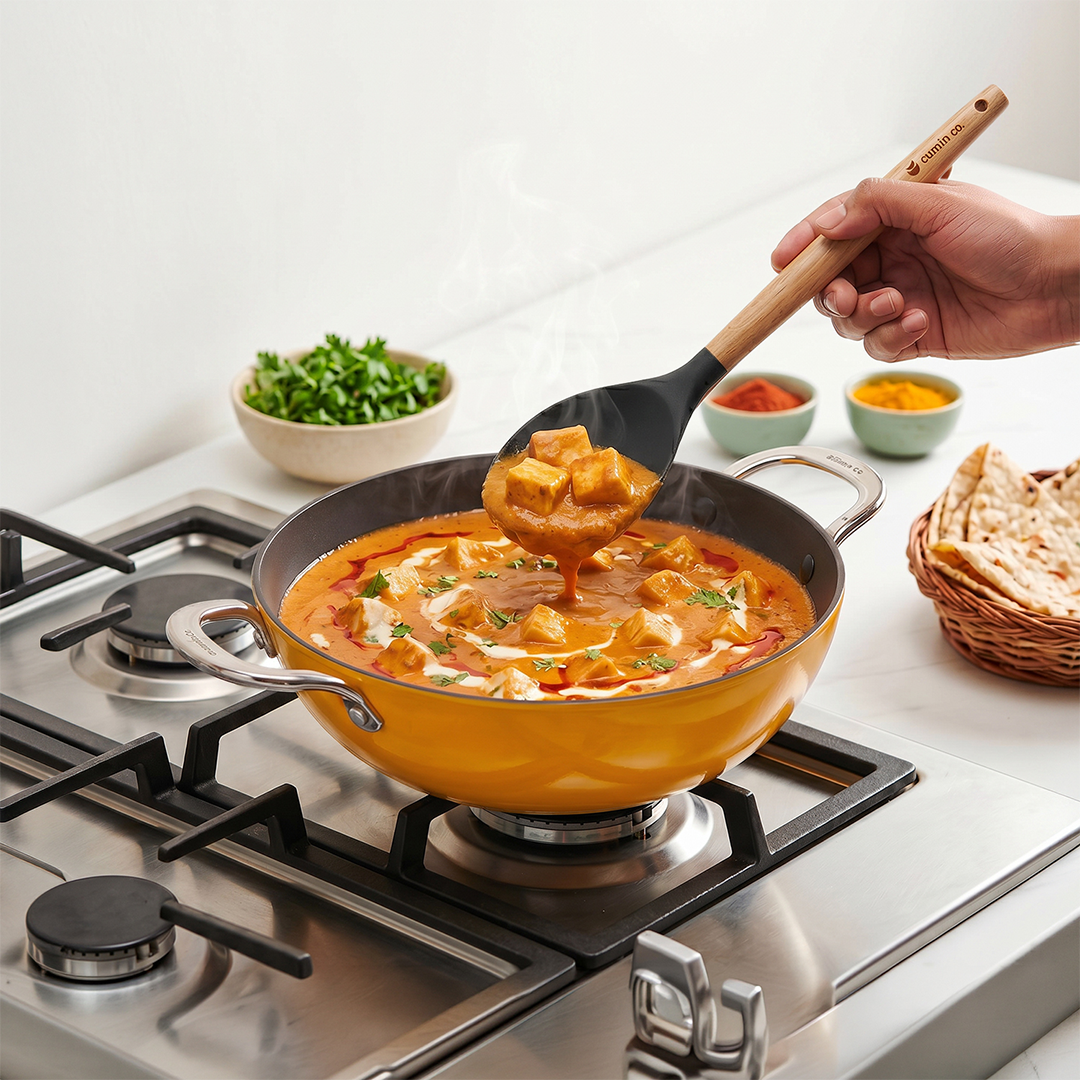
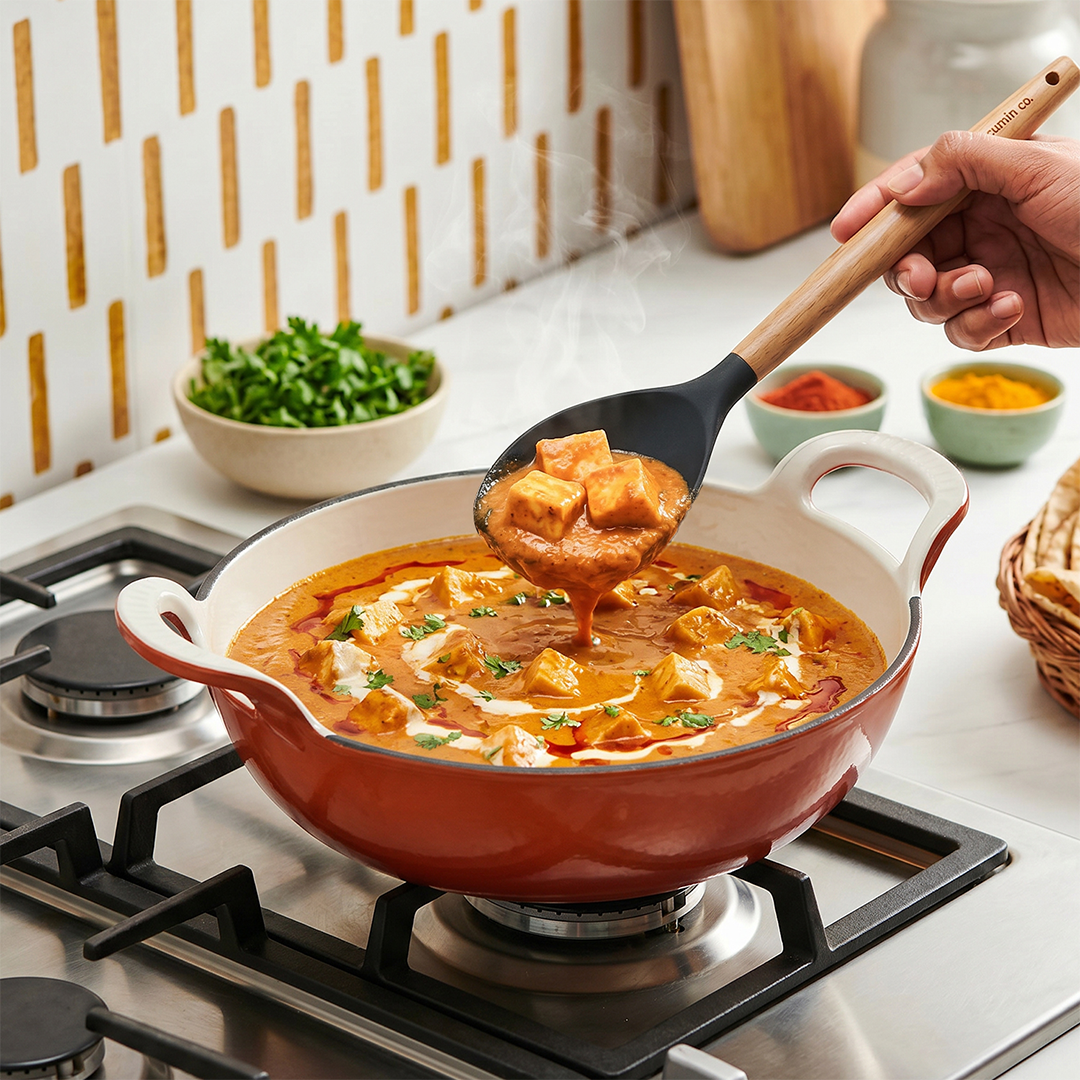
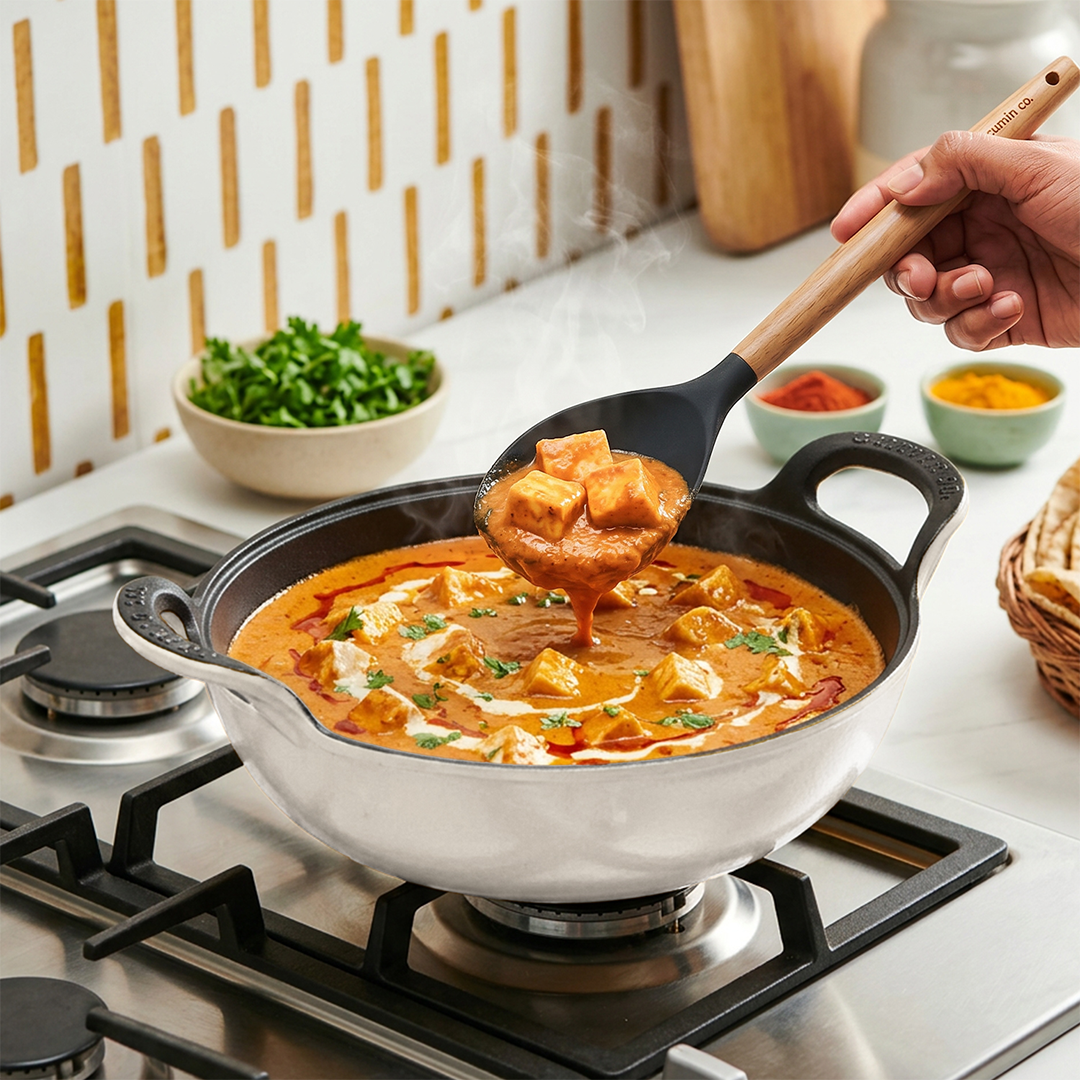
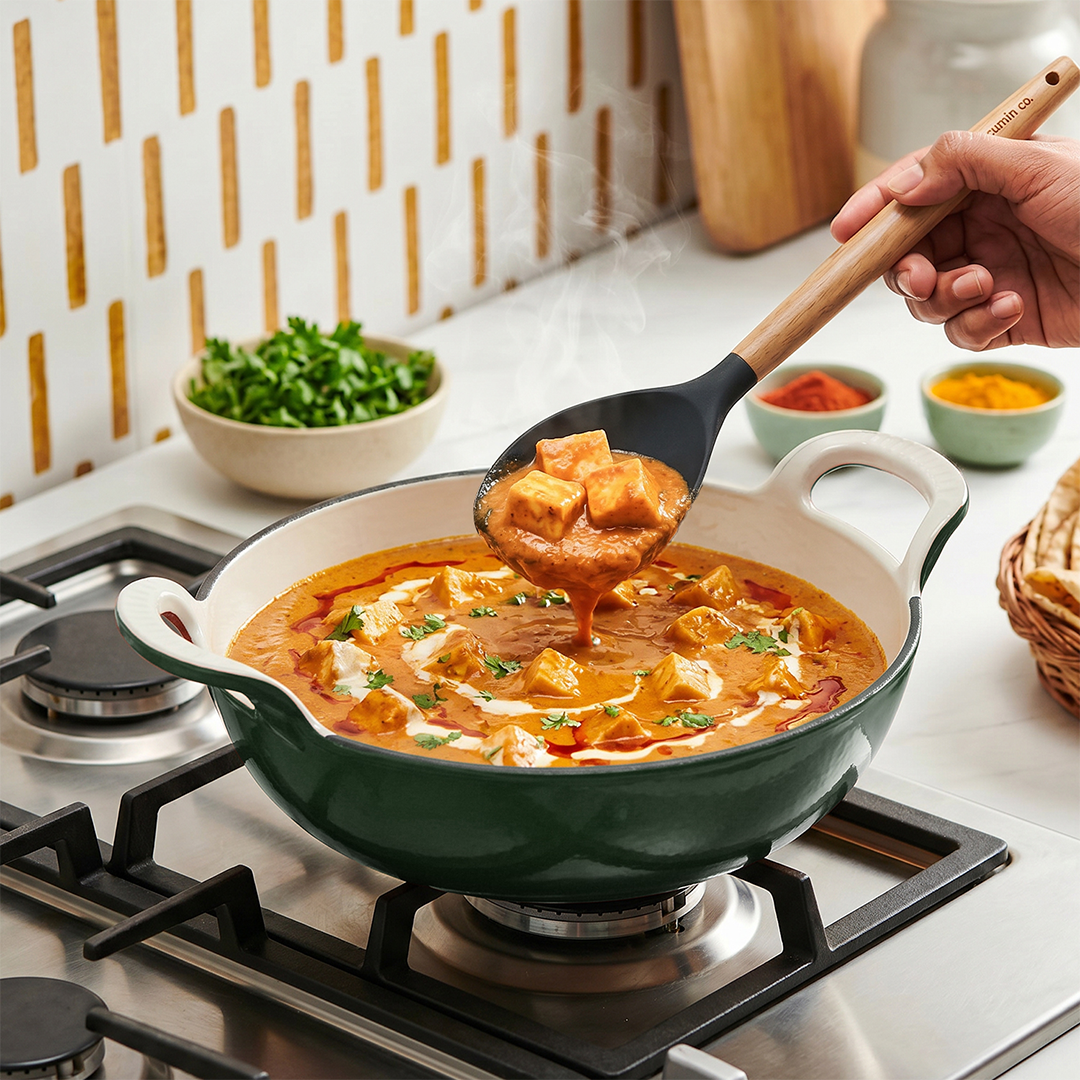
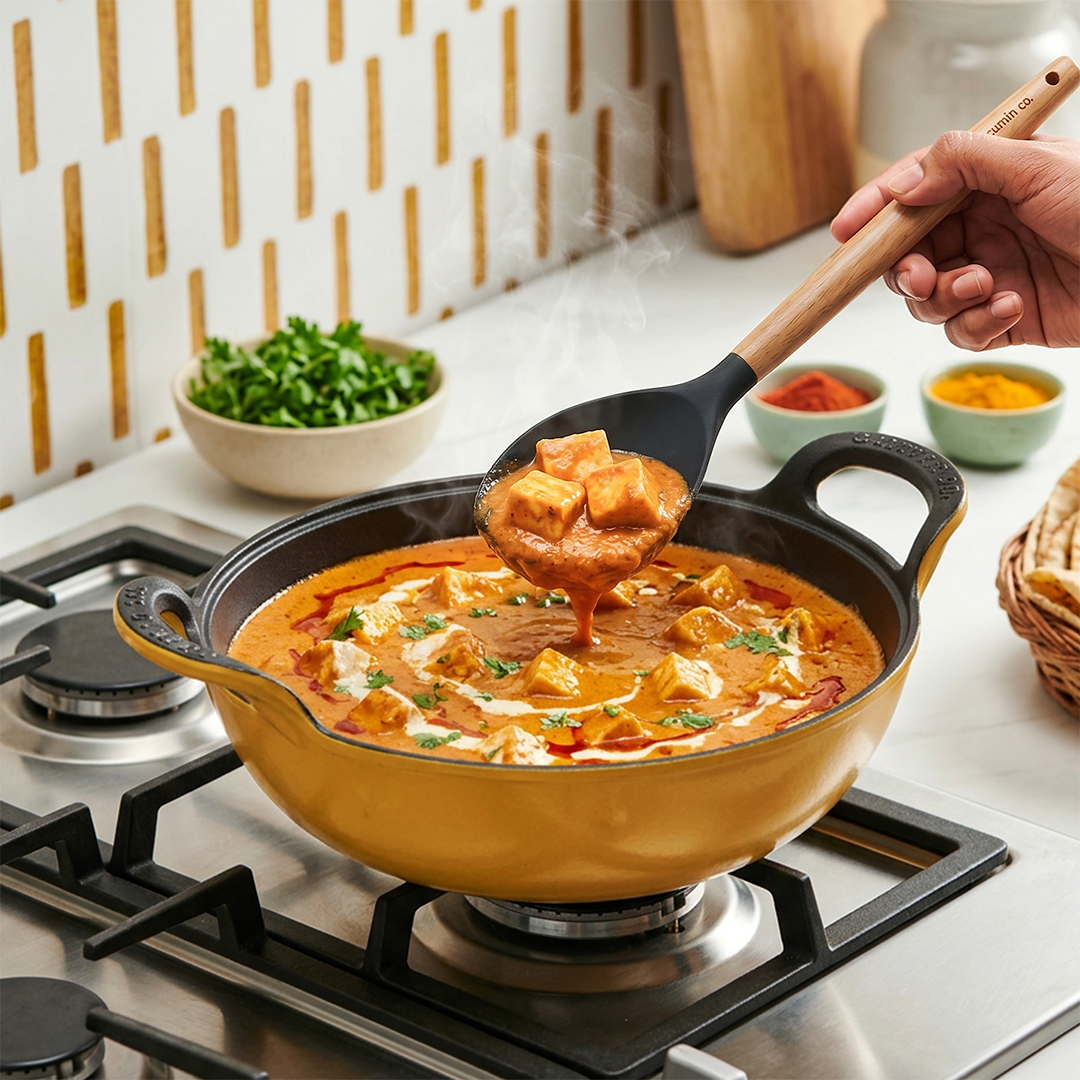
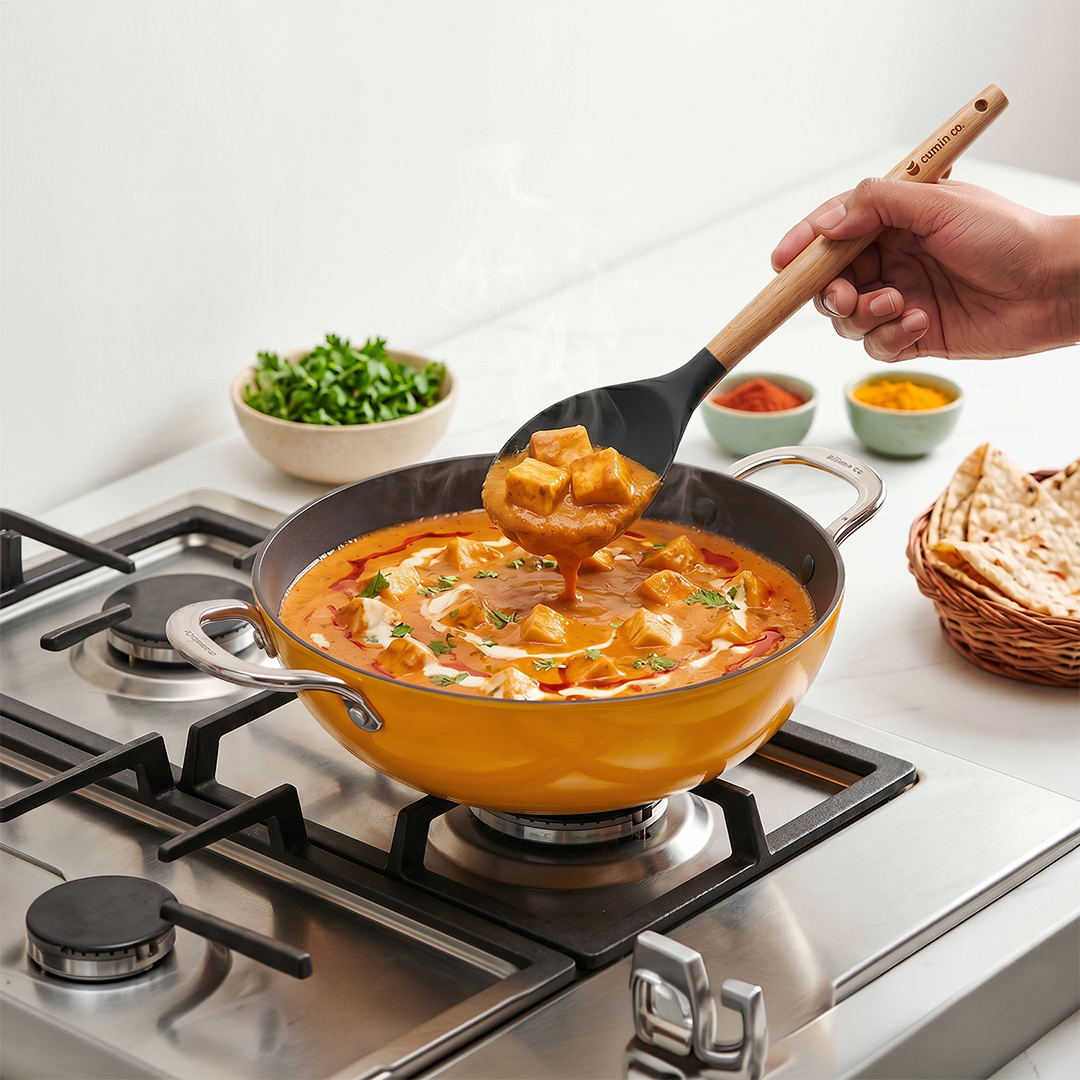
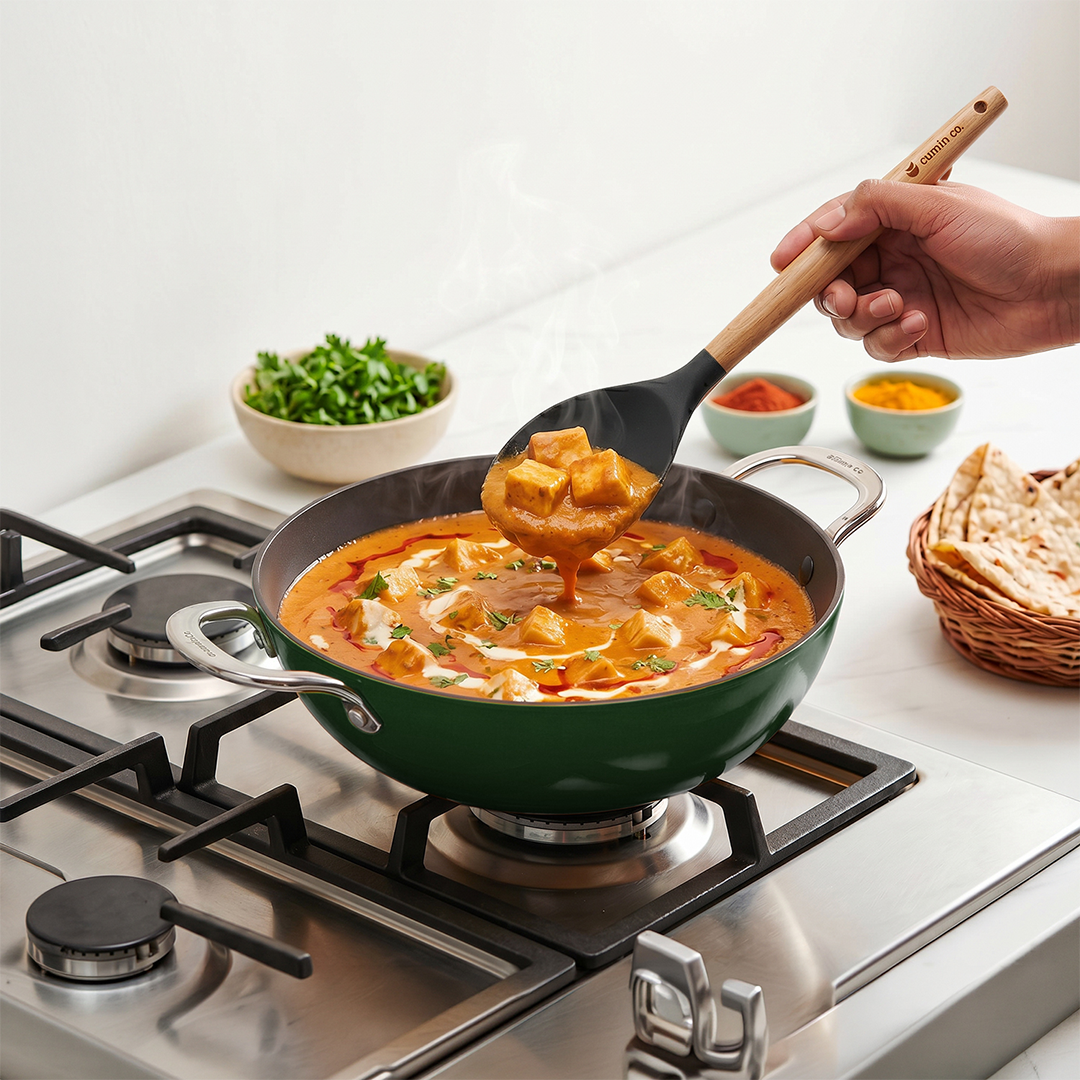
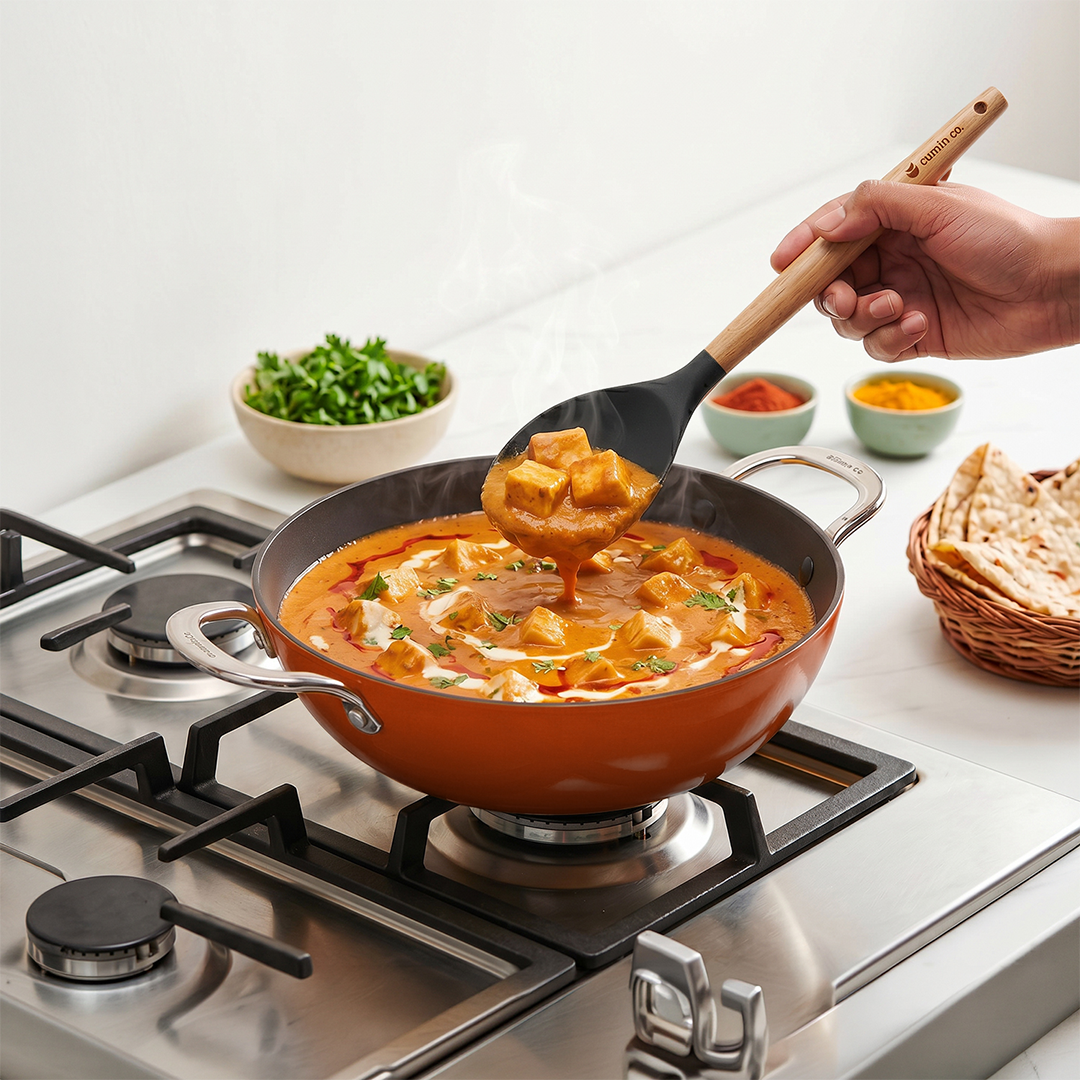
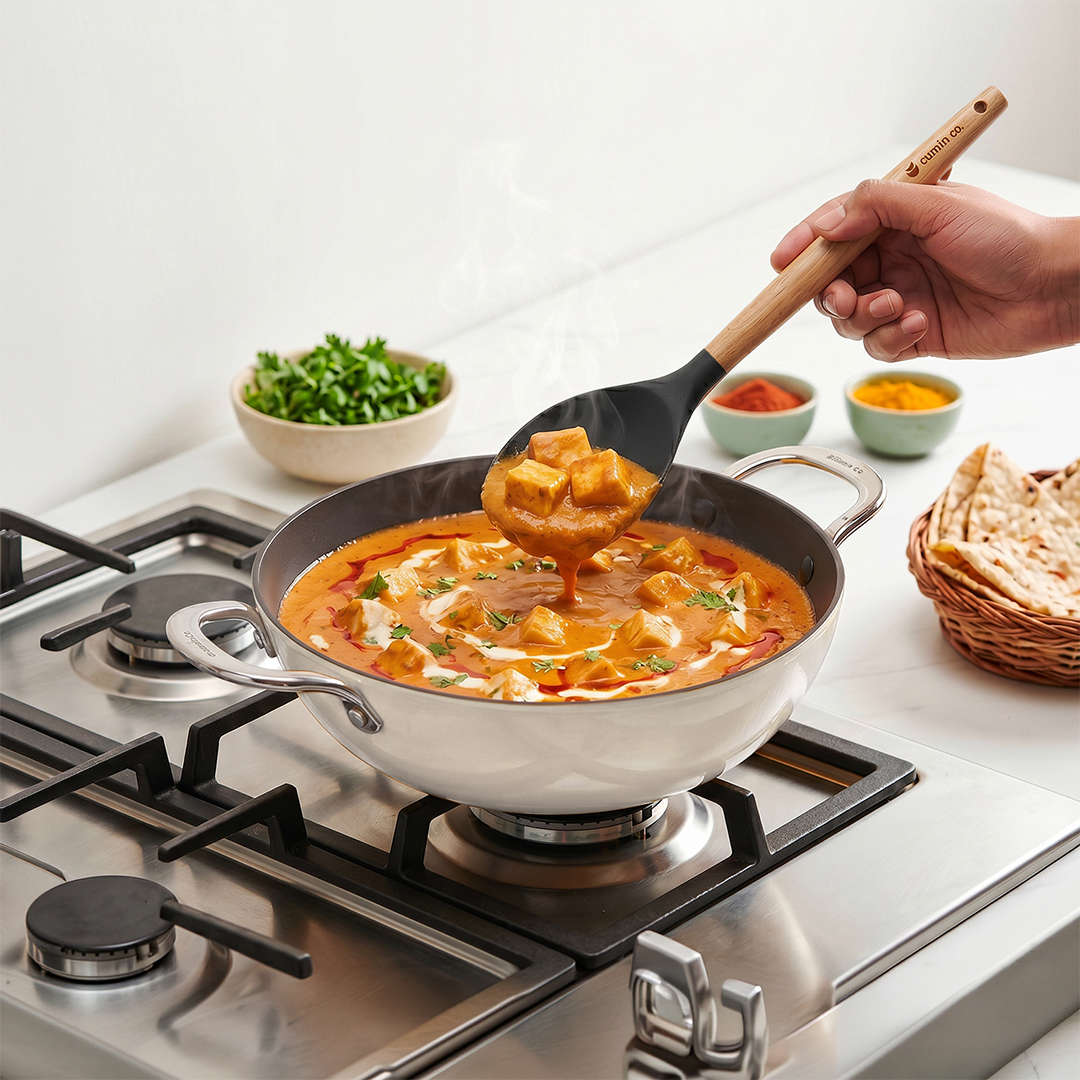
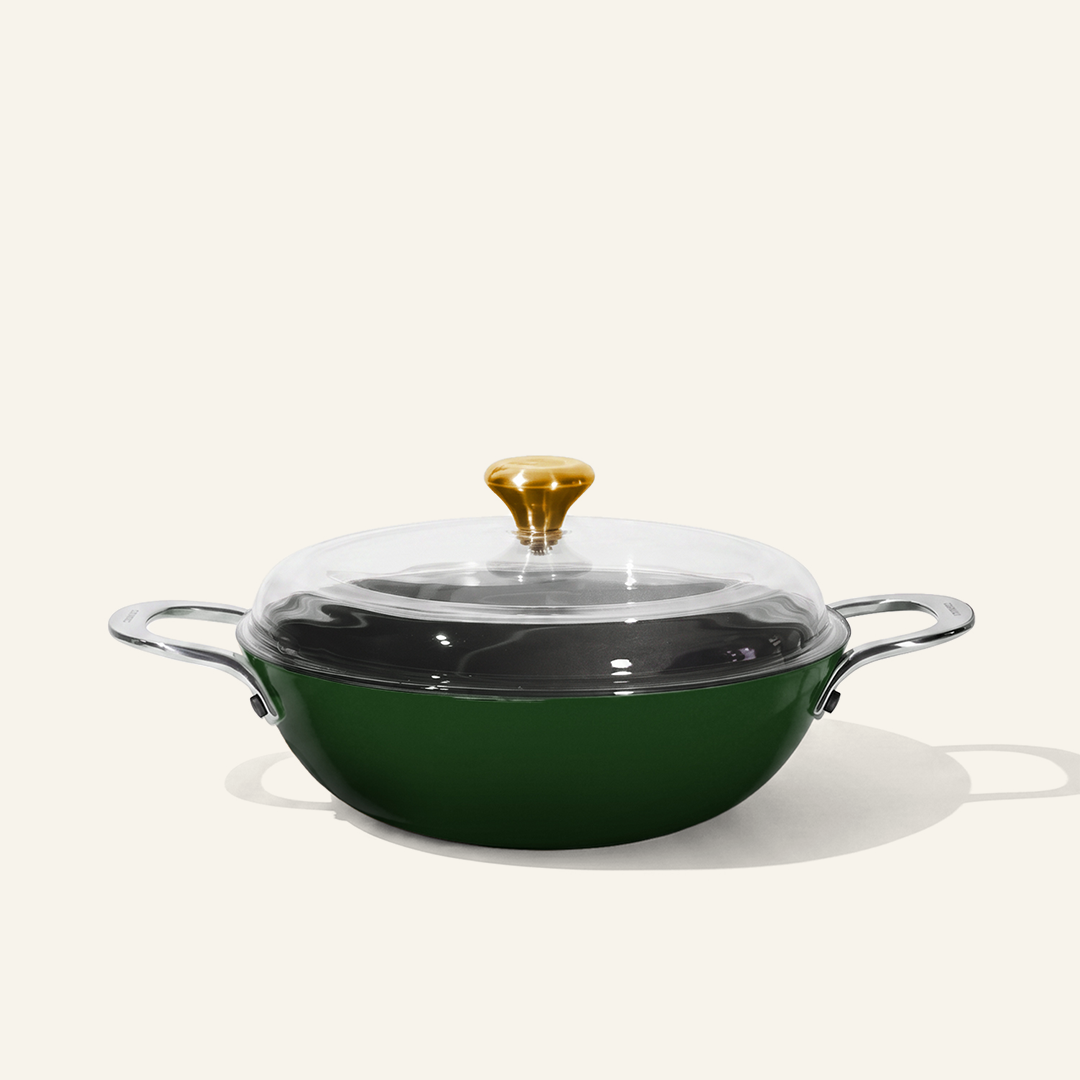
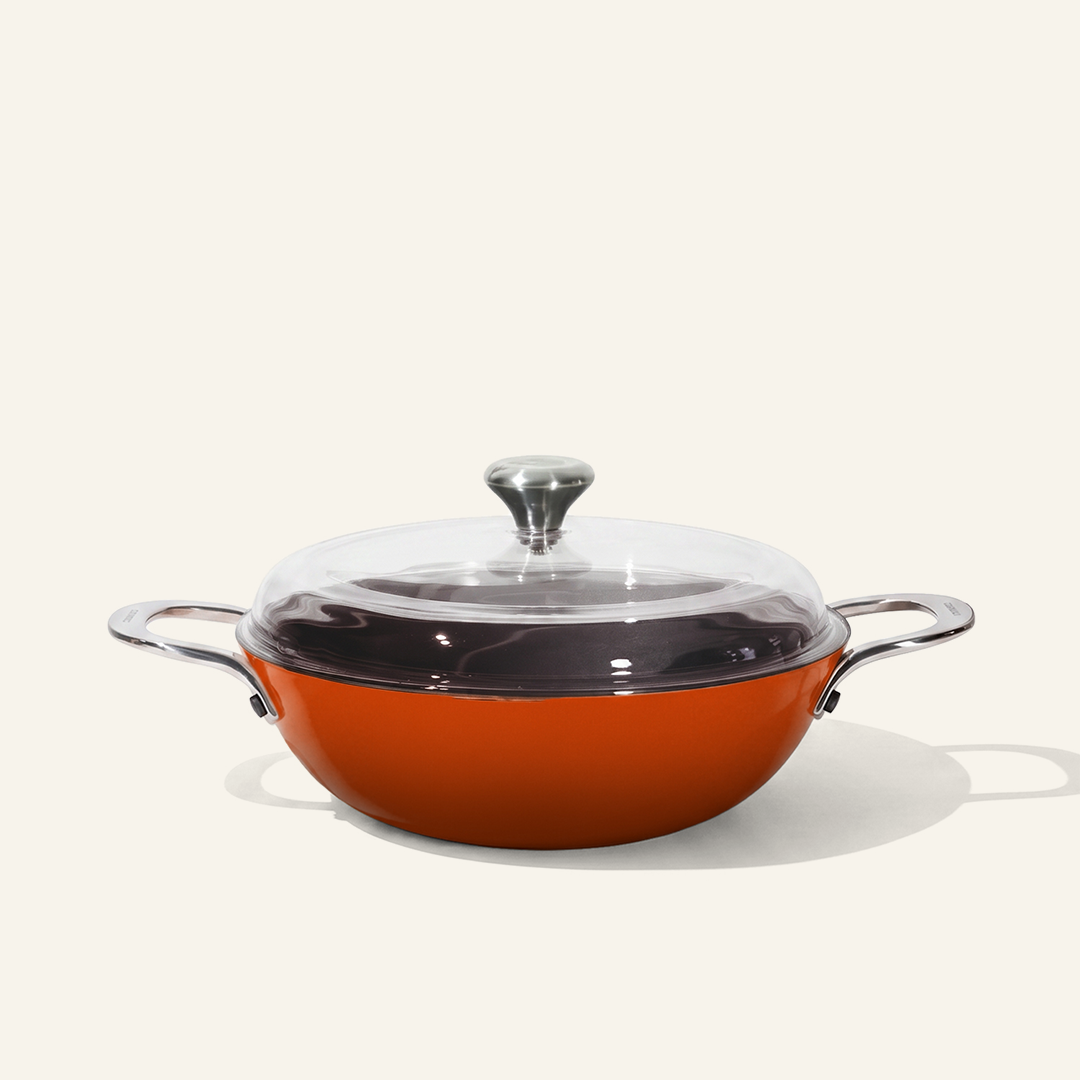
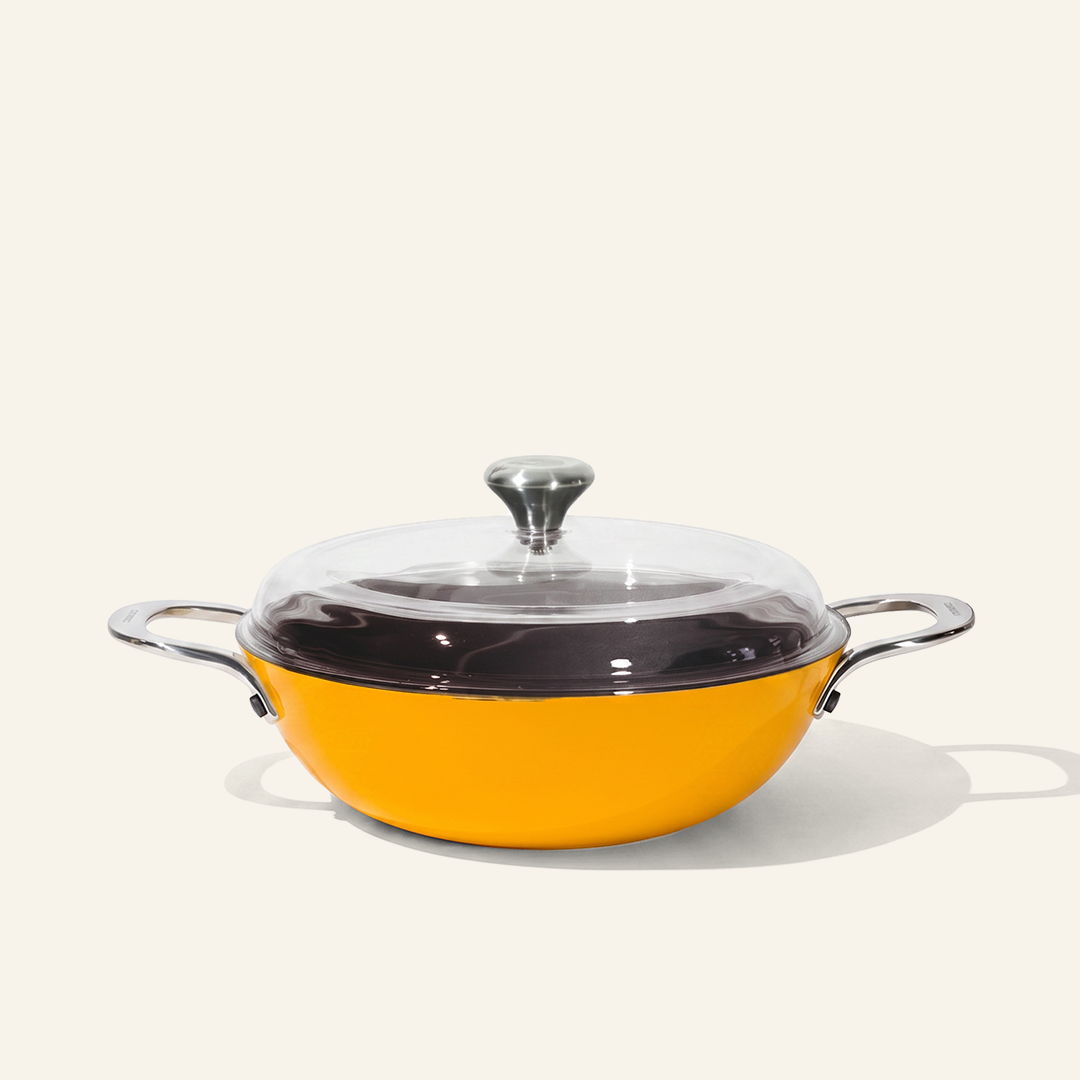
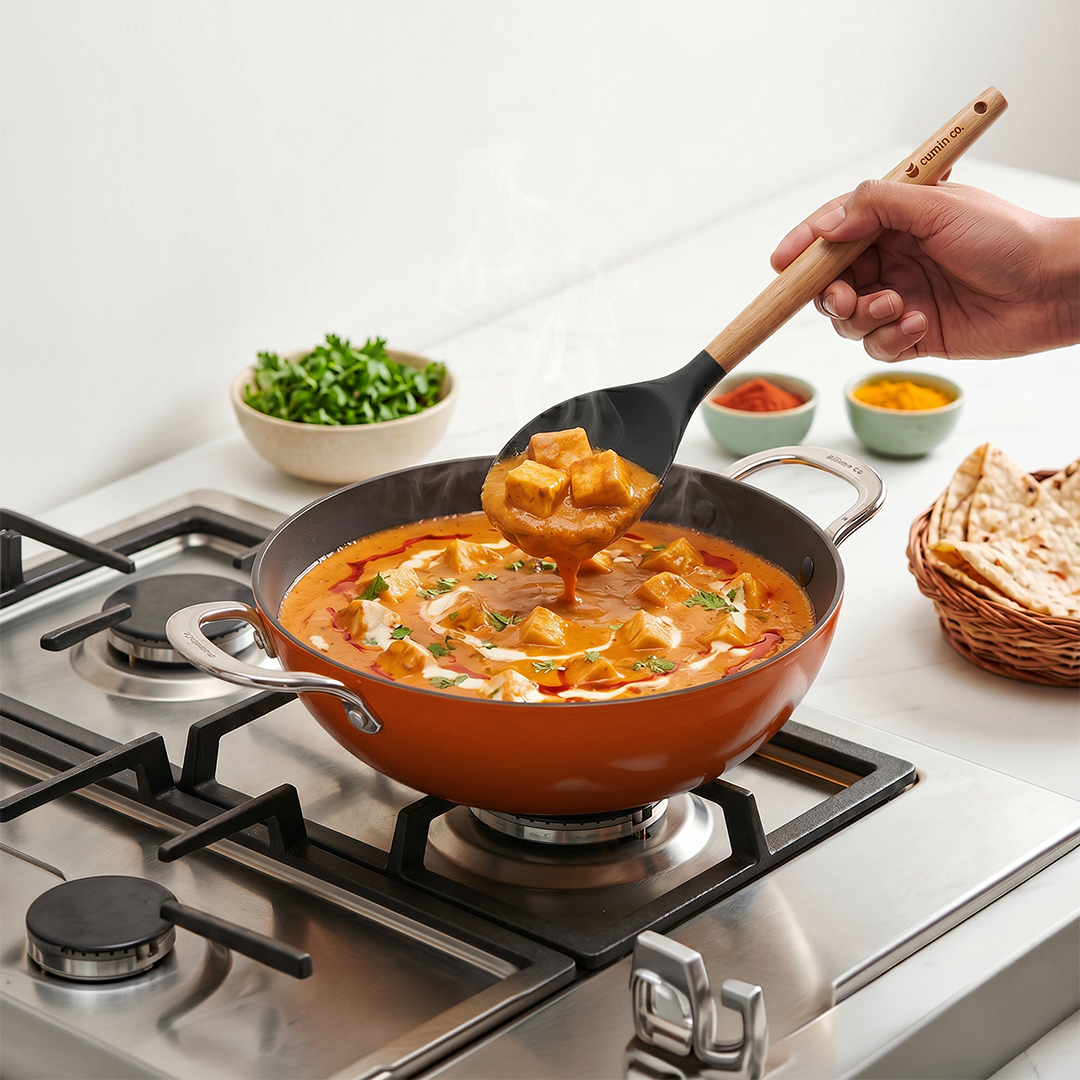

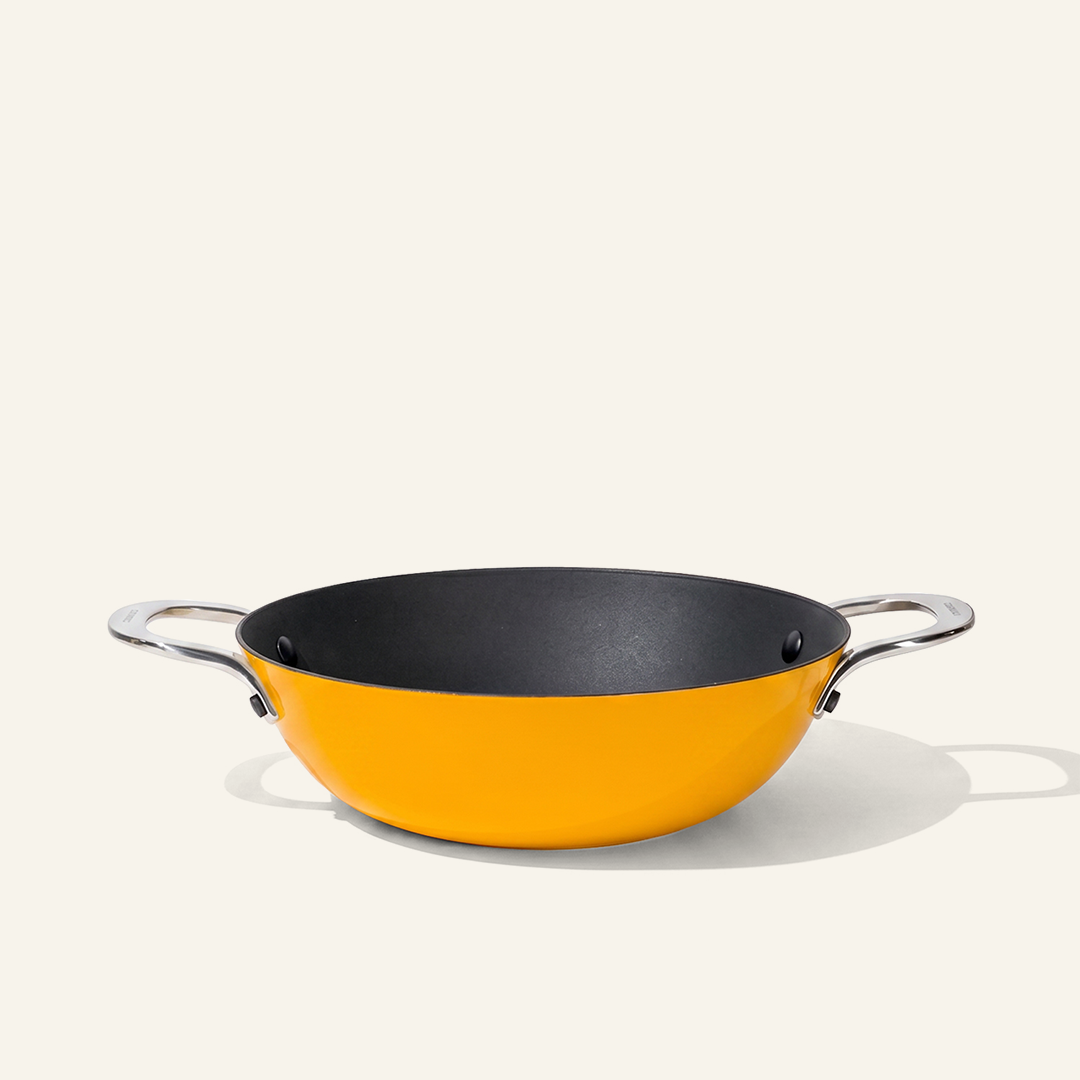
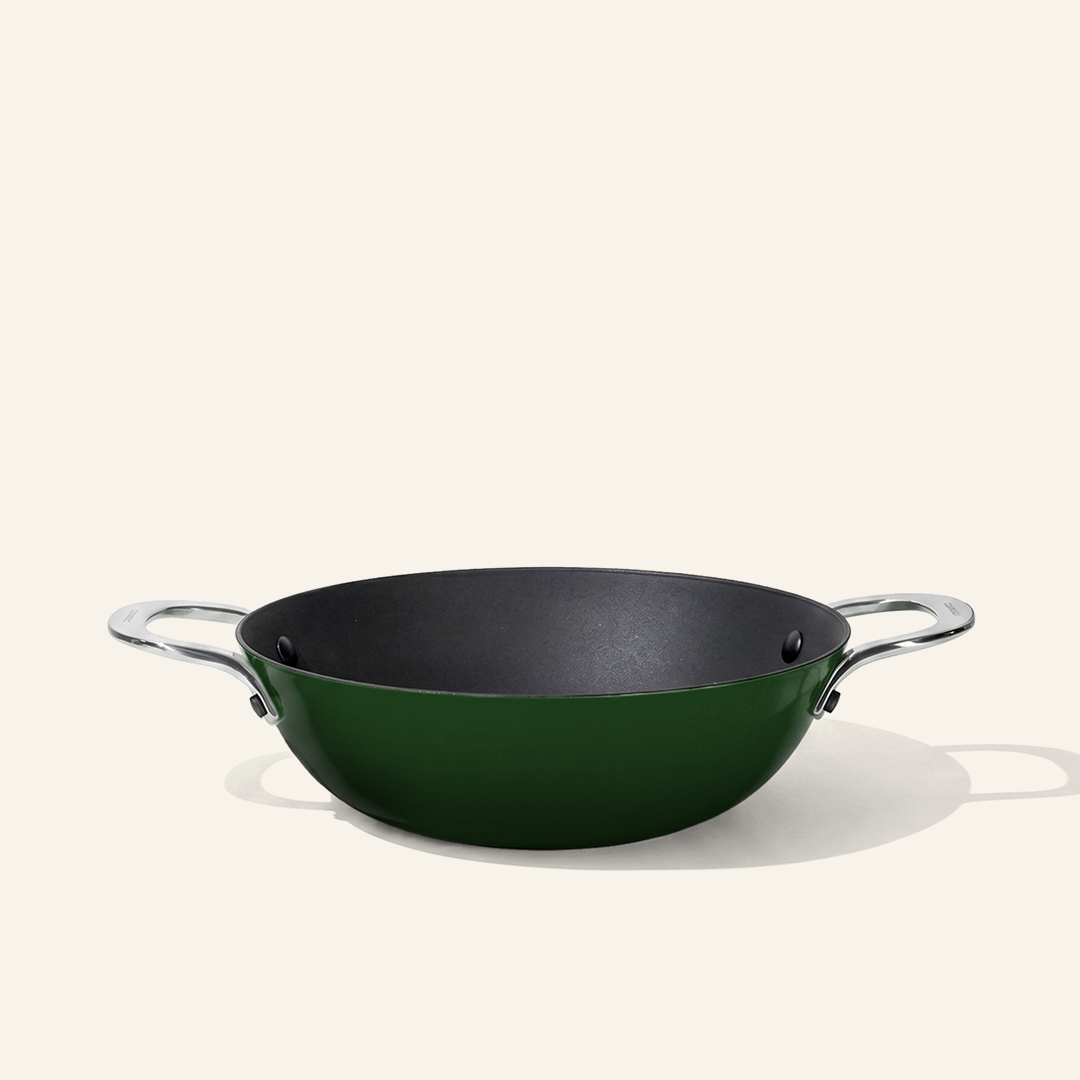
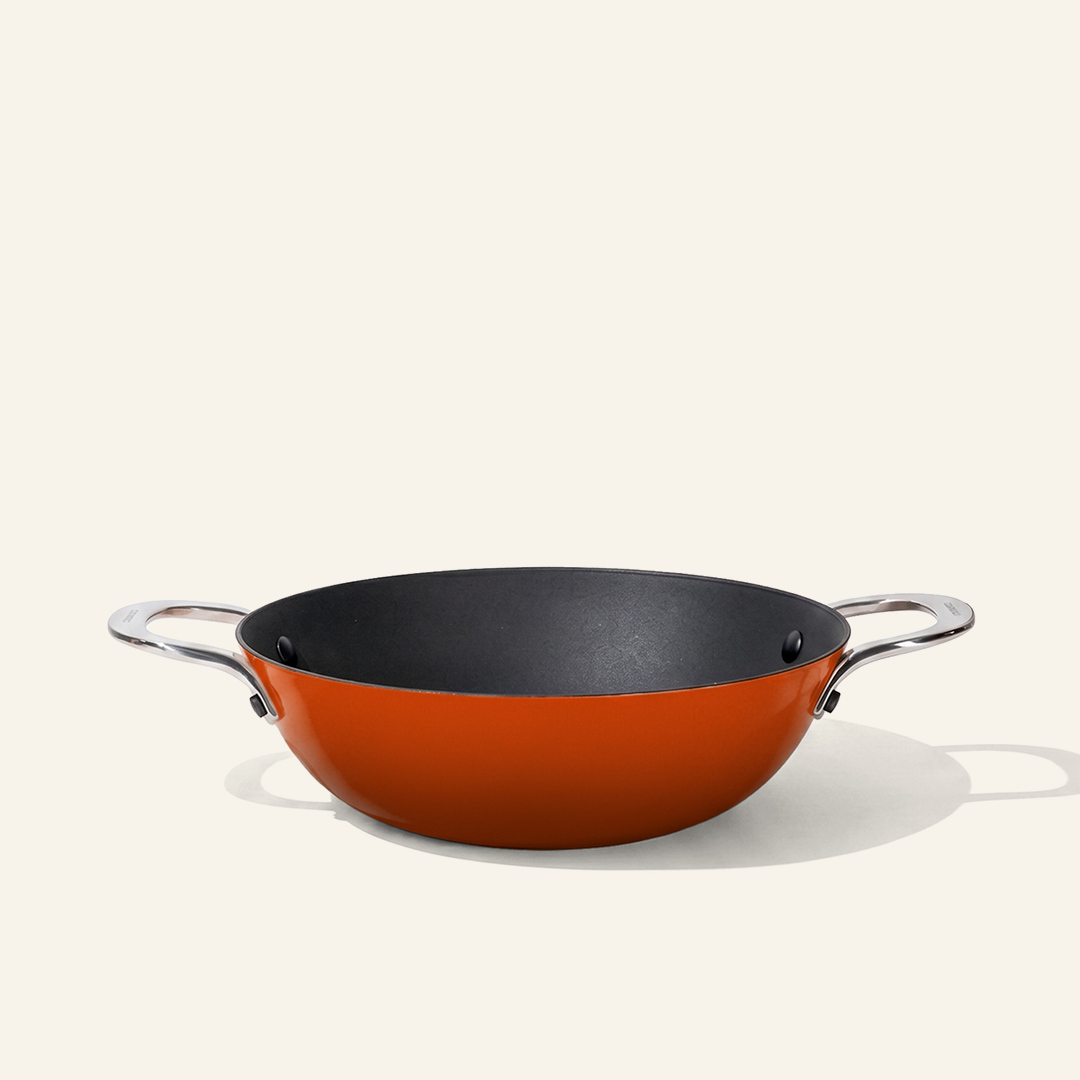
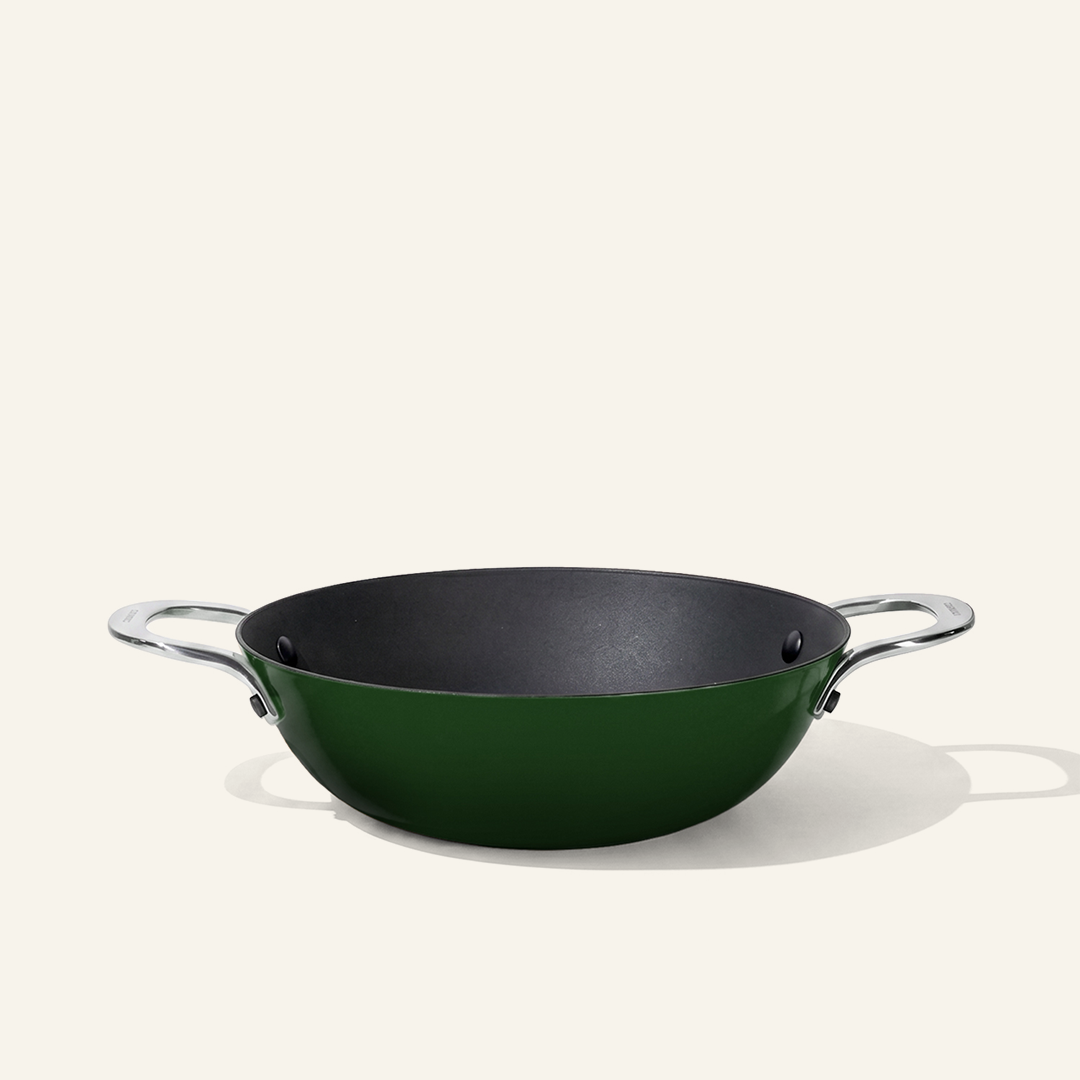
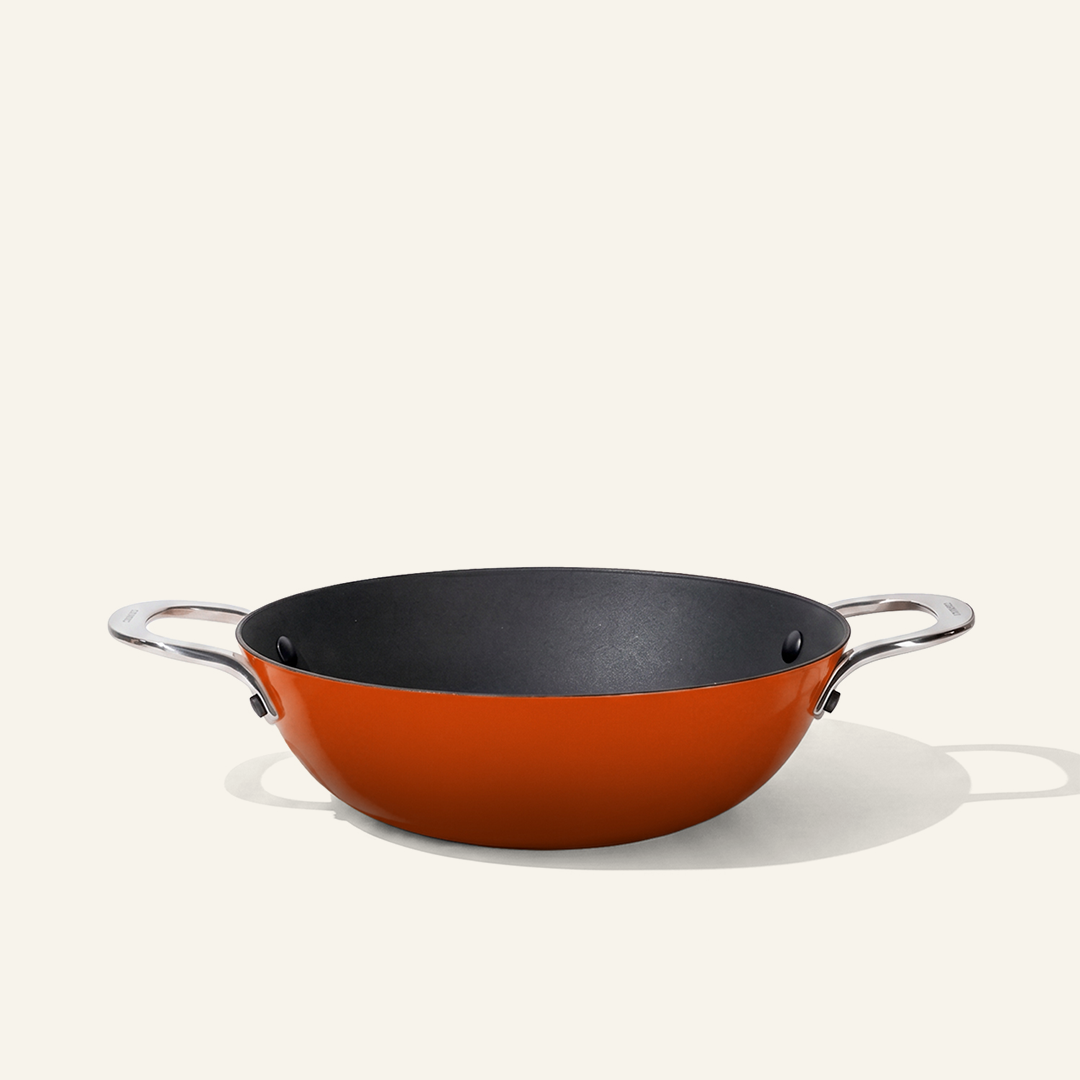
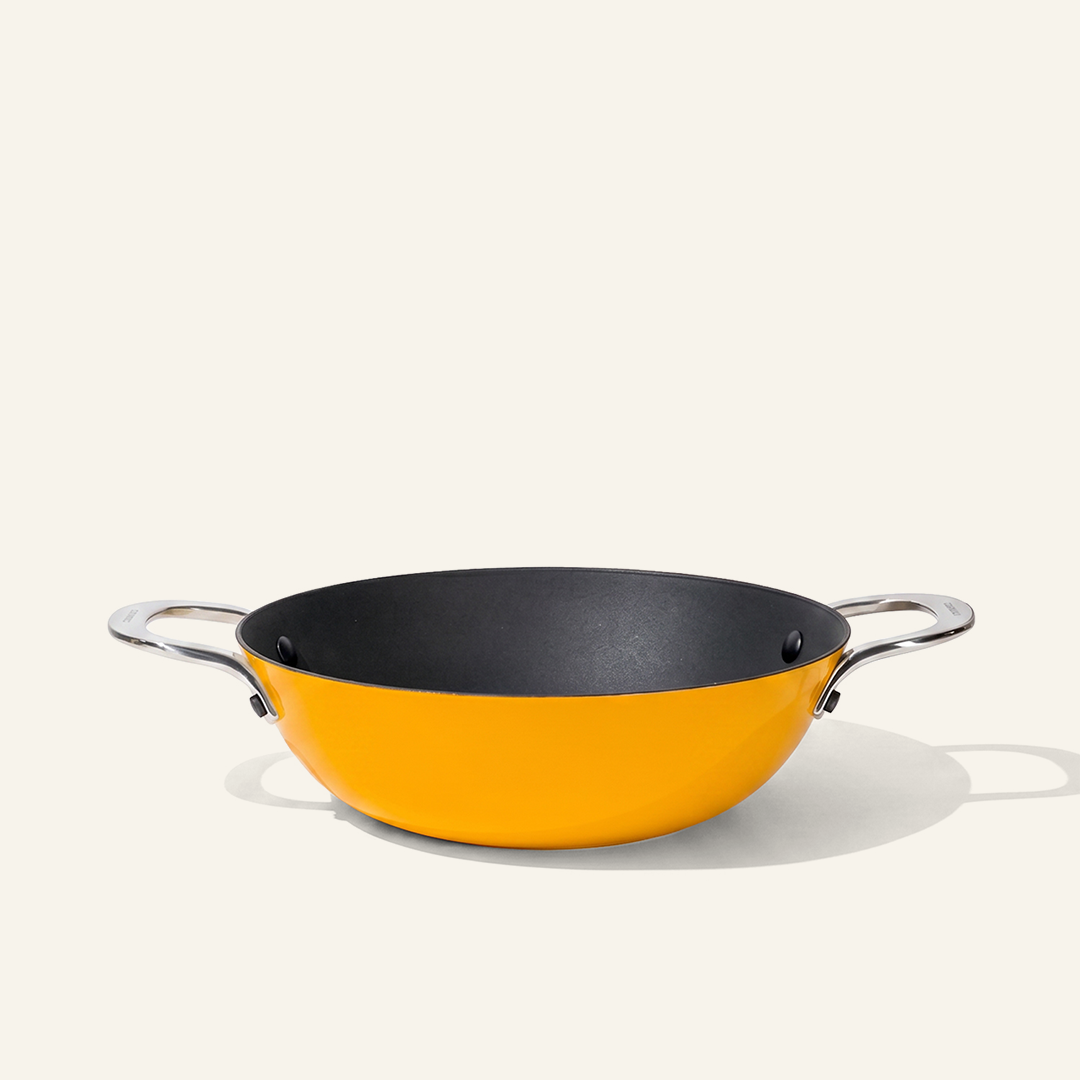
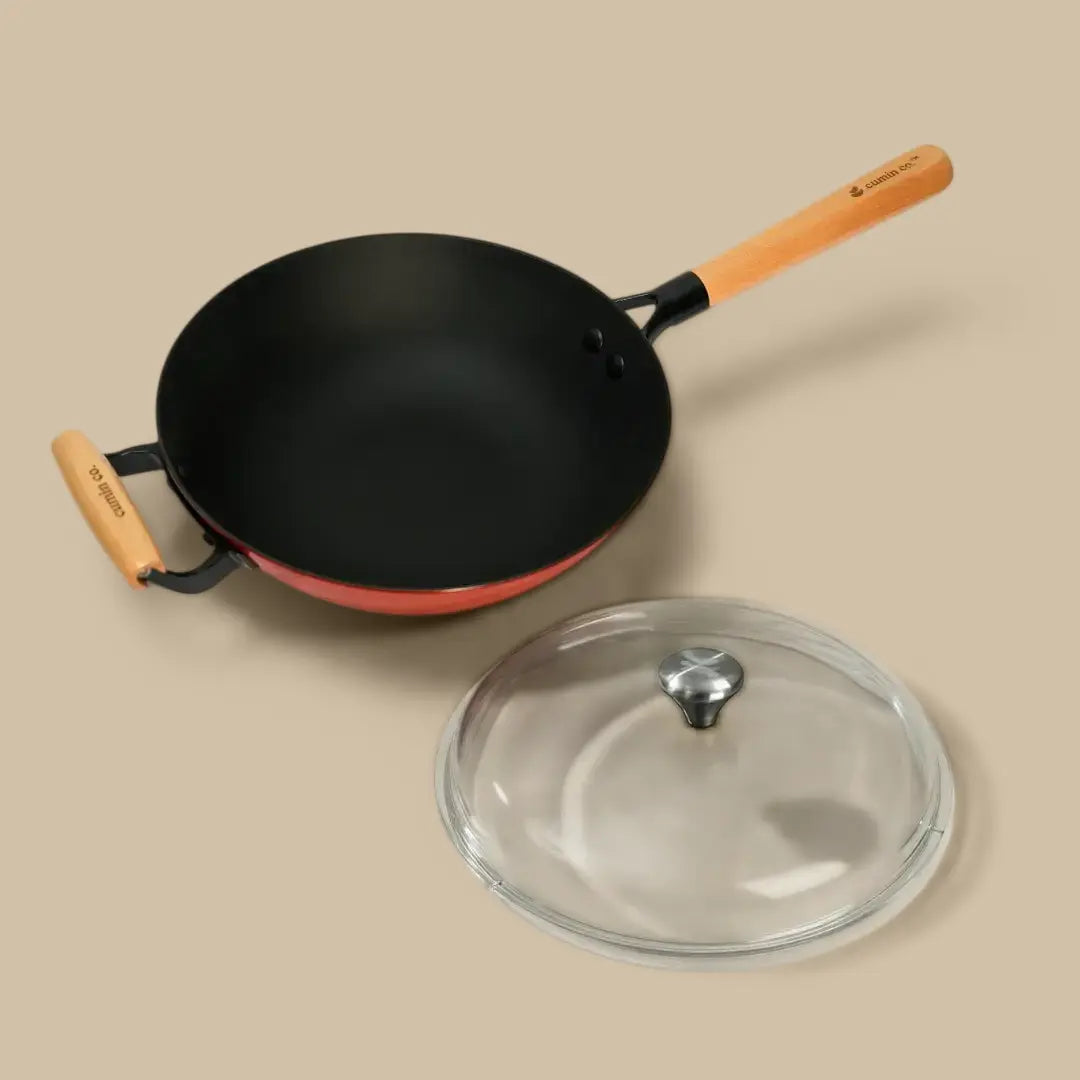

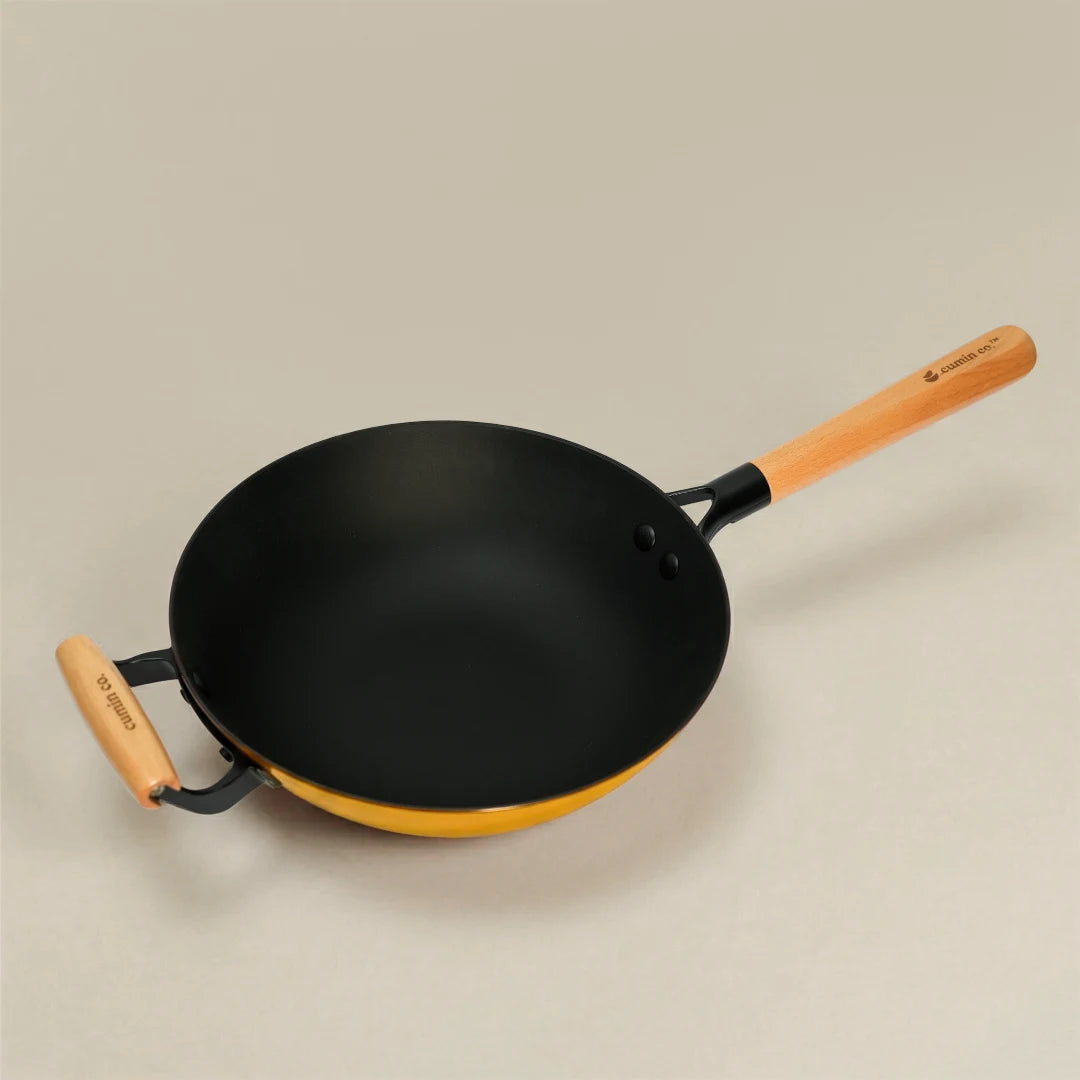
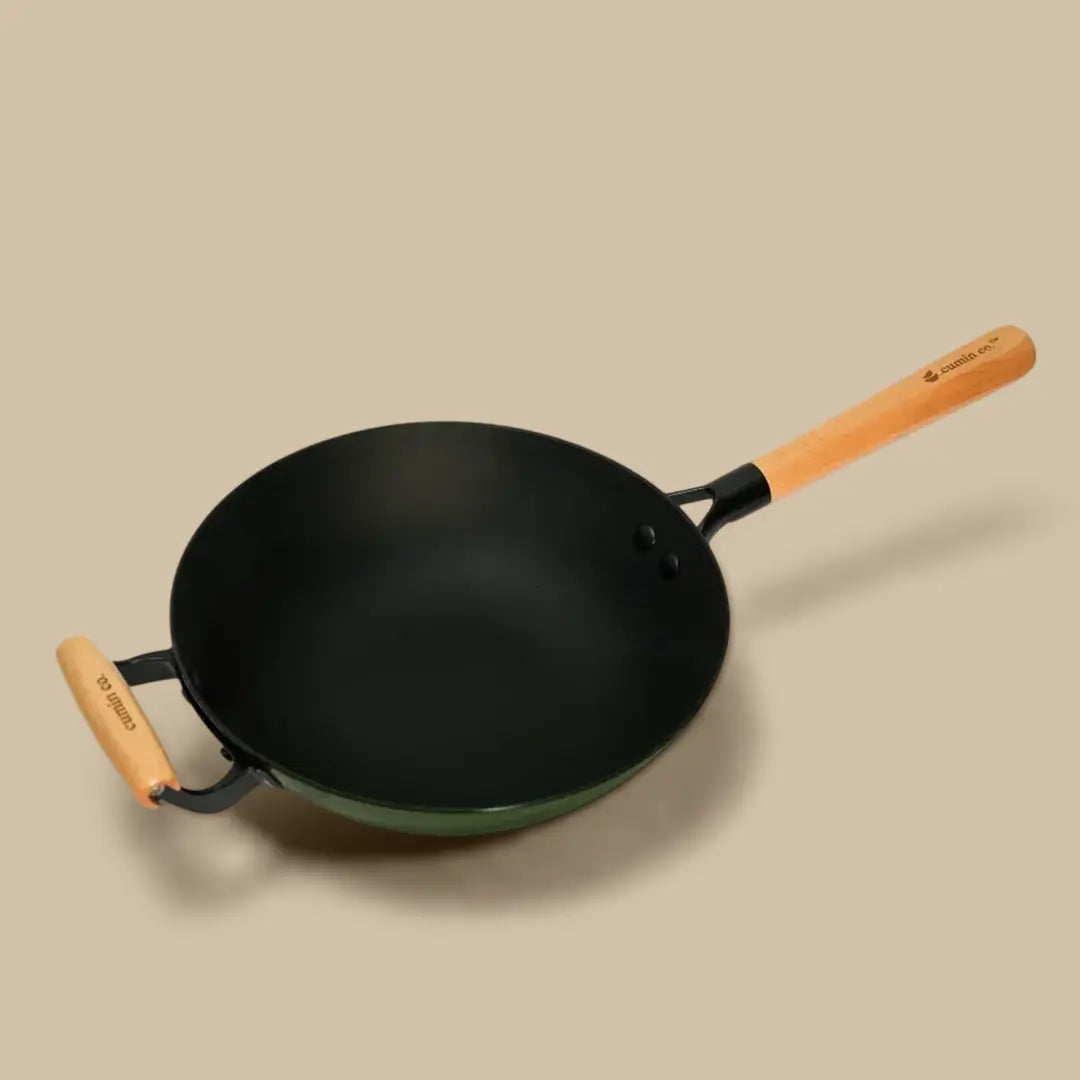

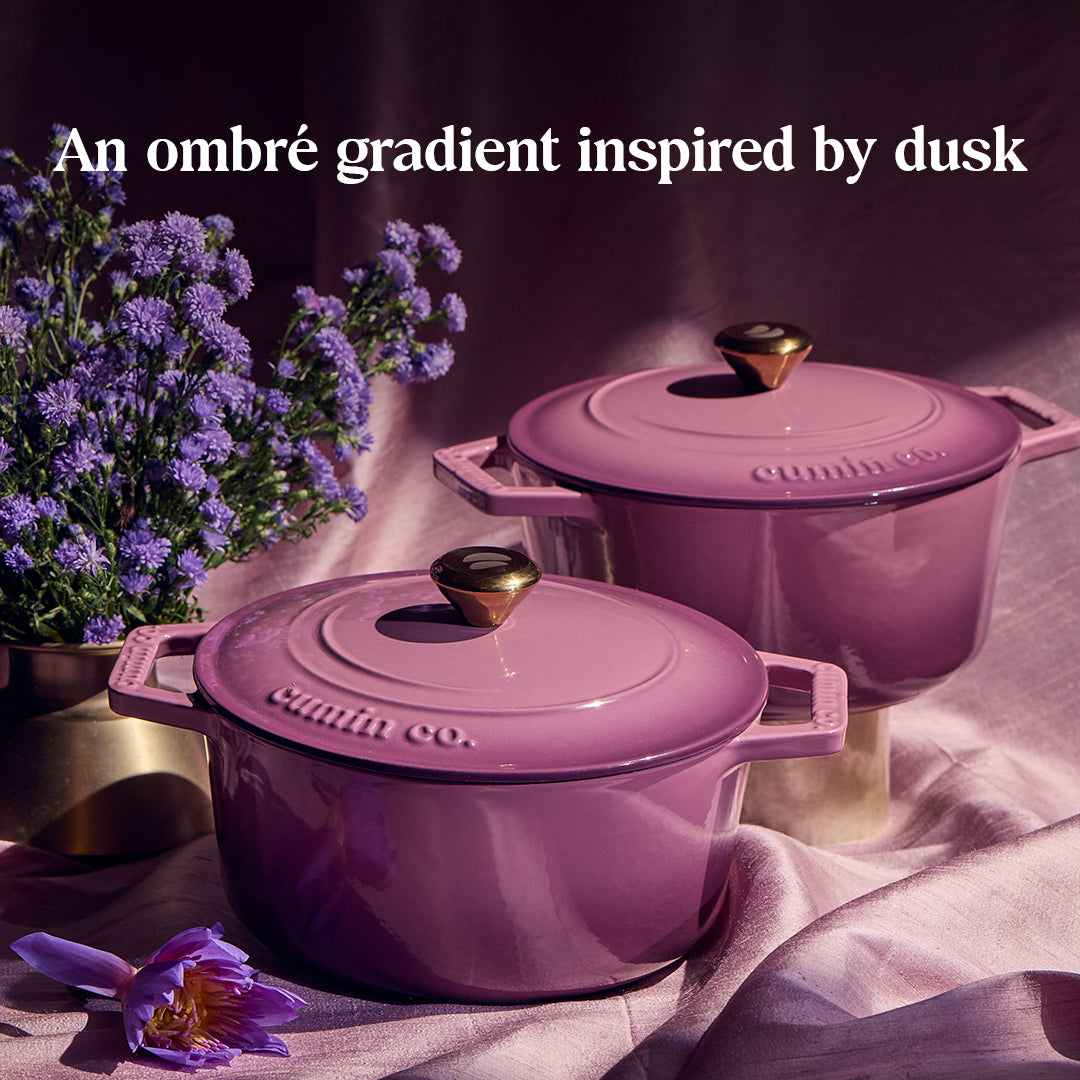

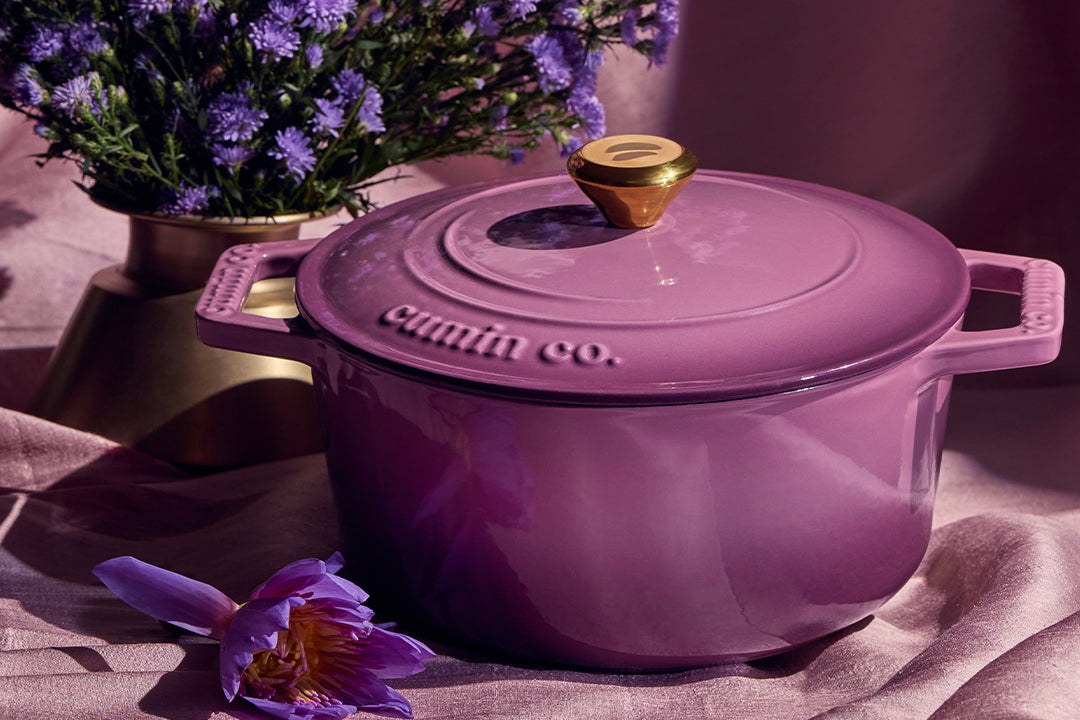
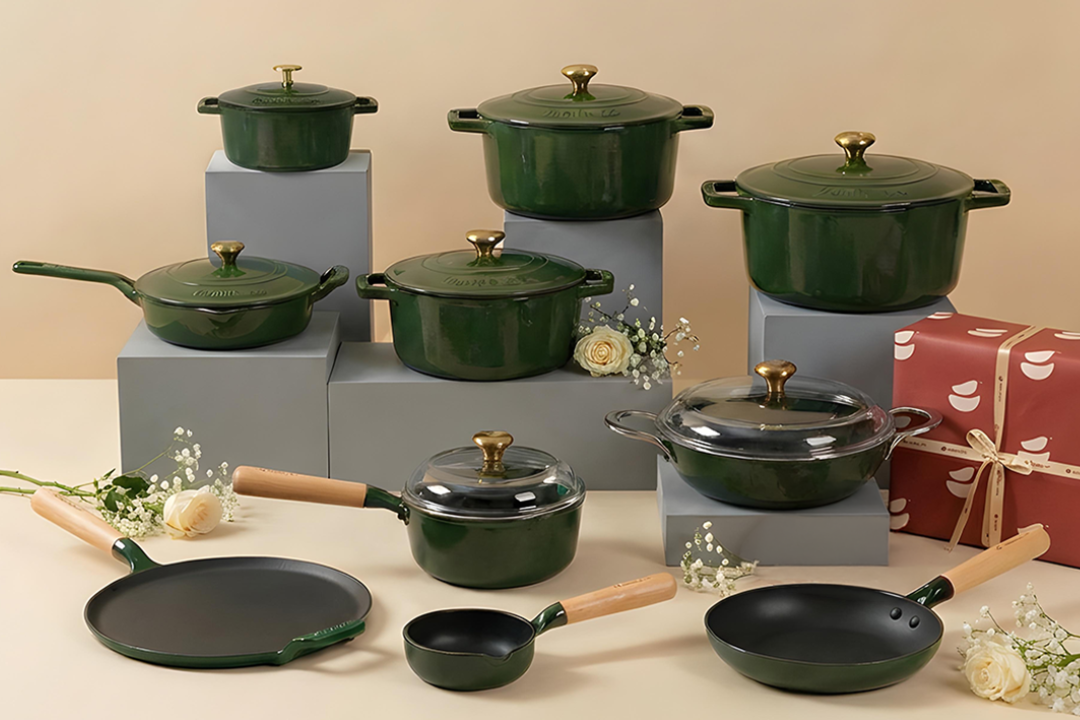

Cast Iron Kadai with Enamel Coating | Enamel Dutch Oven | Small Dutch Oven | Non Toxic Dosa Tawa | Cast Iron Roti Tawa
Enamel Cast Iron Kadai with Lid: 100% Non Toxic Induction Kadai, Naturally Non Stick
The kadai takes more thermal punishment than anything else in an Indian kitchen. High flame tadka, gravies simmering for thirty to forty minutes, oil at 180°C for frying, then a harsh cleaning cycle. Every material fails that cycle differently. non stick peels and break where the flame concentrates and the spatula works hardest. Thin steel and aluminium lose oil temperature the moment food goes in. Bare cast iron rusts within days of one missed drying, and tomato or tamarind strips its seasoning back to raw metal.
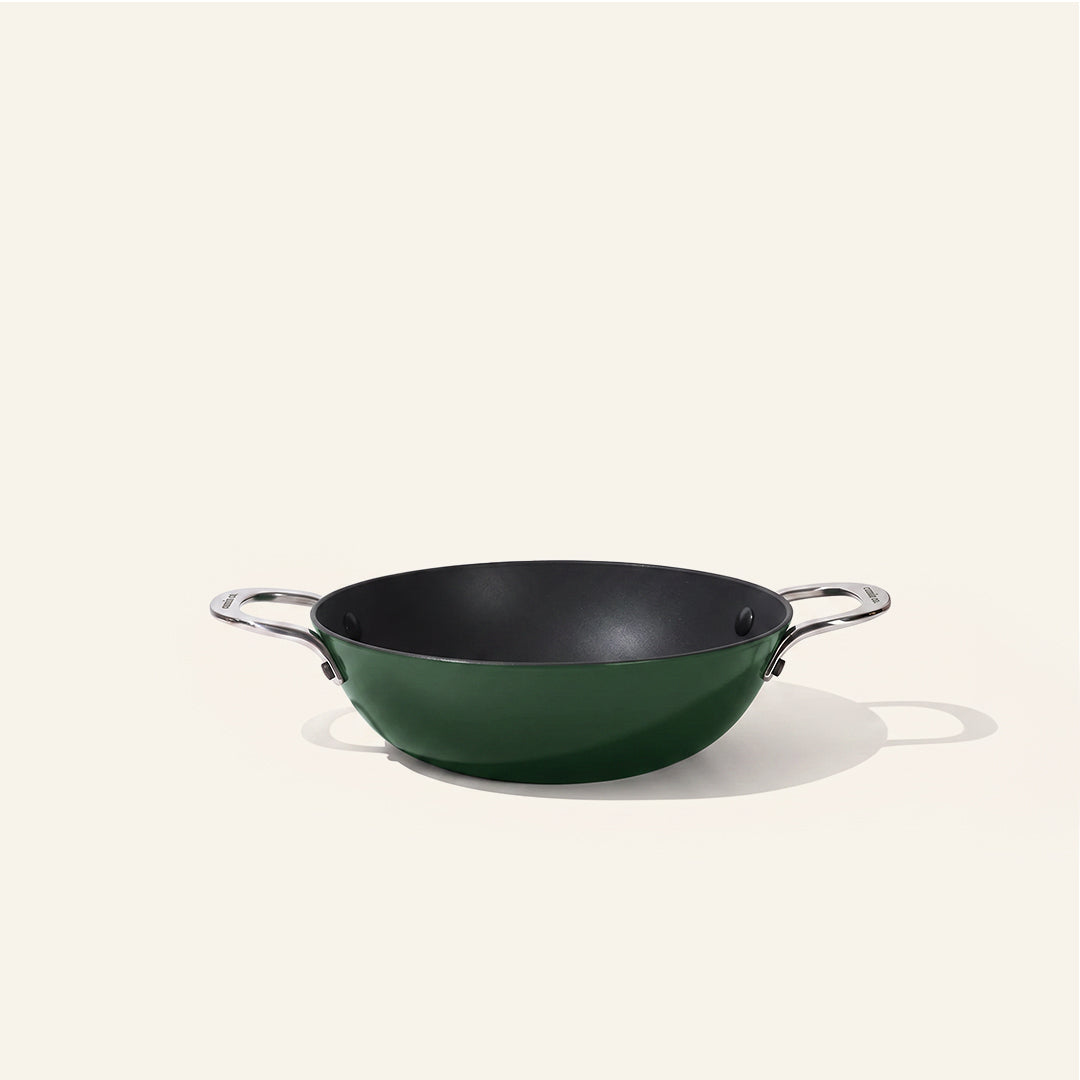
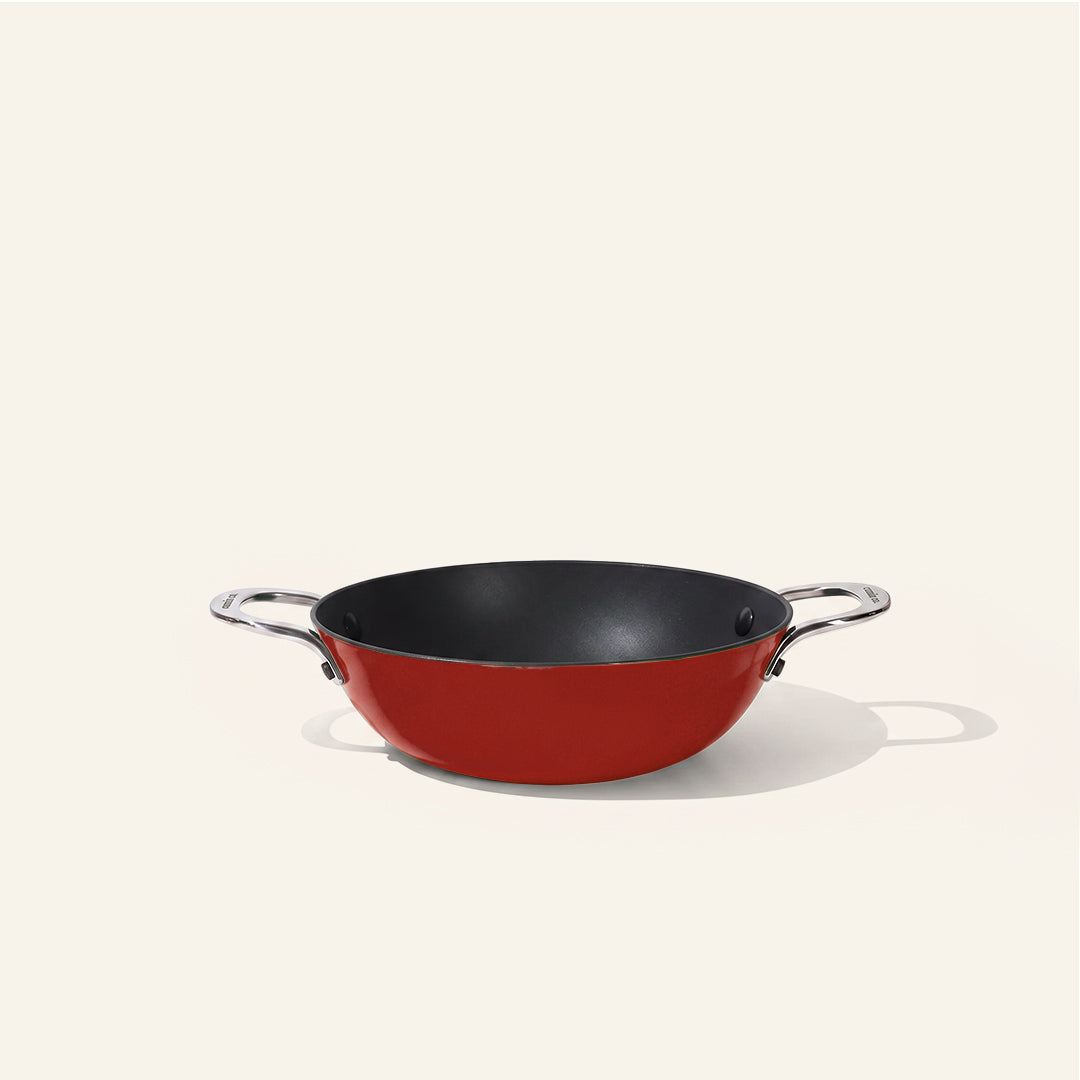
Cumin Co.'s range is enamel fused to cast iron. Four sizes from 2.1L to 5.5L, each available with or without a lid, a compatible base for induction cooking, a four layer titanium infused enamel surface recognised by three patents, and no seasoning at any point in its life.
What Is an Enamel Cast Iron Kadai?
An enamel cast iron kadai is cast iron with a glass surface fired onto the metal at high temperature. It carries cast iron's thermal mass without cast iron's maintenance.
A non stick kadai has a polymer film applied on top of aluminium, and it sits on the surface until it eventually separates. Enamel is fused into the iron across four layers, so it cannot break down at frying temperature.
The difference from bare iron is the release mechanism. Seasoned iron becomes non stick through a layer of polymerised oil built over weeks, a layer that acid dissolves and detergent thins, which is why bare iron sellers advise against tomato gravies and dishwashers. Enamel releases food through surface smoothness and stable heat. There is nothing to build up and nothing to strip, so it behaves the same in year five as in week one.
Why This Is Genuinely a Non Toxic Kadai?
Non toxic is printed on nearly every cookware box in India and carries no information alone. A non toxic kadai should name what it excludes, specifically enough to be checked.
Non Teflon Kadai: No Coating That Can Peel
Most easy release kadais use a fluoropolymer sprayed onto aluminium. It performs for a year or two, then scratches and lifts near the centre, exactly where a kadai runs hottest and where the spatula scrapes during cooking action
This is a non teflon kadai in the literal sense, there is no polymer layer at all. The cooking surface is titanium infused enamel, an inorganic glass fused to iron across four layers. Nothing separates into food, and nothing degrades when you dry roast jeera or hold oil at frying temperature.
PFOA Free Kadai: What That Claim Leaves Out
PFOA was phased out of cookware manufacturing over a decade ago, which is why nearly every brand can claim it. A kadai can be PFOA free and still carry a PTFE coating from the same chemical family.
This kadai is free of PFOA, PTFE, PFAS, lead, cadmium, mercury, and arsenic and other heavy metals, the full list, not the one line most brands print.
PFAS Free Kadai: The Claim Most Brands Avoid
PFAS is the fluorinated forever chemicals family, and most non-stick coatings belong to it. That is why this claim is rarer than PFOA free.
This is a PFAS free kadai by material rather than formulation. enamel contains no fluorinated compounds at any stage of manufacture.
Lead & Cadmium Free Kadai
Lead and cadmium were historically used in glaze pigments to produce bright, heat stable colour, and unregulated enamelware can still carry them. Both are heavy metals that migrate faster in acidic conditions, which describes most of what a kadai cooks.
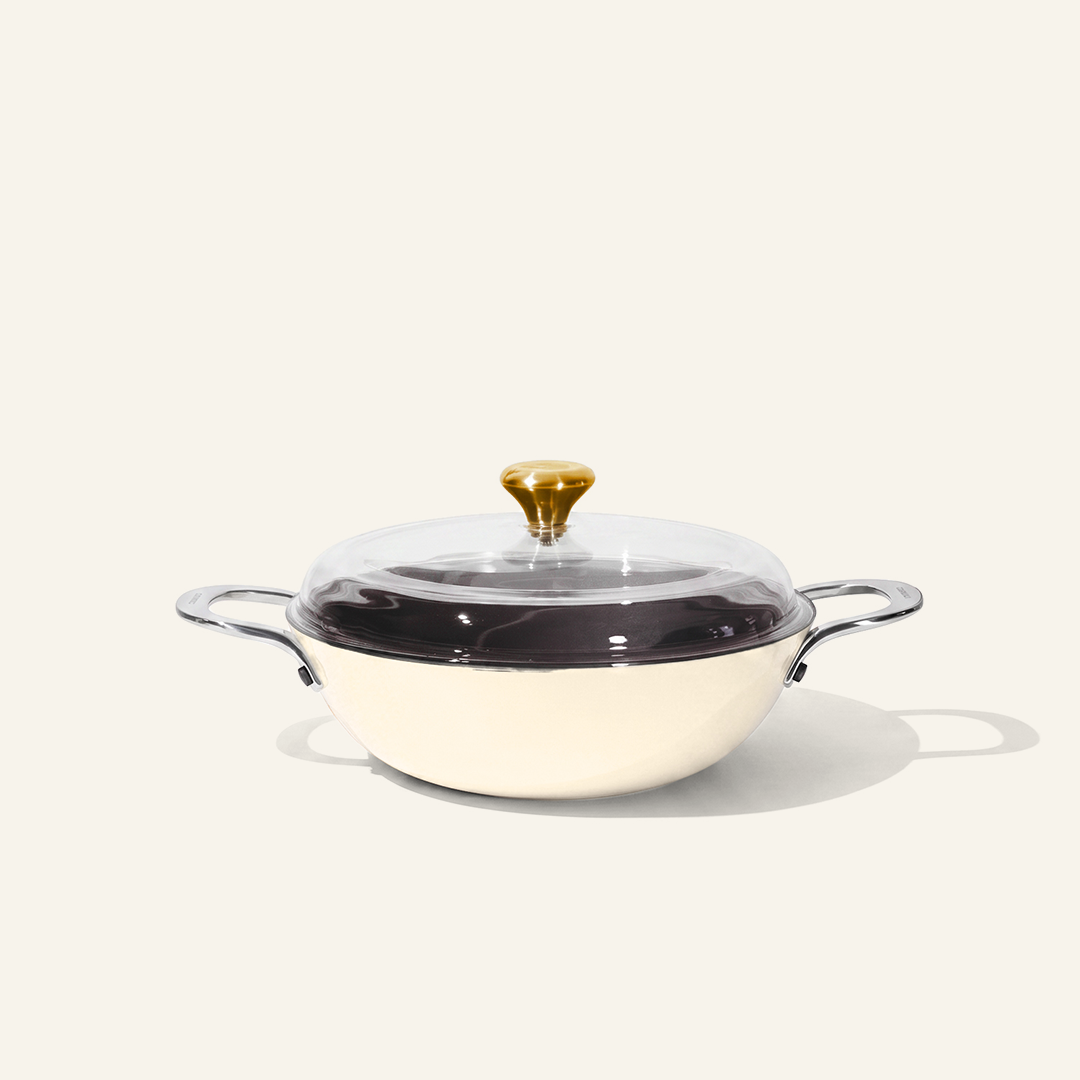
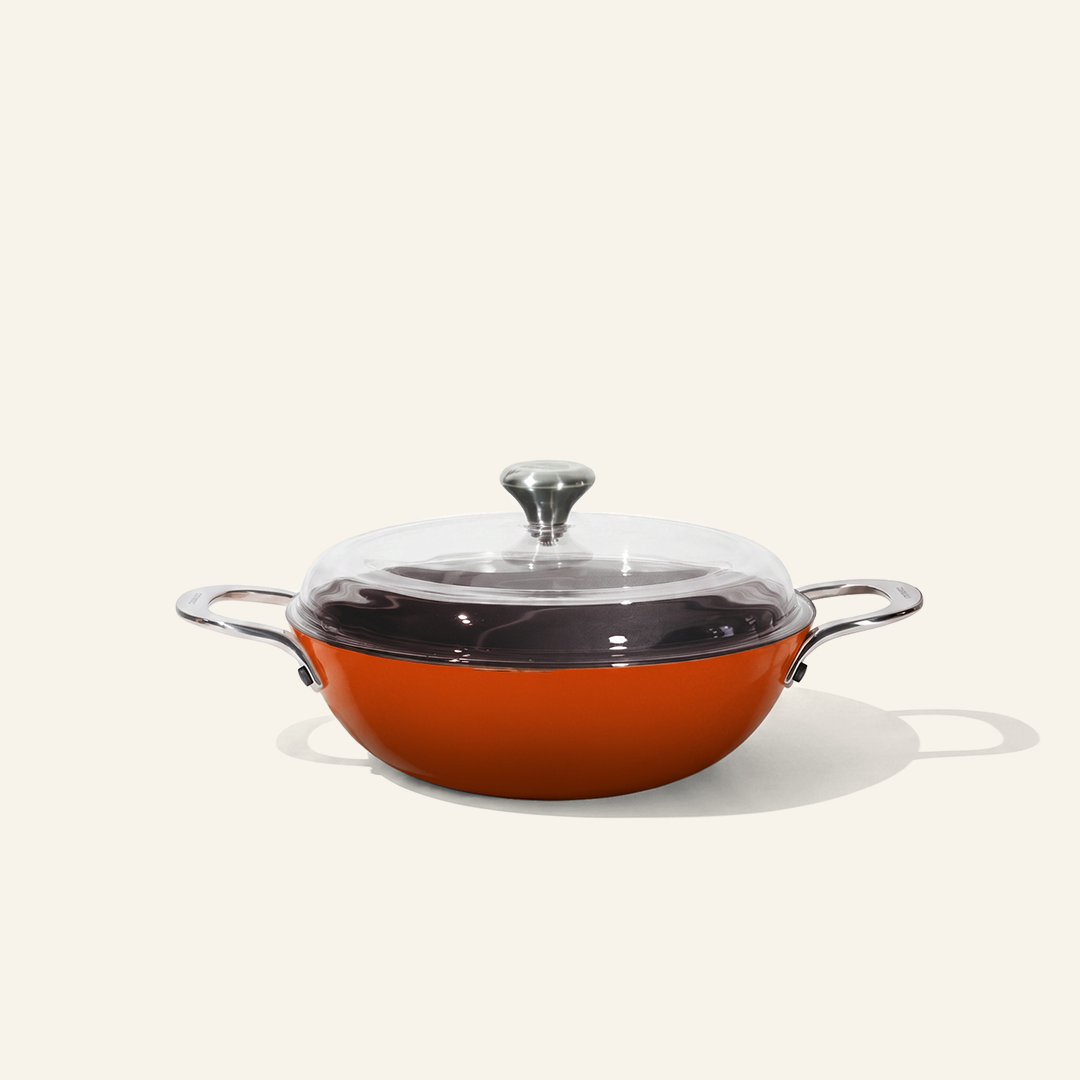
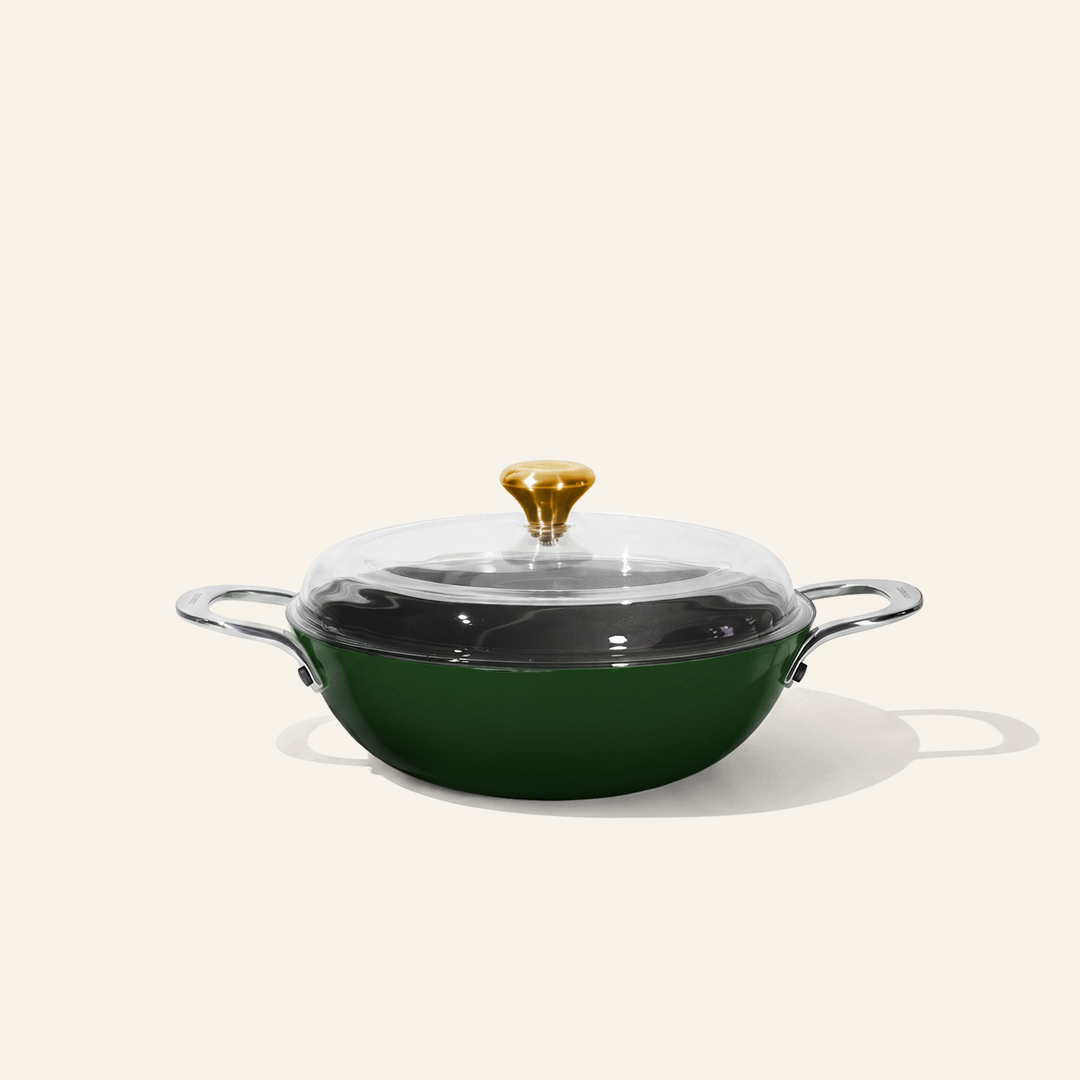
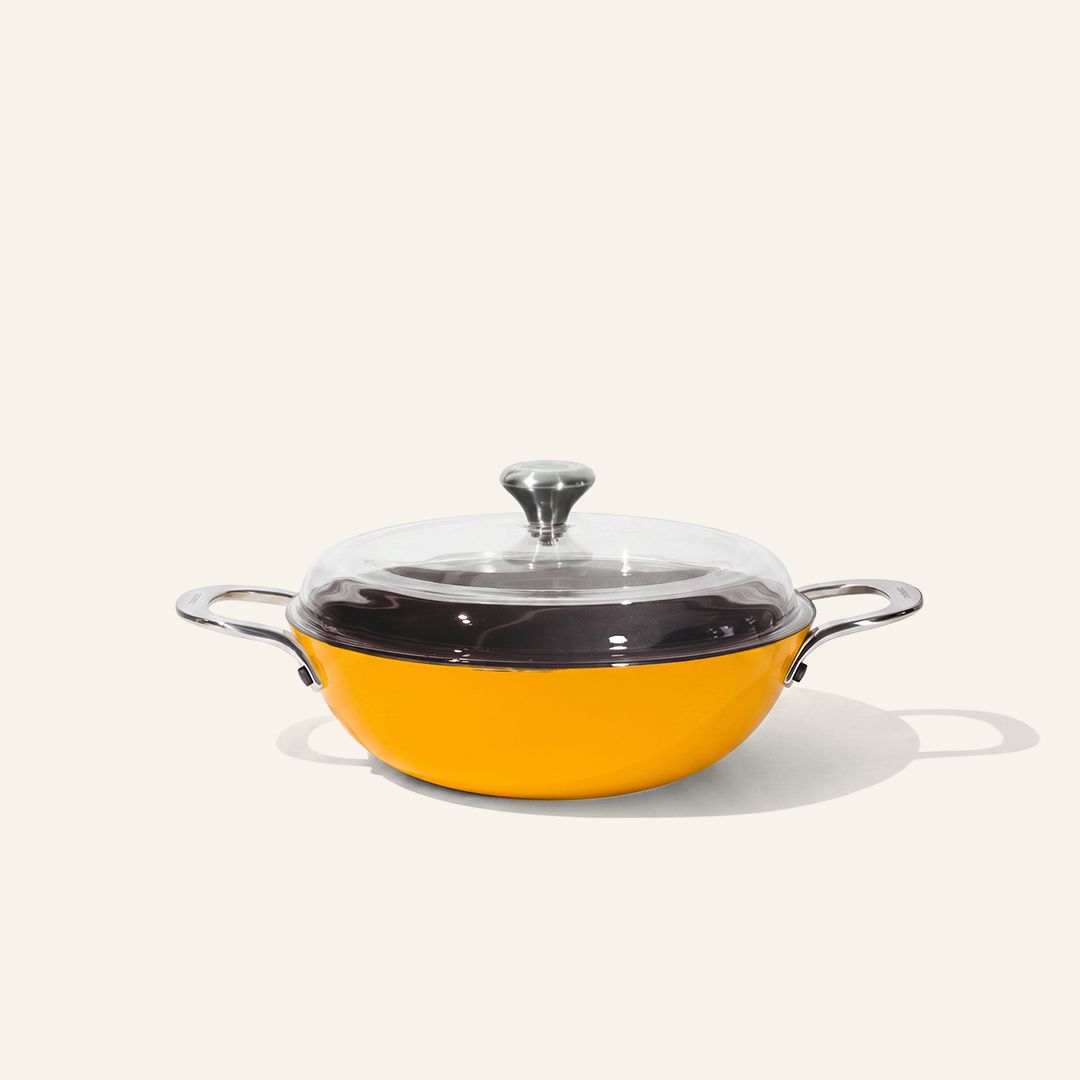
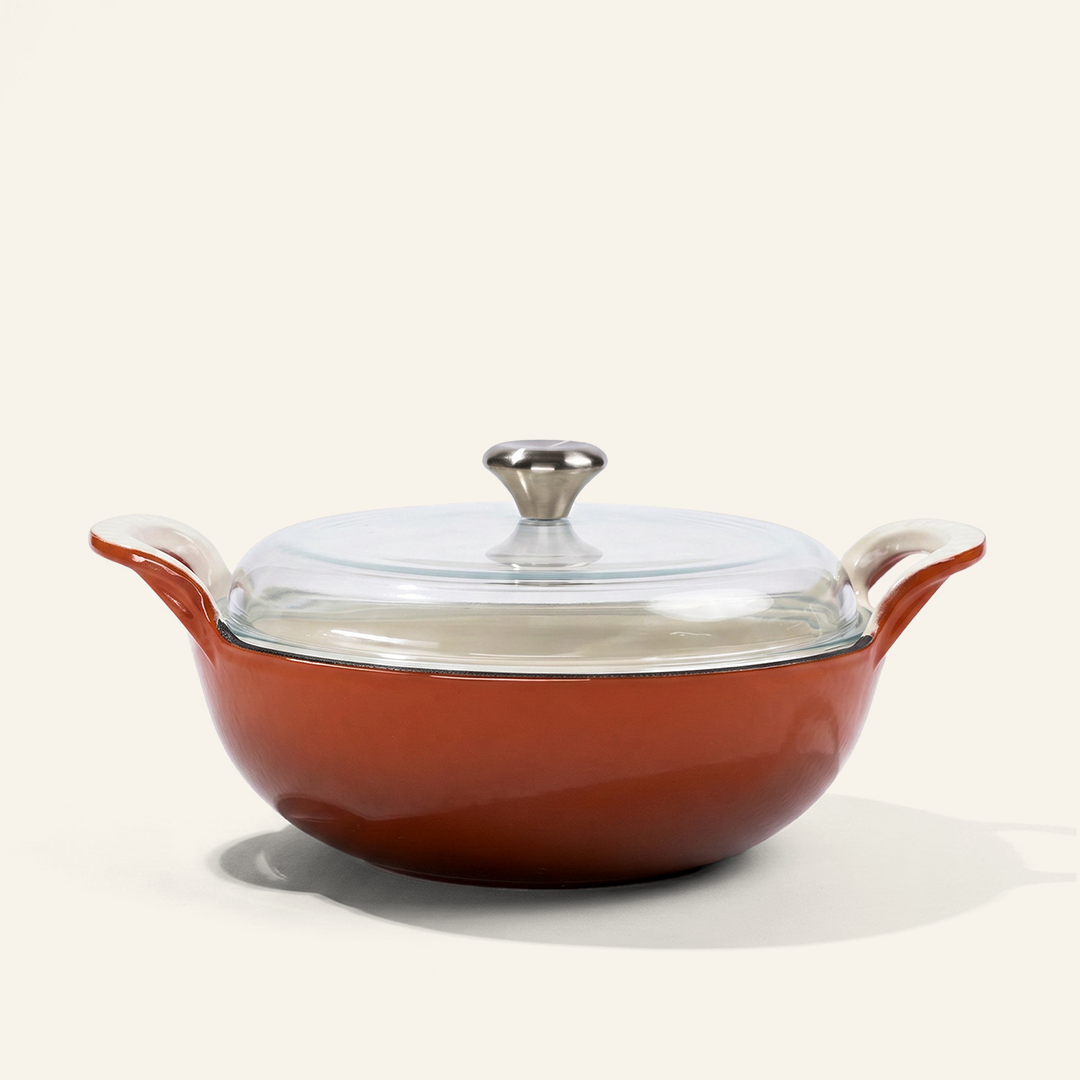
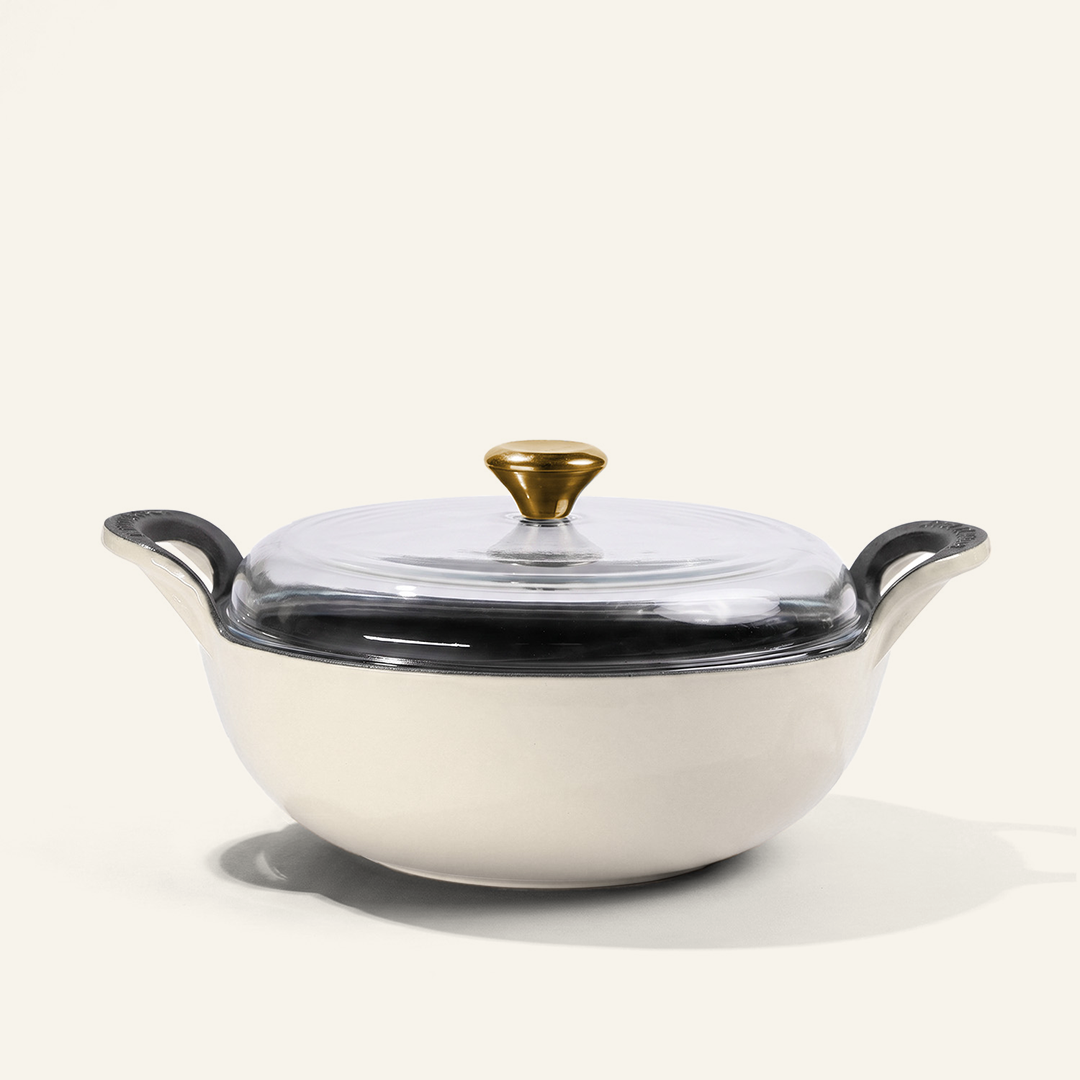
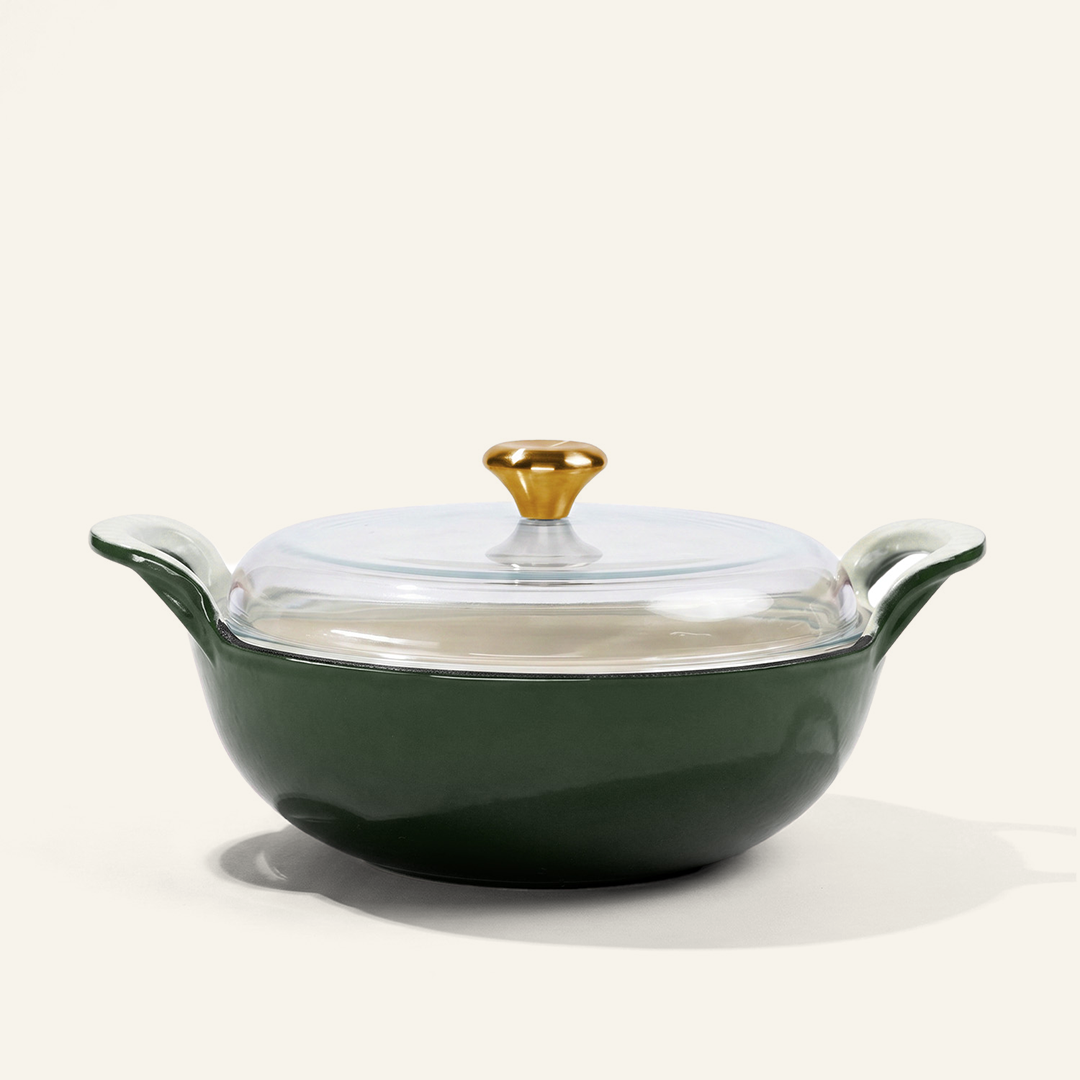
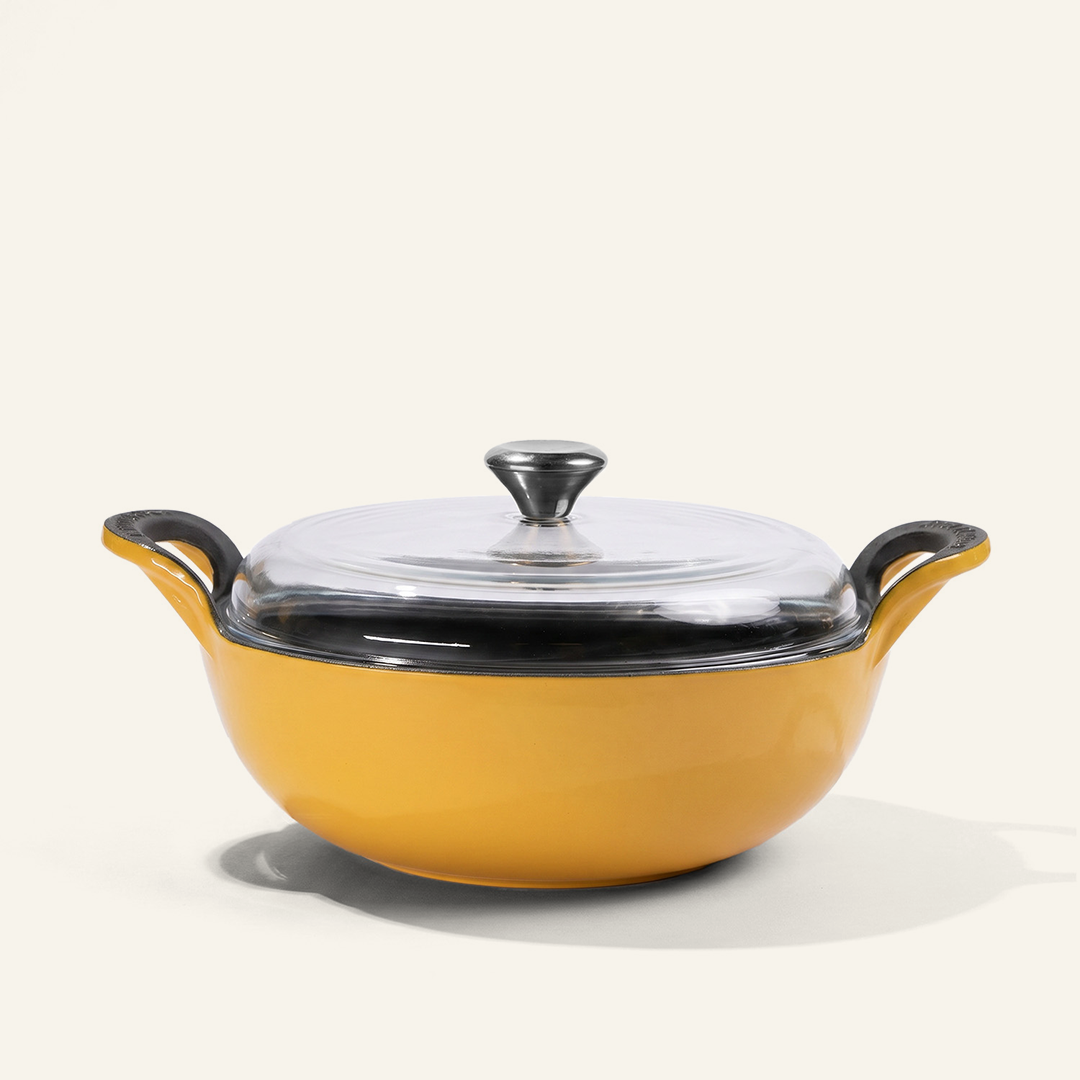
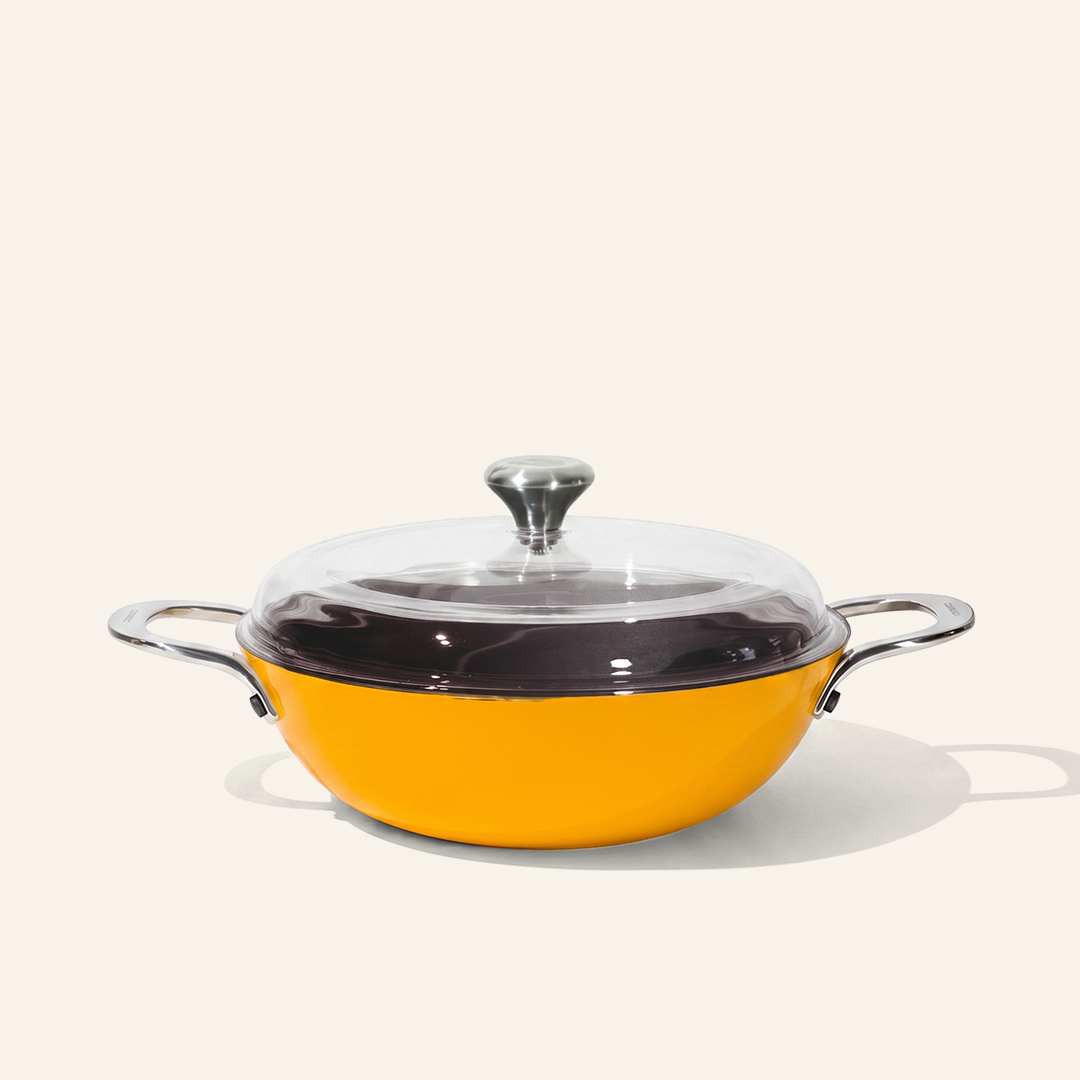
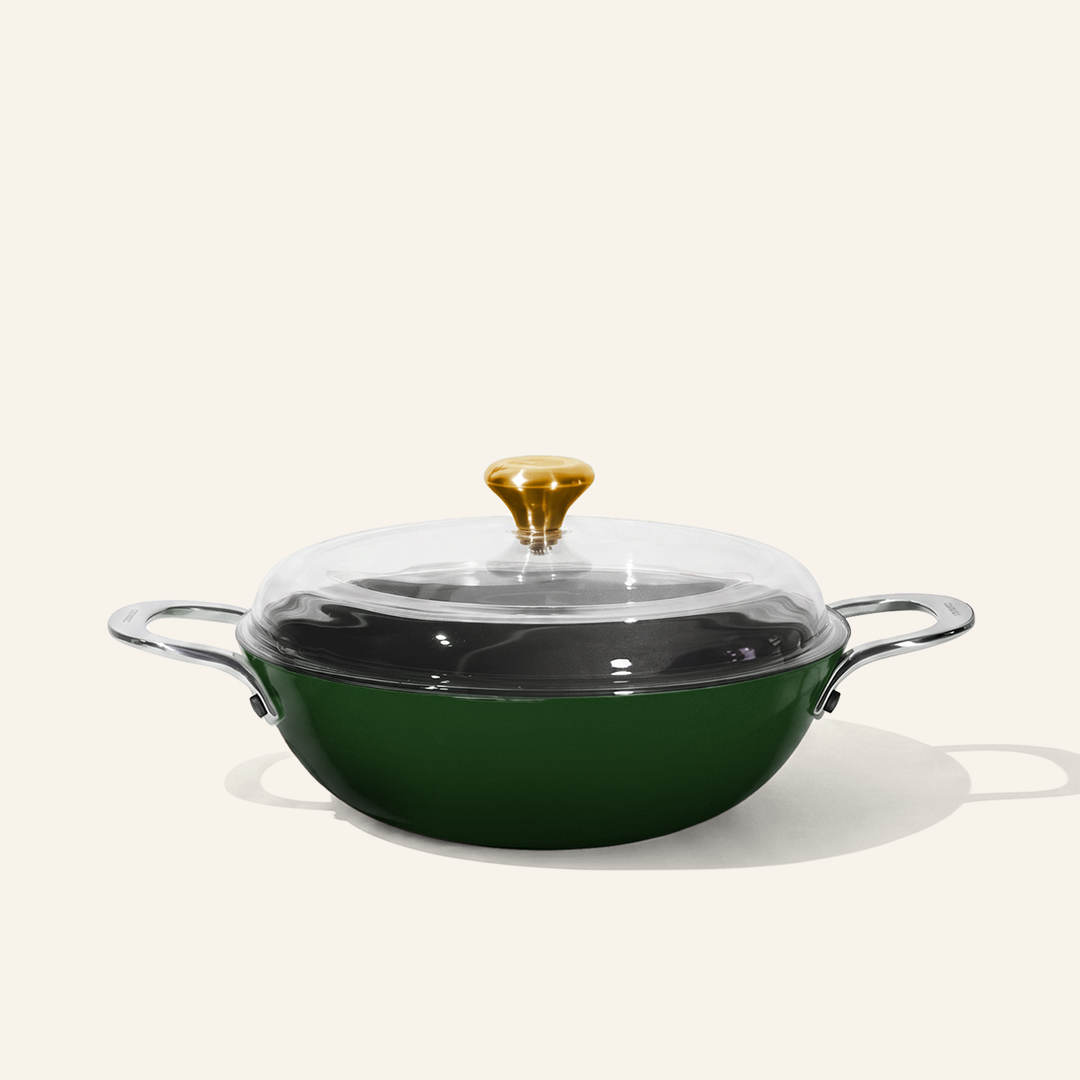
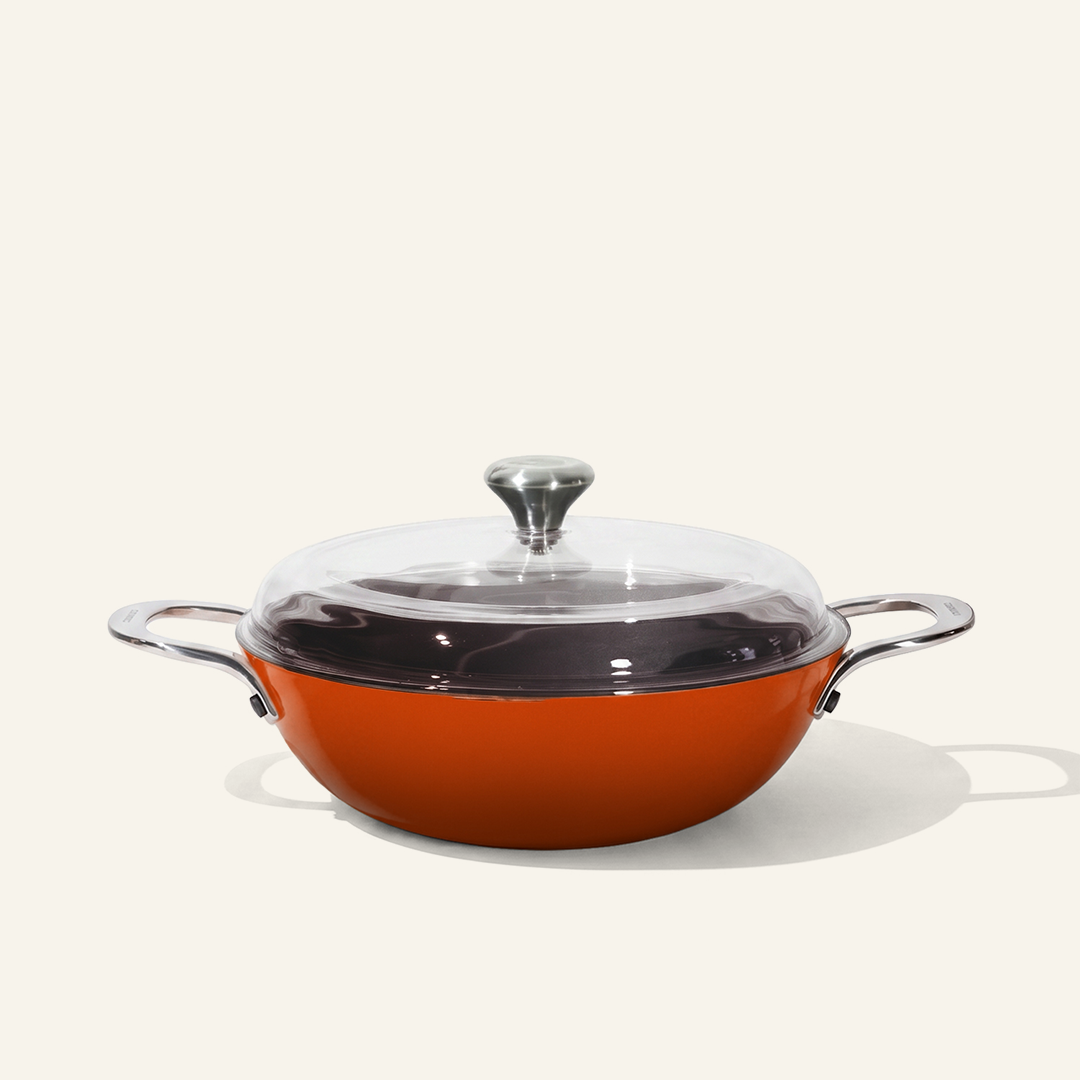
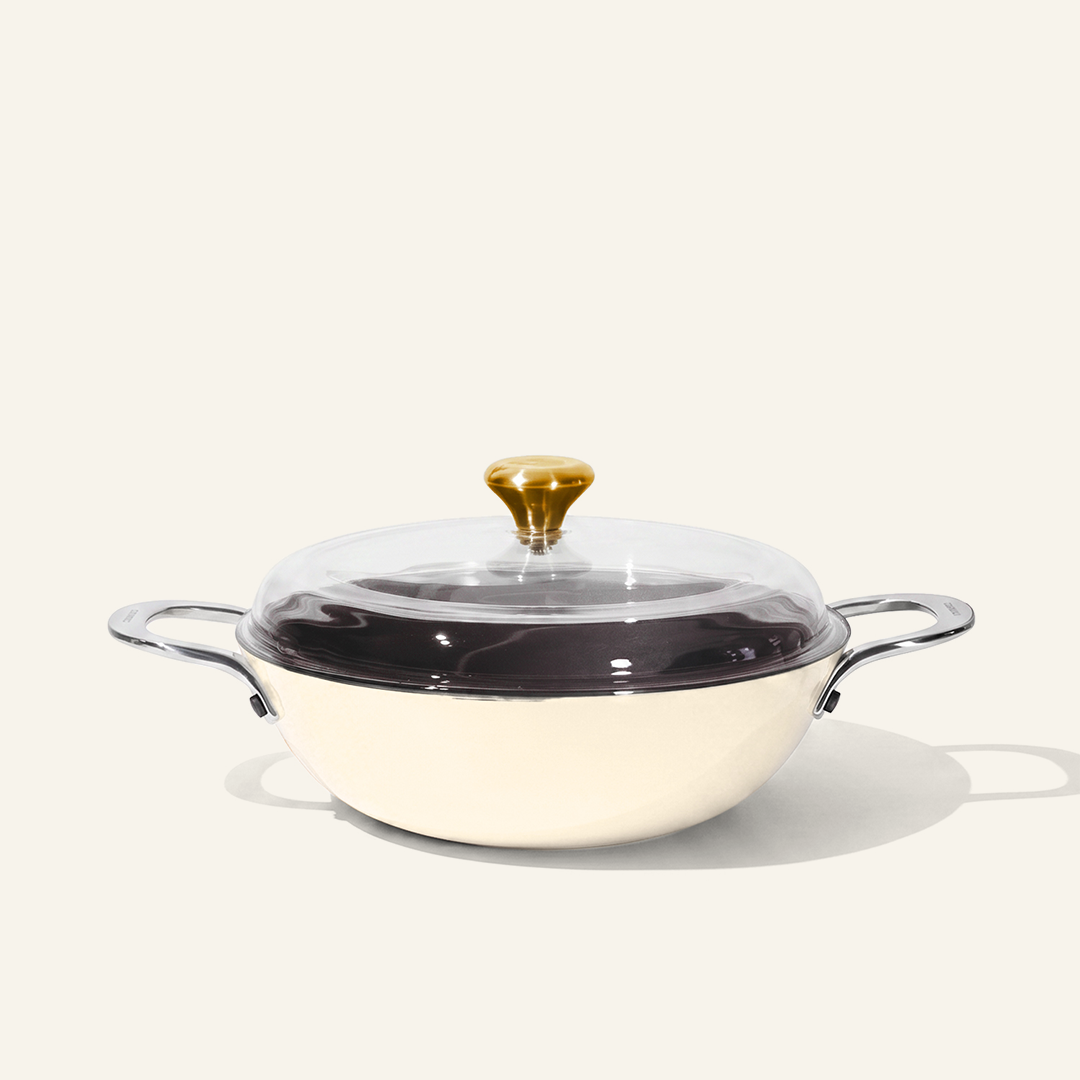
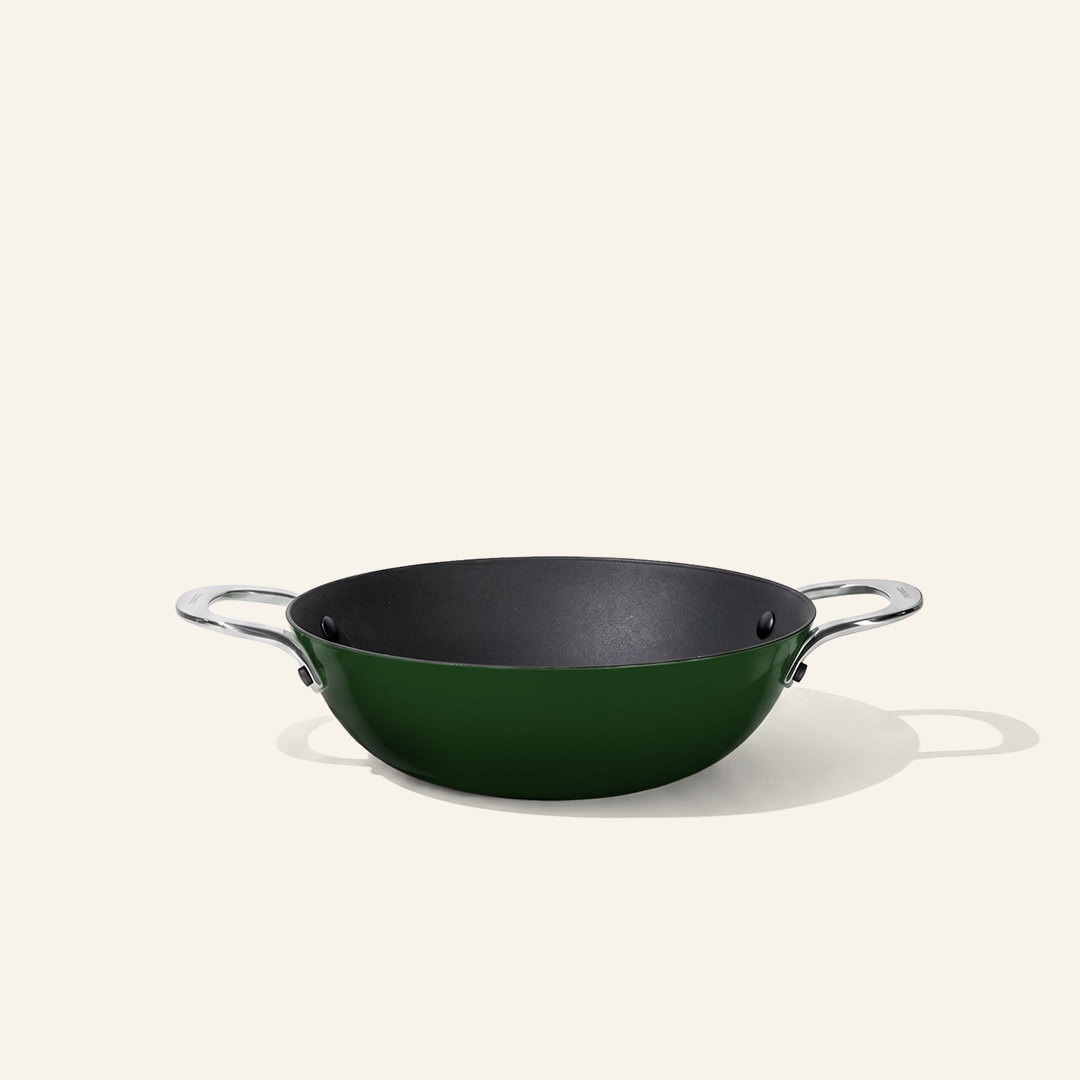
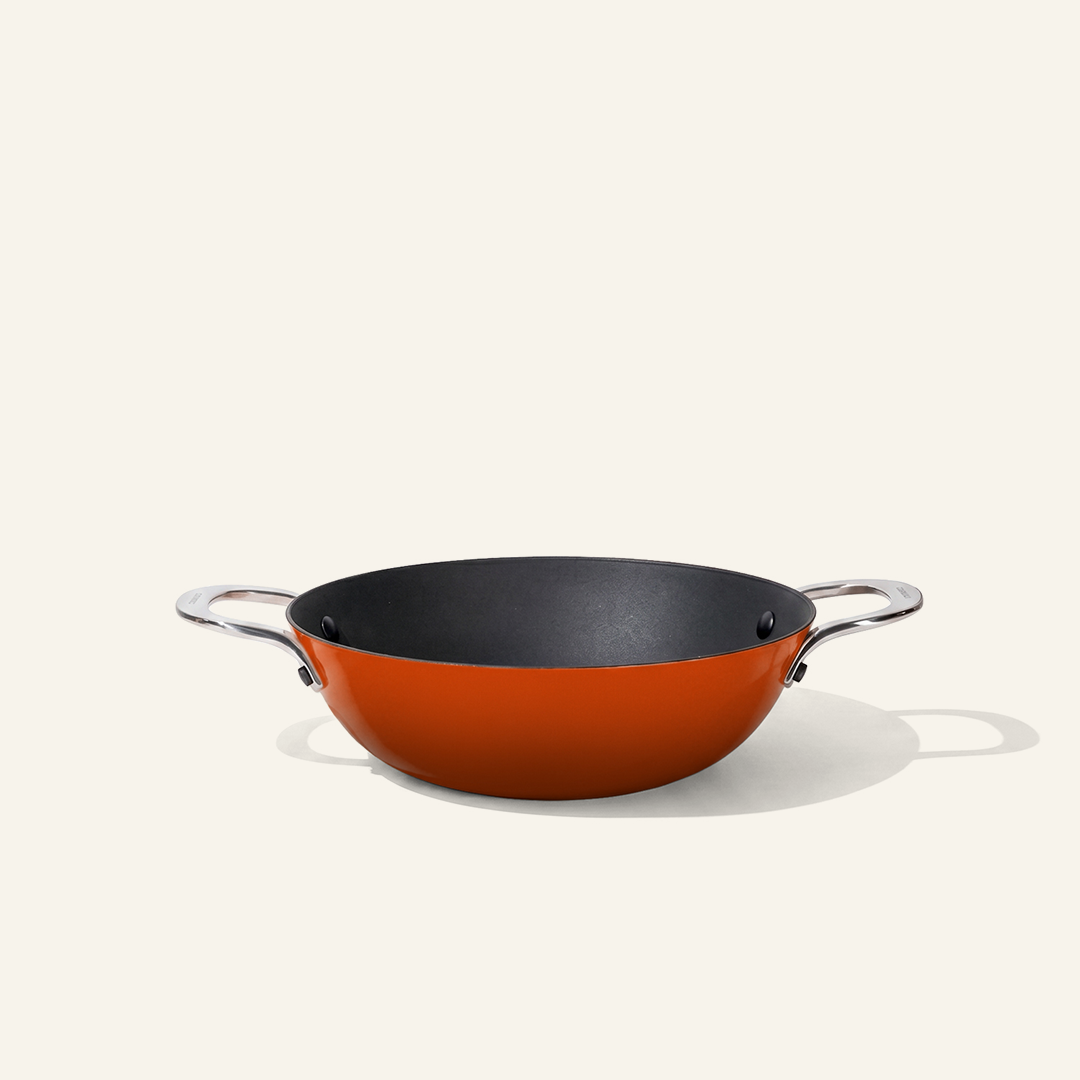
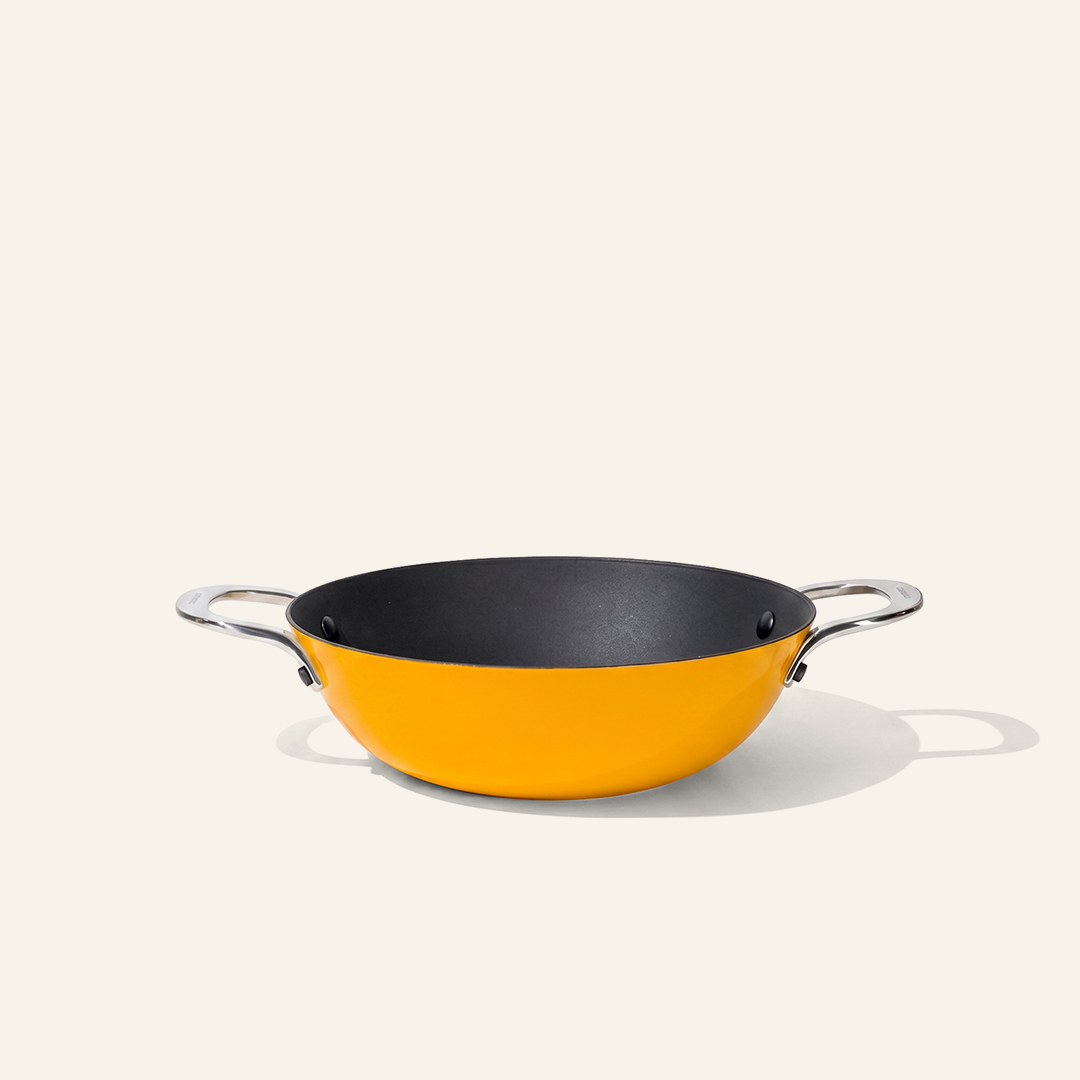
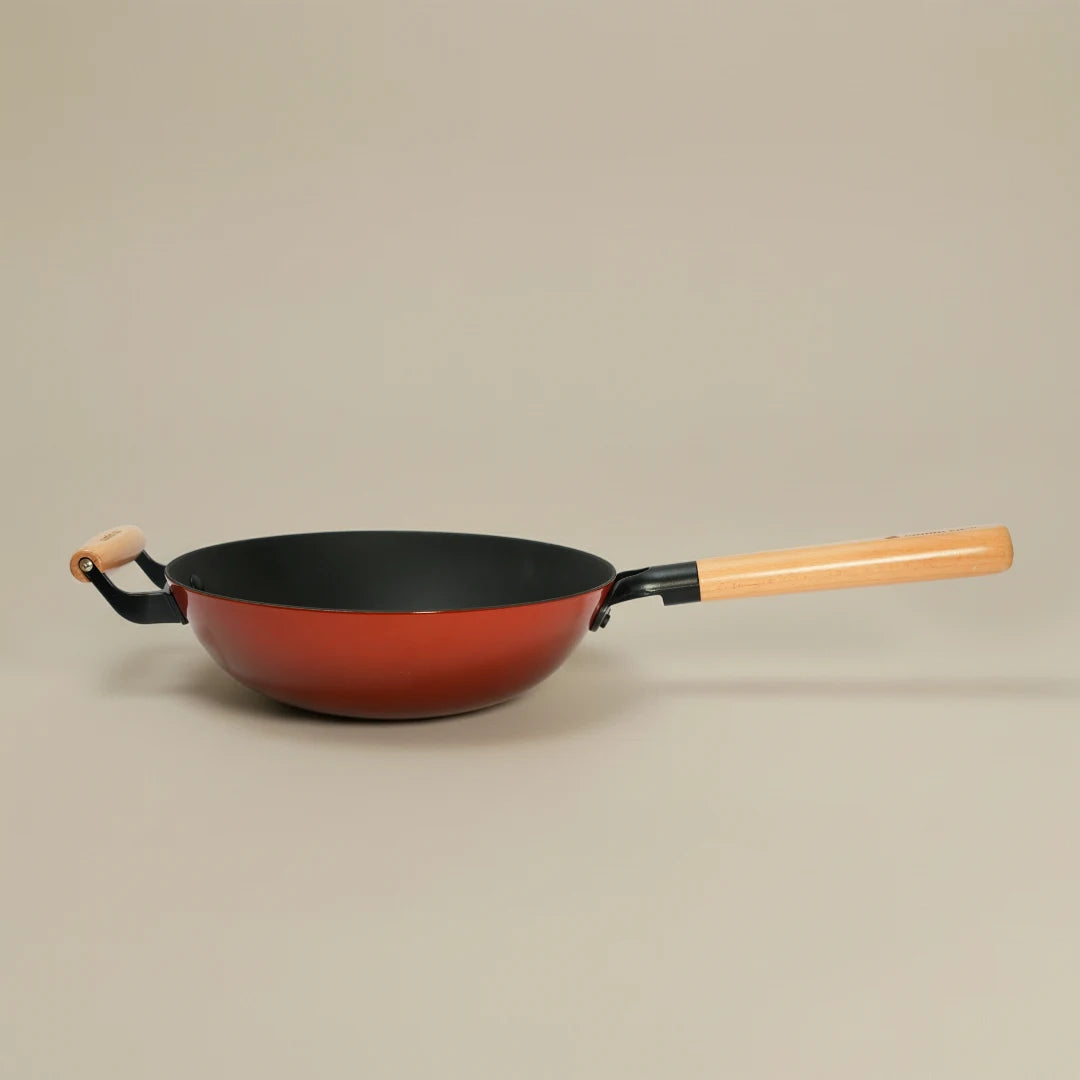
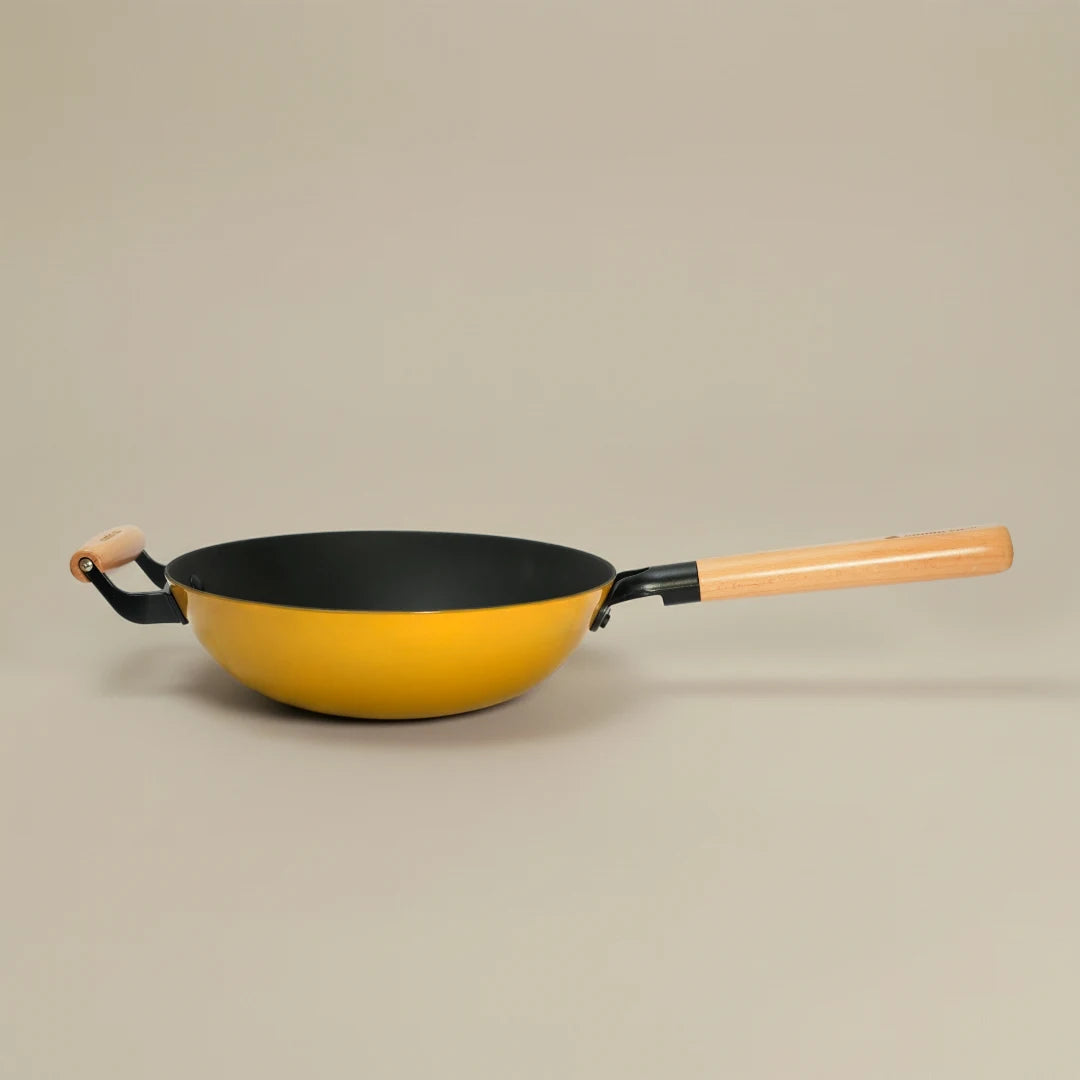
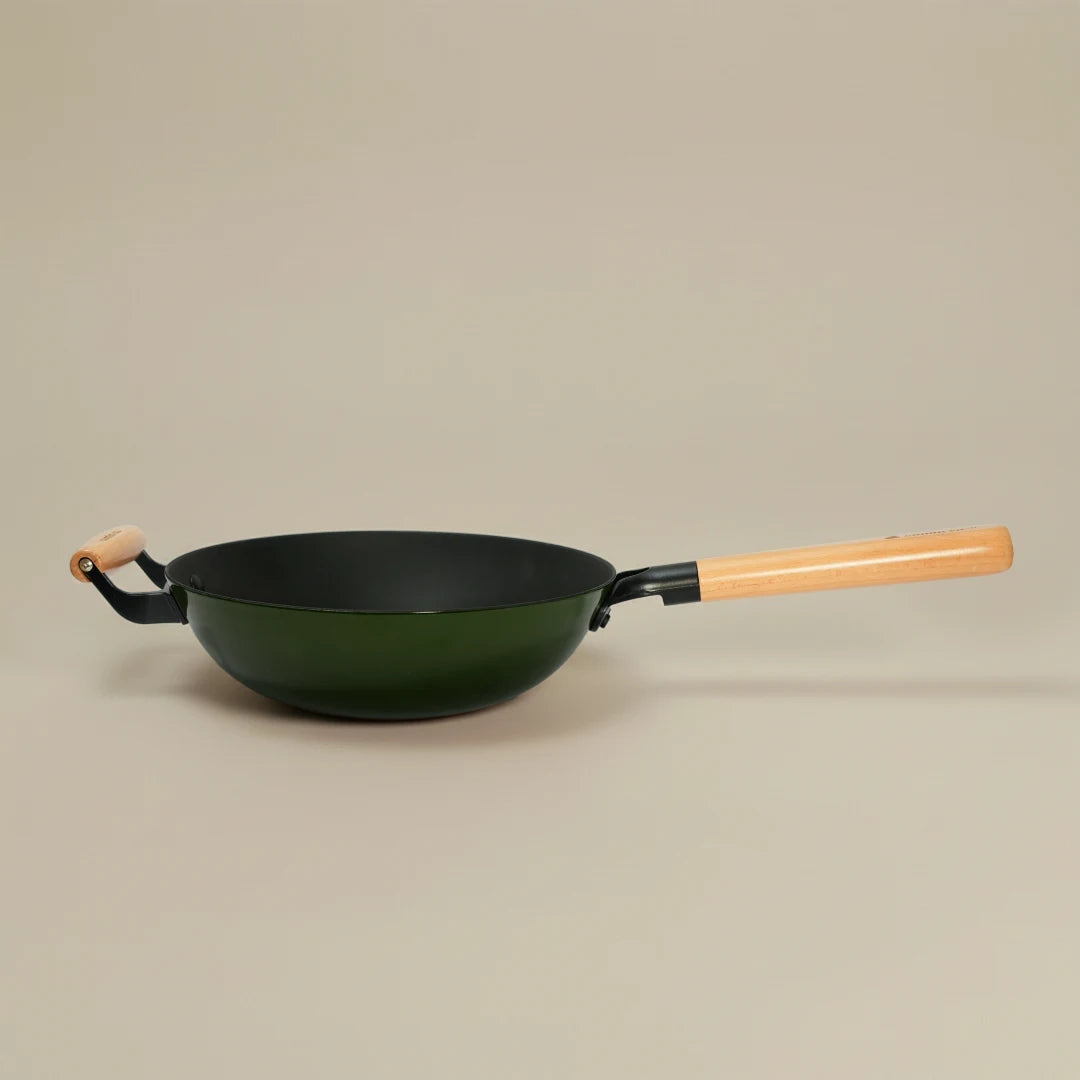
Every colour here, Moringa Green, Kulhad Rust, Sarso Mustard, and Malai White, or the other ones use mineral oxide pigments with no lead or cadmium in the glaze, and no mercury or phthalates. Those oxides stay stable at cooking temperature, which is why the finish holds colour through years of frying instead of dulling.
Special Benefits of Enamel Cast Iron Kadai
Zero seasoning: Non stick from the first tadka, with no oil bake before first use and no re-seasoning cycle after.
Zero rust: Enamel seals the iron completely, so a wet kadai left overnight is not a problem, and neither is a humid coastal kitchen.
Zero reactivity: Tomato, tamarind, lemon, curd marinades, and milk based gravies cook without metallic taste and without surface damage. On bare iron, all of these strip seasoning, and curd can grey.
No metal leaching: Food contacts fused glass, not raw metal. No aluminium in the construction.
Scratch resistant: Titanium infusion raises surface hardness enough for daily spatula work. Wood and silicone remain best practice, but occasional metal will not damage it.
Deglazes cleanly: Fond that sticks during browning lifts off glass with a splash of water or tomato. On seasoned iron, deglazing with acid costs you seasoning. Here it costs nothing and adds flavour to the gravy.
Low maintenance: Wash, dry, store. No oiling before storage, no special detergent, no keeping it away from moisture.
No migration into food: With no PTFE, PFAS, lead, arsenic cadmium, mercury, in the surface, and enamel being chemically non-reactive, nothing transfers from the kadai during cooking, which is what matters in kitchens cooking for infants or during pregnancy.
Naturally Non Stick Kadai: How the Surface Actually Works
Release on a naturally non-stick kadai of this type comes from surface smoothness plus stable heat, not from a coating and not from seasoning. The practical consequence is order of operations: heat the kadai first, then add oil, then the aromatics.
On seasoned bare iron the oil layer is already on the surface, so cold oil in a cold kadai still releases reasonably. On enamel there is no such layer, put oil into a cold kadai, add onions, and they will grip. Give the kadai two to three minutes on medium, then oil, then spices. The seeds should pop within two seconds of hitting the oil. If they sit silent, the kadai went in too cold.
How to Get the Best Out of an Enamel Kadai
Four techniques that differ from seasoned iron or thin steel
Deep frying: test the oil, don't time it. Drop in a bit of batter. It should sink, then rise within about two seconds with steady fine bubbles. Stays down means the oil is too cool and the pakora will soak it up. Floats and browns at once means too hot, so you get a dark shell over raw batter.
Wait between batches. Cold food drops the oil temperature, and that drop is what makes batch two soggy. Cast iron recovers faster than thin steel but still needs 30 to 60 seconds. Let the bubbling settle first.
For spices: let it stick, then deglaze. Masala catching at the base is browning, not burning. On seasoned iron you cannot lift it with tomato or water, because acid takes the seasoning too. Enamel has nothing to lose, so add a splash of water, scrape with a wooden spoon, and the fond goes into the gravy.
Curd and milk need no precautions. Curd in a hot bare iron kadai can grey and split. Enamel is inert, so kadhi and korma bases behave as they would in steel.
Avoid thermal shock. Enamel is technically glass. Never put a hot kadai under a cold tap, least of all after frying. Let it stand for a few minutes. Do not preheat it empty on a full flame.
The lid chips first. Rims chip from impact, not cooking. Set the lid down flat, and do not stack heavy metal on it.
Flat Base Kadai: Even Oil Depth, No Wobble
Traditional kadais have round or curved bottoms. That shape suits a gas flame but creates two problems.
On induction it rocks and loses contact with the plate, so heating goes uneven regardless of the metal being magnetic. And for frying, a round bottom means oil pools deep at the centre and shallow at the edges, so pieces sitting at the rim fry in less oil at a lower temperature, which is why one batch comes out unevenly coloured.
Every Cumin Co. kadai has a flat, wide base. Oil sits at a uniform depth across the whole surface, so every piece in a batch fries the same. On gas, that flat area also gives you a more usable surface for browning, so masala spreads instead of concentrating in a hot central well where it sticks.
Cast Iron Kadai Heat Retention: Steady Oil, Even browning
This is where weight does the work. A cast iron kadai stores heat in its own body, a thin steel or aluminium kadai stores almost none.
The consequence is measurable in frying. Cold pakoras entering oil pull heat out of it. In a light kadai that heat comes only from the flame, so the temperature crashes and stays down while the burner catches up, batch one crisp, batch two oily. In cast iron the vessel itself feeds heat back into the oil, so the drop is smaller and recovery is faster.
The same technique runs the rest of the kadai's work. Onions brown at an even rate instead of browning only where the flame sits. Gravies reduce steadily rather than in surges. You adjust the flame less often.
Enamel Kadai vs Bare Iron Kadai vs Non-Stick
|
Feature |
Cumin Co. Enamel Cast Iron |
Bare / Traditional Iron Kadai |
Non-Stick (PTFE) |
|
Seasoning |
Never |
Before first use, plus periodic |
No |
|
Rust |
Never |
Within days if left wet |
Maybe, if coating’s gone |
|
Black residue initially |
None |
Yes |
None |
|
Acidic food (tomato, imli, lemon) |
Safe |
Strips seasoning, metallic taste |
Safe |
|
Curd and milk based gravies |
Safe |
Can react and grey |
Safe |
|
Deglazing |
Easy to do |
Costs you seasoning |
Little fond forms |
|
PTFE / PFOA / PFAS |
None |
None |
Coating is PTFE based |
|
Lead & cadmium |
None |
None |
Varies by brand |
|
Heat retention |
Excellent |
Excellent |
Poor |
|
Oil temperature recovery |
Fast |
Fast |
Slow |
|
How it eventually fails |
Chipped rim from impact or thermal shock |
Rust, or seasoning stripped by acid |
Coating lifts at centre, 1 to 2 years |
|
Weight (24cm, with lid) |
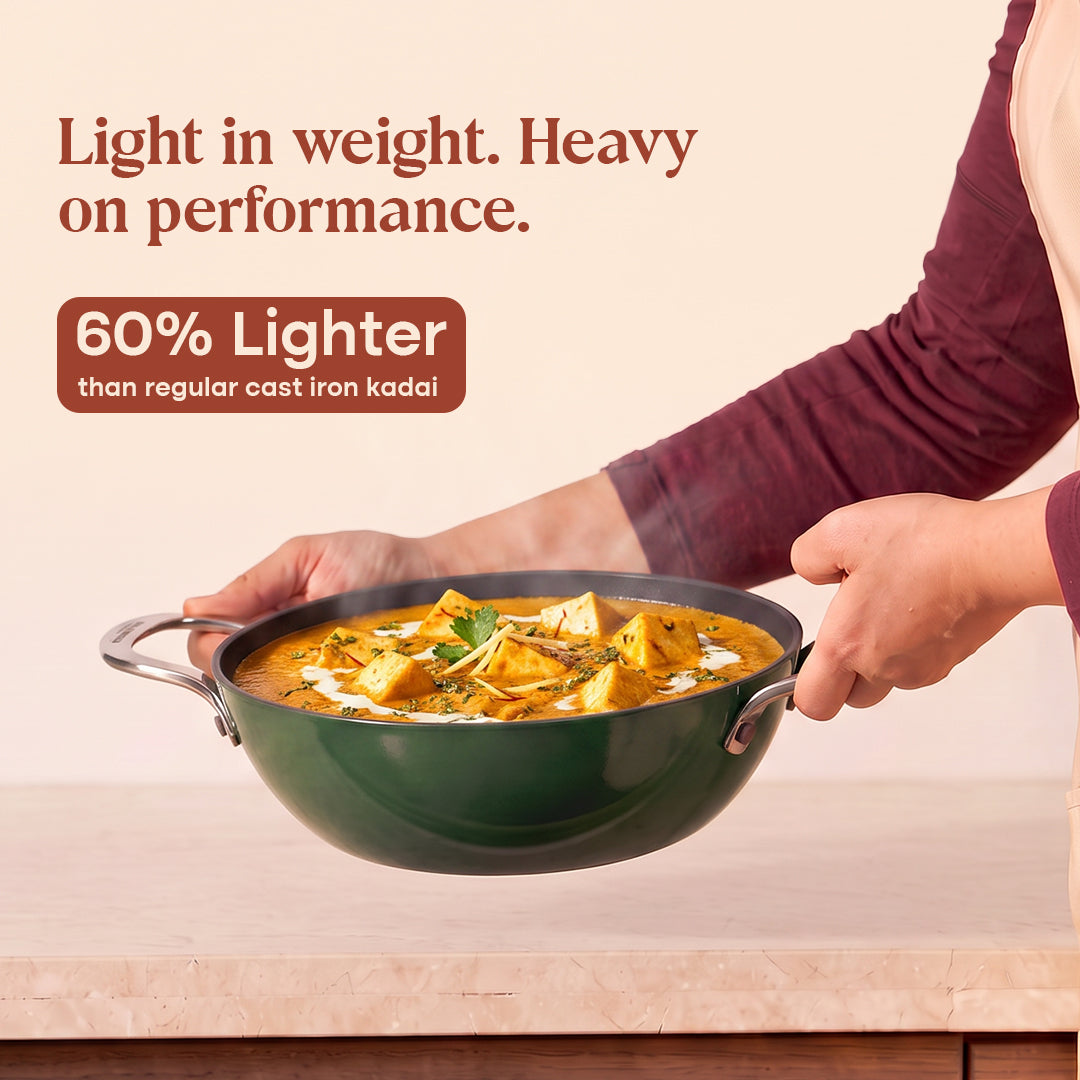
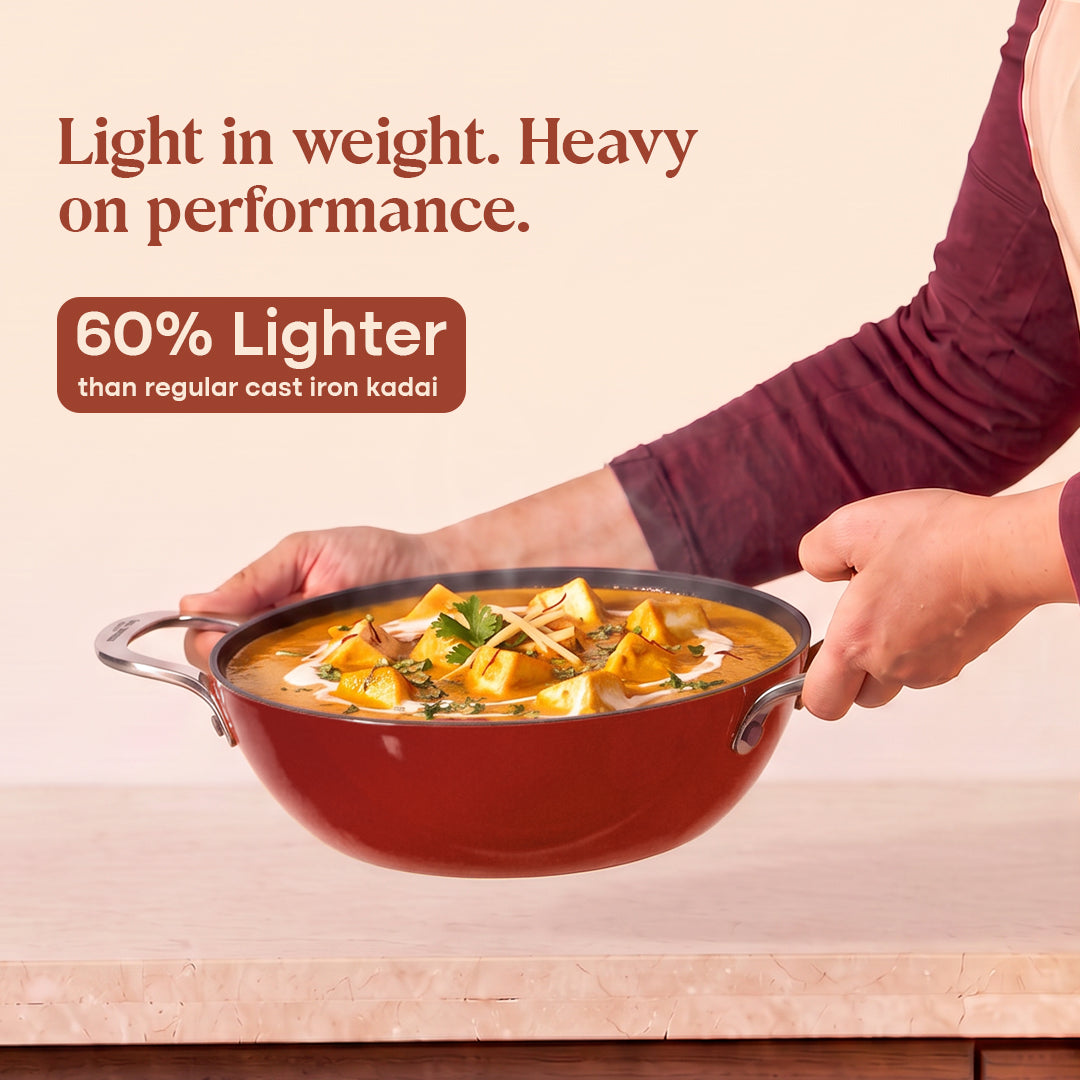
2.4 kg (LITE) |
3 to 3.5 kg typical |
About 1 kg |
|
Induction |
Flat machined base, full contact |
Many round base models are not induction friendly |
Yes |
Which Kadai Size Should You Choose?
Listed capacity is brim full, which is not working capacity. For deep frying, fill to roughly one third, because oil rises sharply the moment wet batter goes in, so a 3L kadai holds about 1L of frying oil safely. For gravies, two thirds is the practical ceiling before splatter. Size up accordingly.
|
Size |
Diameter |
Capacity |
Weight (with lid) |
Best For |
|
No. 9 LITE |
24 cm |
2.1 L |
2.4 kg |
3 to 4 people, daily sabzi, tadka, quick curries |
|
No. 10 Classic |
26 cm |
3 L |
3 kg |
4 to 5 people, everyday all-rounder, deep frying |
|
No. 11 LITE |
28 cm |
3.9 L |
2.8 kg |
4 to 5 people, gravies with volume, weekend frying |
|
No. 13 LITE |
32 cm |
5.5 L |
4 kg |
5 to 6 people, joint families, biryani, bulk frying |
Kadai with Lid or Without?
Every size is available both ways. A lid does three specific things in Indian cooking. It traps steam so dum-style cooking works, it keeps sabzi from drying out during a long simmer, and it cuts oil splatter substantially during frying.
Buy without a lid only if you already own one that fits the same diameter. A lid that sits loose lets steam escape and defeats the purpose.
Induction Kadai: Kadai with an Induction Base That Actually Works
Cumin Co.'s kadai range has a flat base that sits flush against the plate, so the full base heats rather than a ring at the centre. The same base gives stable contact on a gas burner, and the range works on ceramic and electric cooktops too. Heat safe up to 260°C, so it goes from stovetop to table for finishing and serving.
Our Enamel Kadai Range
|
Product |
Size |
Capacity |
Colours |
|
24 cm |
2.1 L |
Moringa Green, Kulhad Rust, Sarso Mustard, Malai White |
|
|
24 cm |
2.1 L |
Moringa Green, Kulhad Rust, Sarso Mustard |
|
|
26 cm |
3 L |
Moringa Green, Kulhad Rust, Sarso Mustard, Malai White |
|
|
28 cm |
3.9 L |
Moringa Green, Kulhad Rust, Sarso Mustard, Malai White |
|
|
28 cm |
3.9 L |
Moringa Green, Kulhad Rust, Sarso Mustard |
|
|
32 cm |
5.5 L |
Moringa Green, Kulhad Rust, Sarso Mustard |
|
|
32 cm |
5.5 L |
Moringa Green, Kulhad Rust, Sarso Mustard |
What You Can Cook In this Enamel Cast Iron Kadai?
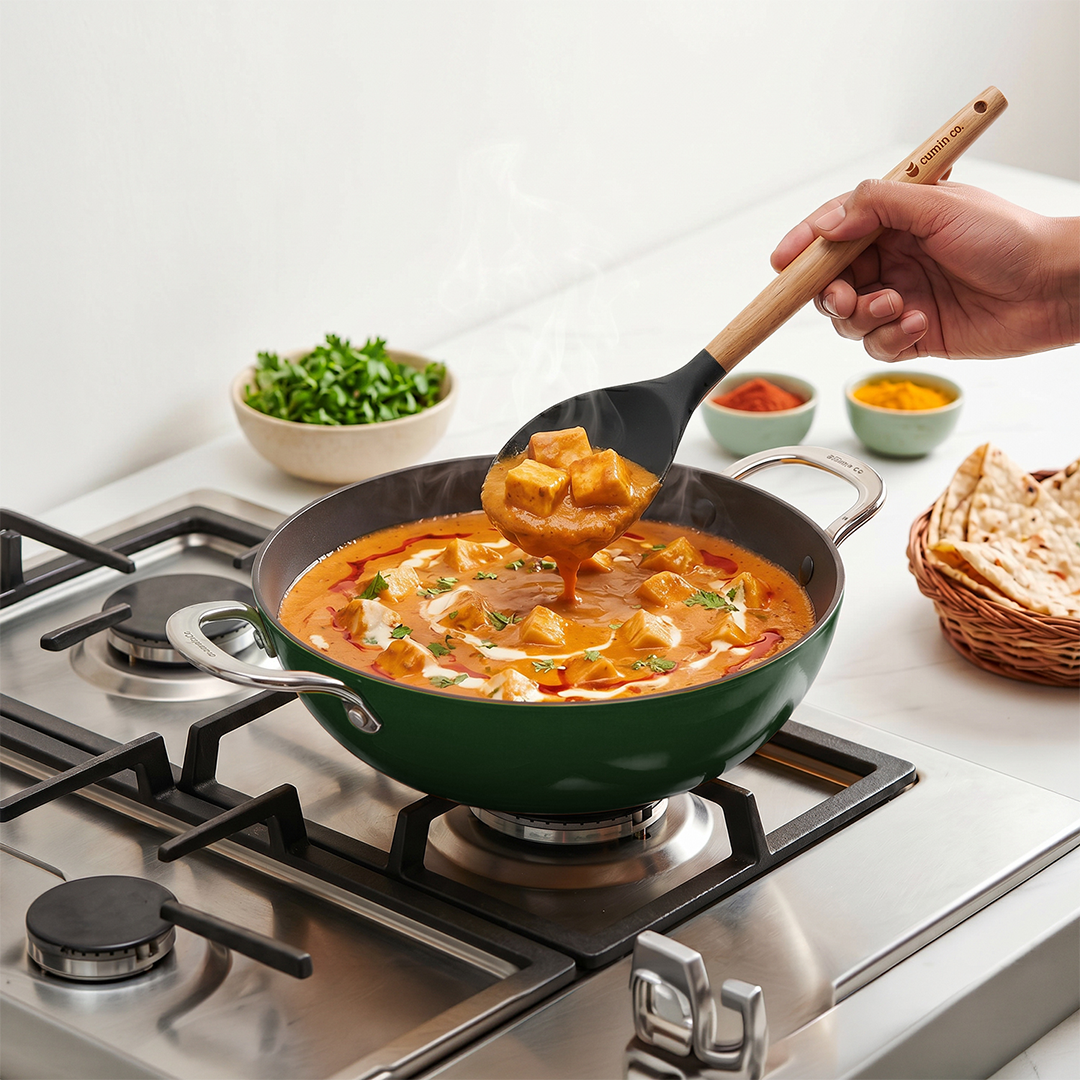
Sabzi, curries, and gravies. browning, onion tomato bases, curries that simmer for thirty to forty minutes without catching. The enamel is non reactive, so tamarind, tomato, and lemon finishes are all safe, and the fond that forms during browning deglazes straight into the gravy.
Deep frying. Pakoras, samosas, bhajiya, puris. Thermal mass keeps oil temperature stable between batches, and the deep wide profile reduces splatter compared with a shallow pan.
Biryani and dum cooking. The flat base spreads heat across the bottom layer instead of concentrating it in a central well, which is what stops the base catching before the top is done. The lid does real work here.
Kadhi, korma, and curd based gravies. Enamel is inert, so curd goes in without splitting from metal contact, something bare iron cannot promise.
Halwa and traditional sweets. Sooji and besan halwa need long, controlled roasting without temperature spikes. Thin cookware scorches the base before the middle is done, cast iron's mass prevents that.
Dry roasting spices, peanuts, whole spices. Enamel takes dry heat without damage, and unlike seasoned iron there is no oil layer to burn and taint the next dish. Keeping it at medium, empty high heat is the one condition enamel dislikes.
How to Use and Care for Your Enamel Kadai?
First use: rinse, dry, cook. No seasoning, no oil bake, no conditioning.
Preheat: medium, two to three minutes, then add oil. Cast iron at medium does what a thin pan does at high. Do not run it empty on a full flame.
Utensils: wood or silicone daily. Occasional metal is fine, daily metal scraping is not.
Cleaning: warm water and regular dish soap. No wire scrubbers. A short soak lifts stubborn residue without scrubbing.
Cooling: let it stand several minutes before it meets water, especially after frying. Hot enamel into cold water risks crazing.
The lid: set it down flat rather than resting it against the kadai rim. Rim chips come from impact, not from cooking.
Storage: anywhere, including humid or coastal kitchens. No oiling, no rust precautions.
Why Buy an Enamel Kadai from Cumin Co.?
Certified to food contact standards, US FDA and Germany's LFGB. LFGB is the demanding one, it tests migration and sensory transfer rather than composition alone, meaning the surface was tested for what actually moves into food, not just what the recipe says is in it.
Three patents on the enamel. Enviromax Pro is proprietary four layer titanium infused enamel, not a generic coating bought in. That formulation is what lets one surface be simultaneously non stick, rust proof, scratch resistant, and stable under acid at frying temperature.
A named exclusion list. Free of PTFE, PFOA, PFAS, lead, cadmium, mercury, and phthalates.