 Shop All
 Food Containers
 Cookware Sets
 Limited Edition Launches
 Bakeware
 Serveware
 Corporate Gifting

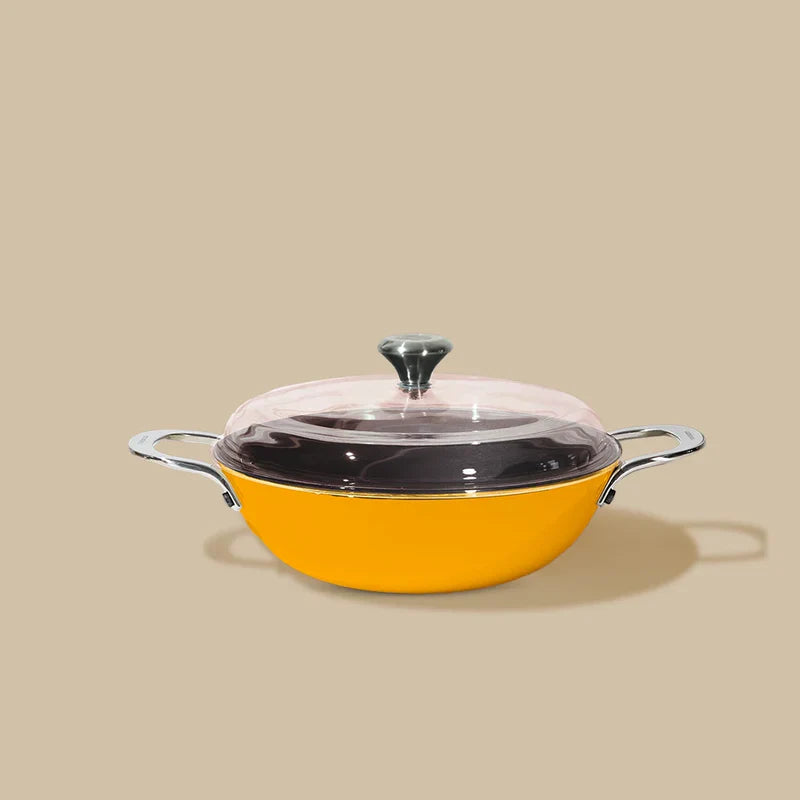

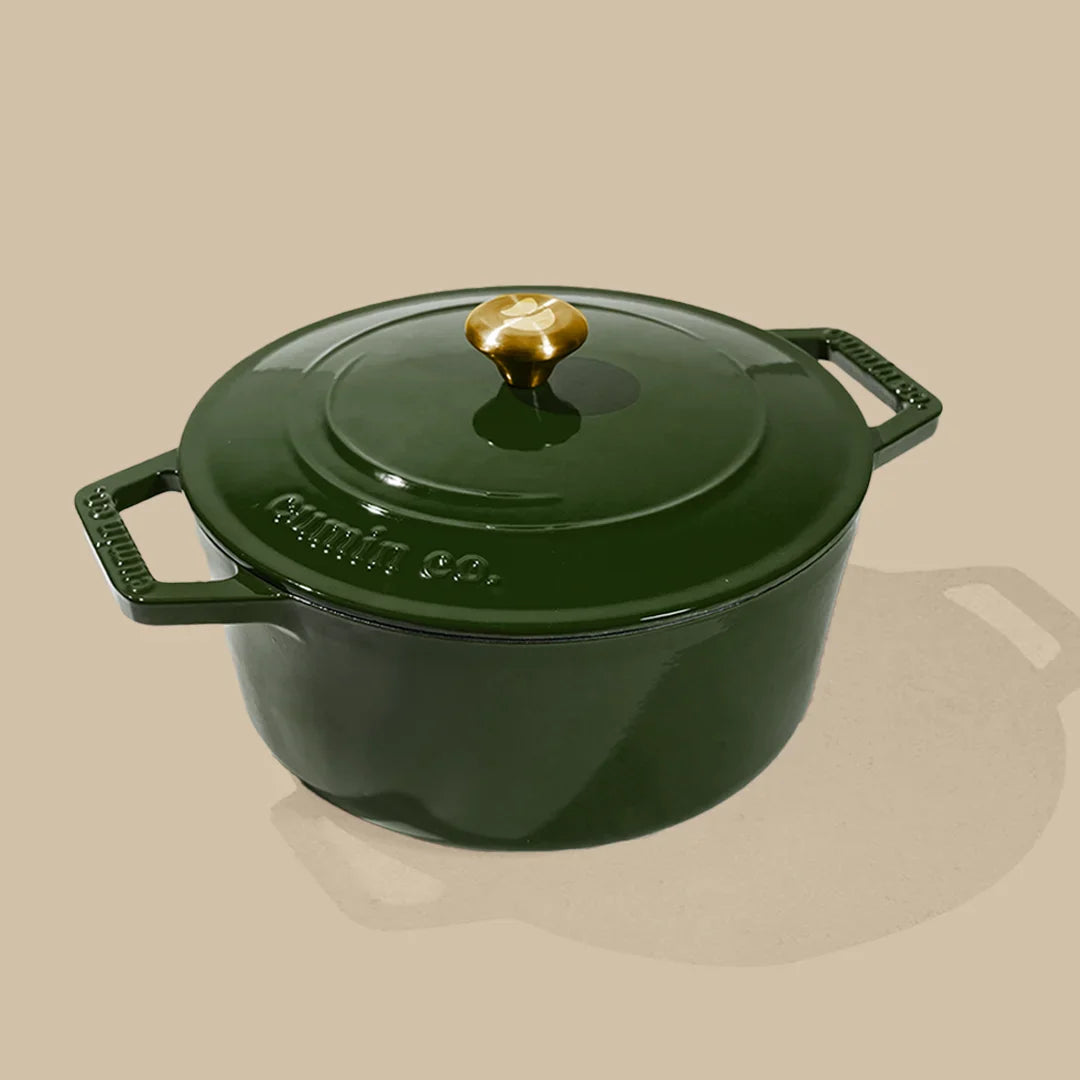
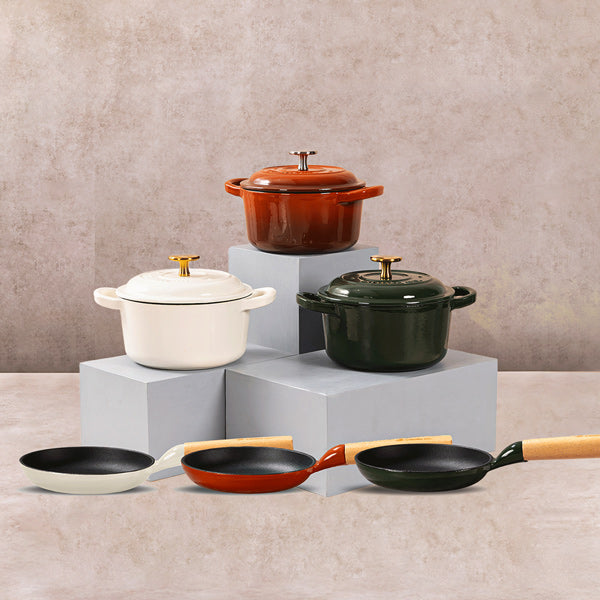

You've got a colourful pot on the stove and a quiet worry at the back of your mind. Is that coating leaching something into my food?
The short answer is no, as long as the enamel is intact and the cookware comes from a brand that tests for lead and cadmium. Enamel is glass, not a chemical coating. The real risks are cheap or vintage pieces, and enamel that has chipped or cracked.
Here's what we'll cover: what enamel is made of, whether it's safe to cook in, the actual health risks, what to do about chips and scratches, and how to look after your cookware so it lasts.
What Is Enamel Coating Made Of?
Enamel is powdered glass, usually silica or borosilicate frit, fused onto metal at around 800 to 900°C. At that heat the powder melts, spreads over the surface and hardens into a smooth, glassy layer. Once it's fully fused, it's inert. It doesn't react with food, it doesn't hold on to flavours, and nothing in it breaks down at normal cooking temperatures.
This also answers a question a lot of people search for: is enamel coating toxic? Enamel isn't made with PFAS, PTFE or PFOA, the chemicals people worry about in non-stick pans. It's a different material altogether.
That's also why "is enamel non stick cookware safe" is a slightly mixed-up question. Enamel isn't a non-stick coating in the first place. It's a glass surface, and food lets go of it because it's smooth, not because of a chemical film.
Is Enamel Coating Safe for Cooking?
Yes. Three things make enamel a good cooking surface.
-
It doesn't react with food. Glass has no metallic taste and doesn't change what you cook.
-
It's safe with acid. Tomato, tamarind, lemon and curd are all fine. Bare cast iron reacts with acid and can lose its seasoning. Enamel saves you from all of it.
-
No iron leaching. The enamel seals the iron underneath, so iron doesn't move into your food the way it can from bare cast iron. In short, no migration from the metal.
So the real safety question isn't the glass itself. It's what went into the glaze and how the finished product was tested. Several bodies set the rules on that.
|
Source |
What It Says |
Reference |
|
FDA |
Sets the limits on how much lead and cadmium can migrate from enamelled food-contact surfaces |
|
|
ISO 4531:2018 |
The international standard for vitreous and porcelain enamel, which limits how much lead, cadmium, nickel and other metals can leach out |
|
|
California Prop 65 |
Requires warnings on products that expose people to lead or cadmium above set levels |
|
|
ACerS (Everyday Life page) |
States that porcelain enamel is chemical-resistant and used in cookware |
|
|
ACerS (Ceramic-coated cookware article) |
Confirms that enamel and porcelain cookware doesn't contain PTFE or PFOA |
Real Health Risks of Enamel Cookware?
If you're wondering about the enamel cast iron health risk, it comes down to three things.
-
Lead and cadmium in cheap or vintage pieces. Older glazes, especially on imports made before 2000, sometimes used lead and cadmium to get bright colours and a shiny finish. These metals can migrate into food, particularly acidic food. The FDA says there's no known safe level of lead exposure, so this one is worth taking seriously.
-
Chipped or cracked enamel. Once the glass layer breaks, the metal underneath is exposed. Small glass-like fragments can also end up in food.
-
Thermal shock. Glass doesn't like sudden temperature changes. Dropping a hot pan into cold water can cause tiny cracks that grow over time.
None of these are a reason to avoid enamel altogether. They're a reason to be picky. Reputable brands test their cookware against FDA limits. When you're buying, check the product page or label for a lead-free and cadmium-free statement, and look for those standards by name. If it’s absent or isn’t in those exact terms, look for better clarity.
Cumin Co.'s enamel cookware is made with Enviromax Pro technology, a proprietary coating process built for durability and chip resistance. The enamel is [FDA food contact compliant], which means lead and cadmium don't migrate into food. Every piece comes with years of warranty on the enamel coating.
Is Chipped or Scratched Enamel Cookware Safe?
It depends on where the damage is.
-
Minor scuffs on the outside: Cosmetic and safe. They don't touch your food and mean that function hasn’t dropped.
-
Chips on the inside cooking surface: stop using the pot or replace it.
The reason is simple. Exposed cast iron can rust and react with acidic food, and enamel fragments are glass-like, so you don't want them in a meal.
What about light scratches? If a utensil leaves a mark that doesn't go through to the metal, it's mostly a sign the surface is wearing. Keep an eye on it. If you can see bare metal, treat it like a chip.
When to retire your cookware
-
You see a chip or flake on the inside, where food touches the pot
-
Grey or black metal shows through anywhere on the cooking surface
-
Rust spots appear inside the pot
-
A web of fine cracks spreads across the interior, or enamel comes off into your food
How to Use Enamel Cookware Safely?
Looked after properly, enamel cookware is low effort. A few habits do most of the work.
-
Use low to medium heat. Enamel holds heat very well, so you don't need a very high flame to get a good result.
-
Skip metal utensils. Use wooden, silicone or other food-grade spatulas so the surface doesn't get scratched.
-
Avoid thermal shock. Never put cold water on a hot pan. Let it cool down first.
-
Hand wash with a soft sponge. Cumin Co. Dishwash Cream works well for this, and it's gentle on the enamel.
-
Check for chips regularly. Run your eye and finger over the inside now and then, especially after a heavy cooking week.
FAQs
Is enamel cast iron cookware healthy for Indian cooking?
Yes, and it suits it well. Curries, dals and slow braises often use tomato, tamarind or curd, and these are exactly the foods that bare cast iron doesn't like. Enamel doesn't react with acid, so you won't get a metallic taste or a stripped surface. For tamarind and tomato-heavy cooking, that's a real advantage over bare iron and metals like aluminium.
What makes enamel cookware non-toxic? What to look for when buying?
A few things. Look for a lead-free and cadmium-free certification. A mention of ISO 4531 on the product page is a good sign too. Country of manufacture also matters, because it tells you whose testing and rules the product was made under. Cumin Co.'s enamel cookware is certified and tested for heavy metals.
How long does enamel cookware last?
Decades, with proper care. Enamel doesn't wear away like a sprayed coating. What shortens its life is impact, thermal shock and rough scrubbing, so avoid those and a good piece can outlast the kitchen it's in.