

 Food Containers
 Cookware Sets
 Limited Edition Launches
 Bakeware
 Serveware
 Corporate Gifting




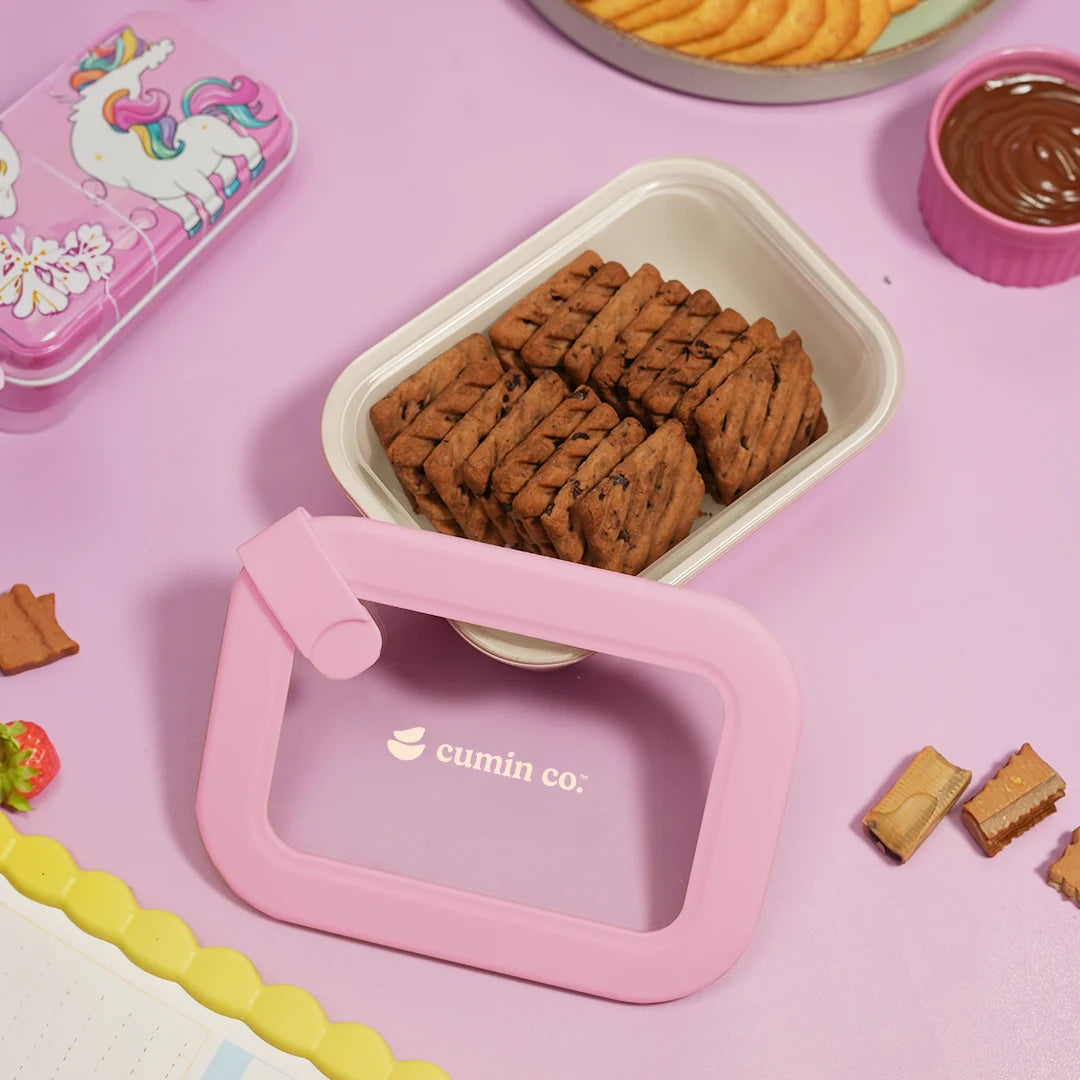
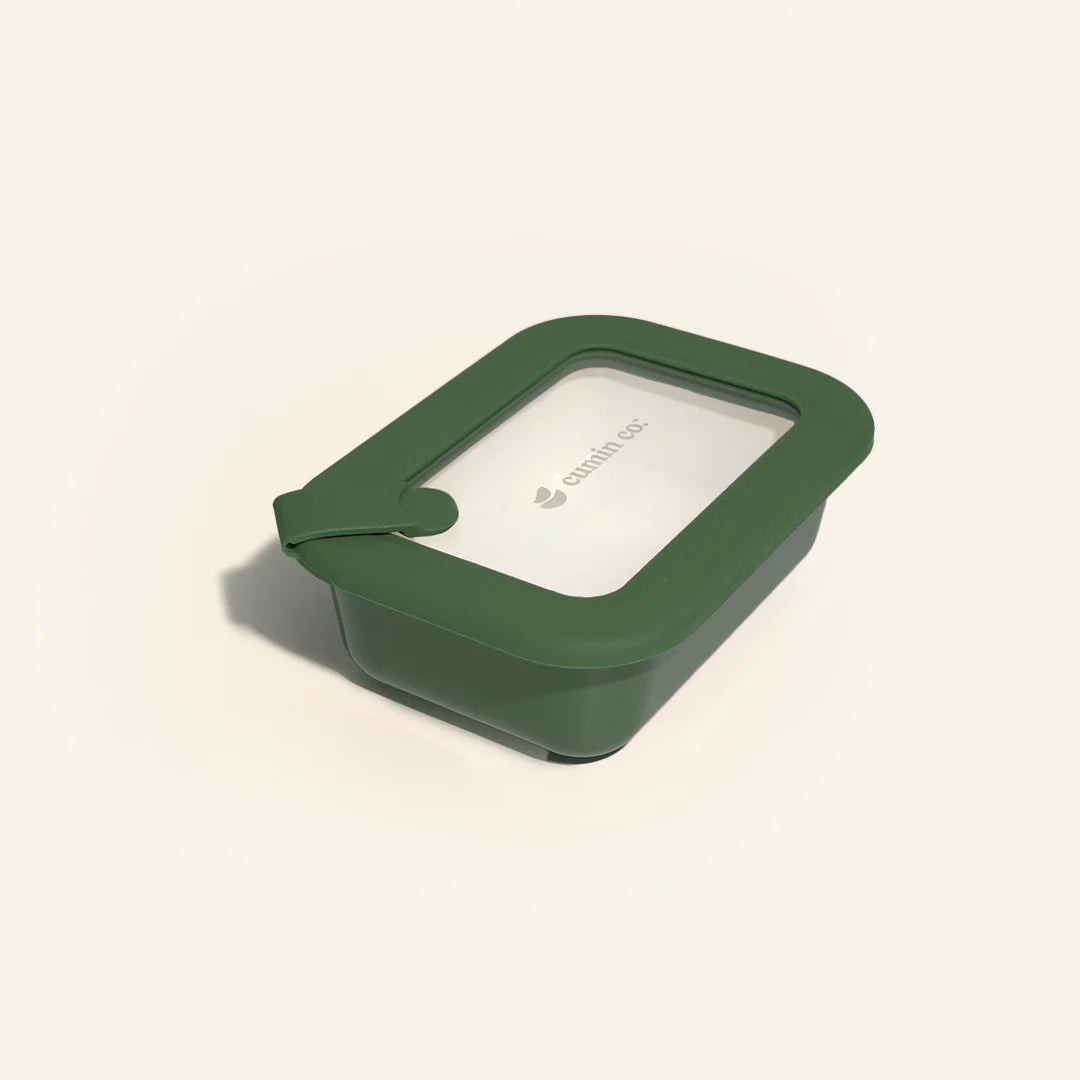
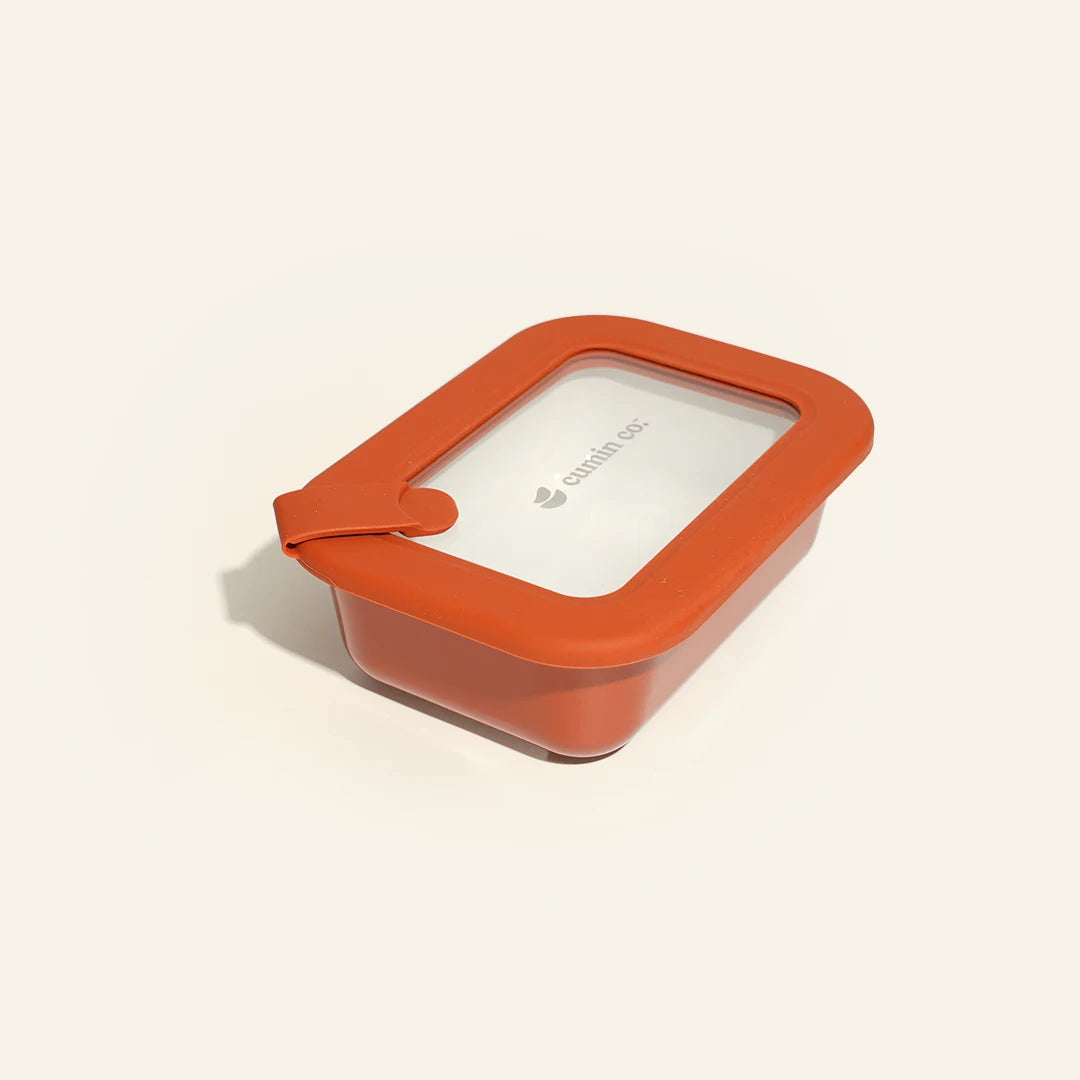
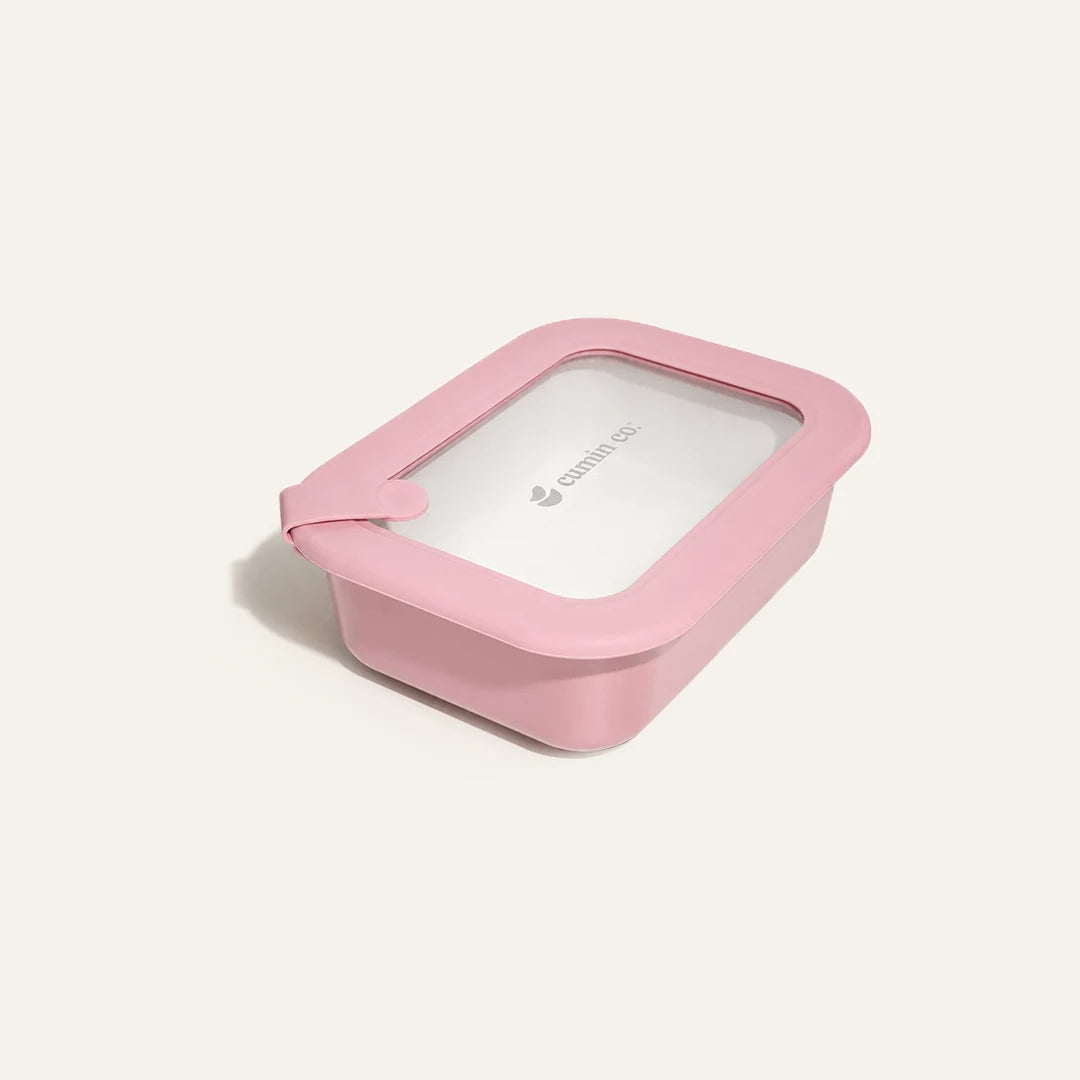
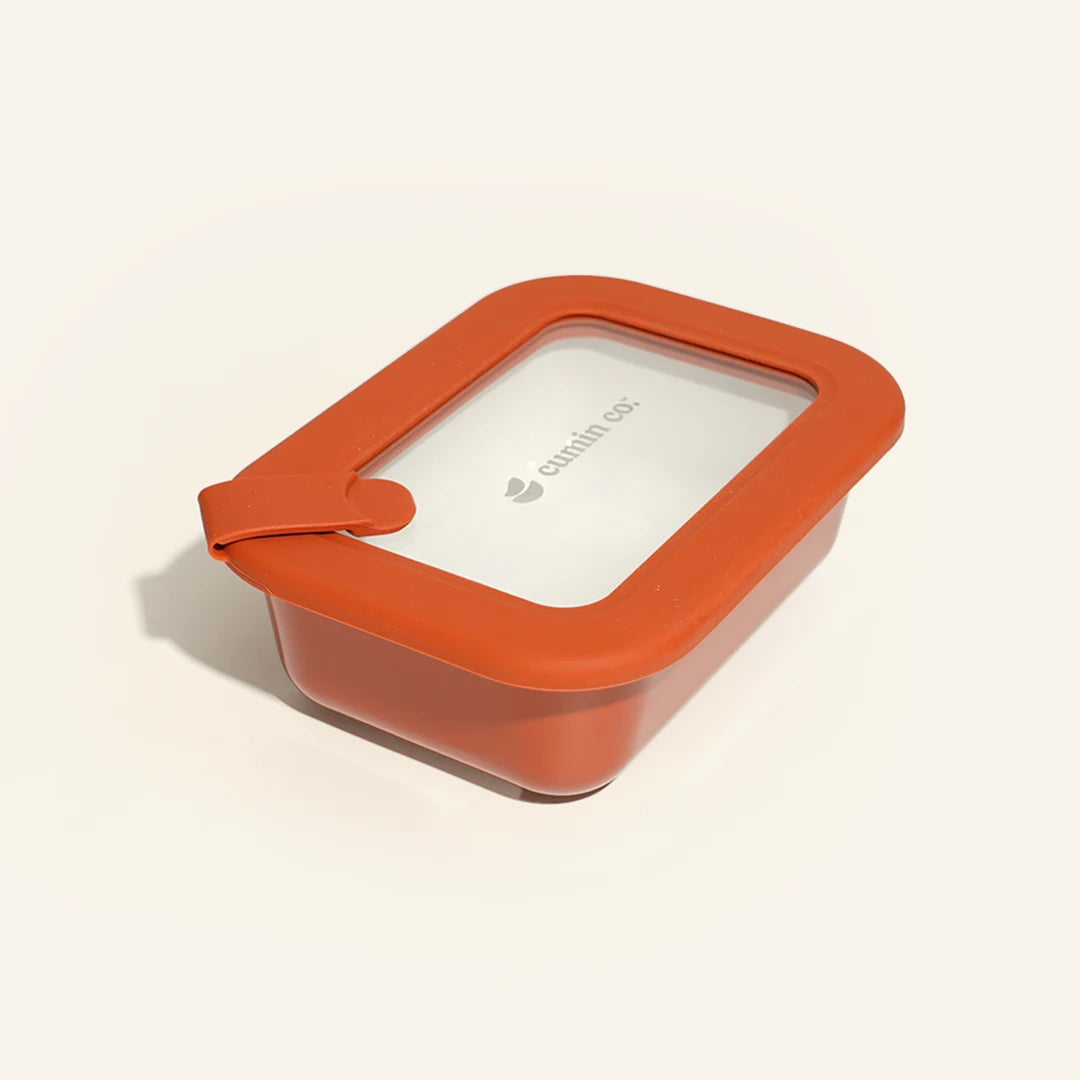
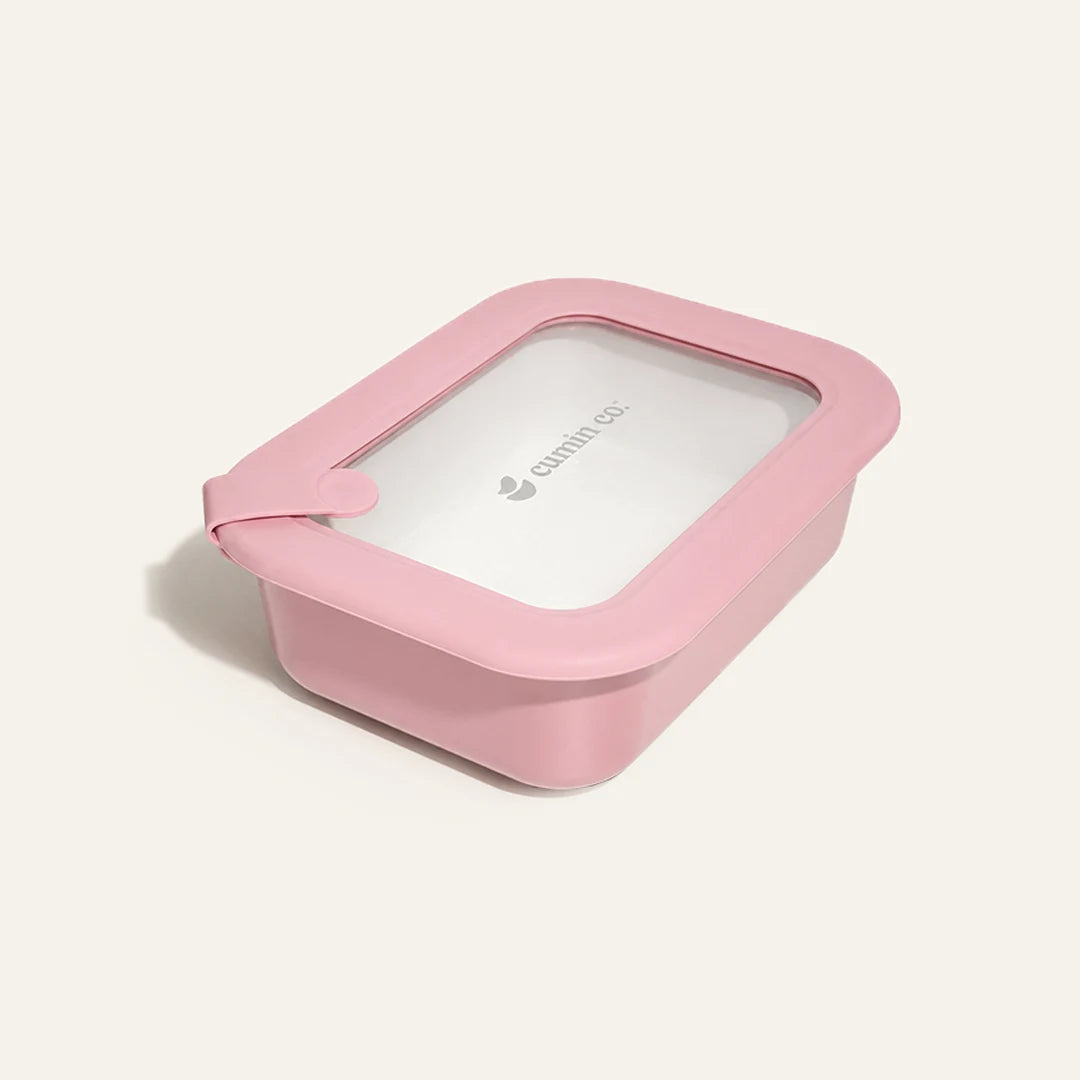
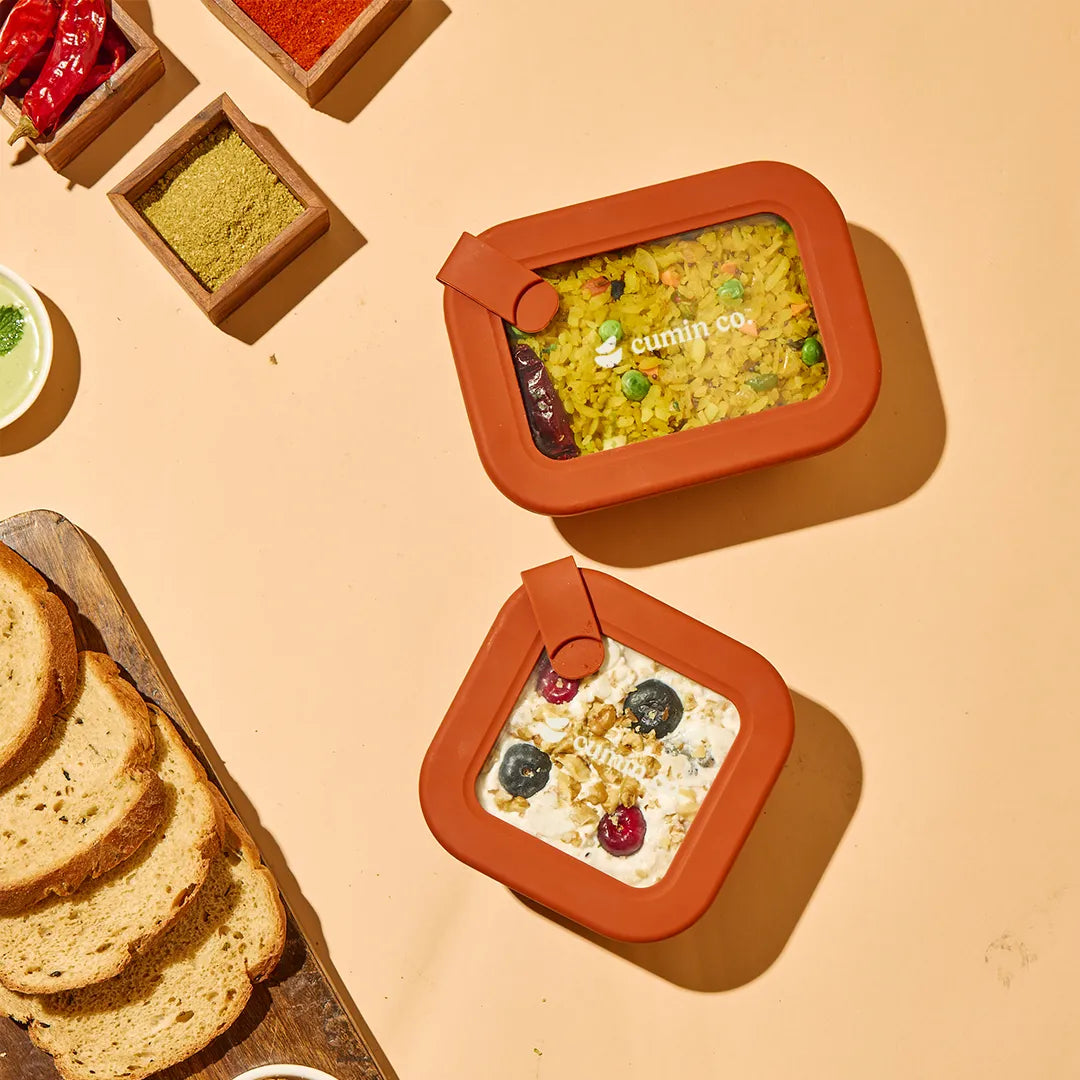
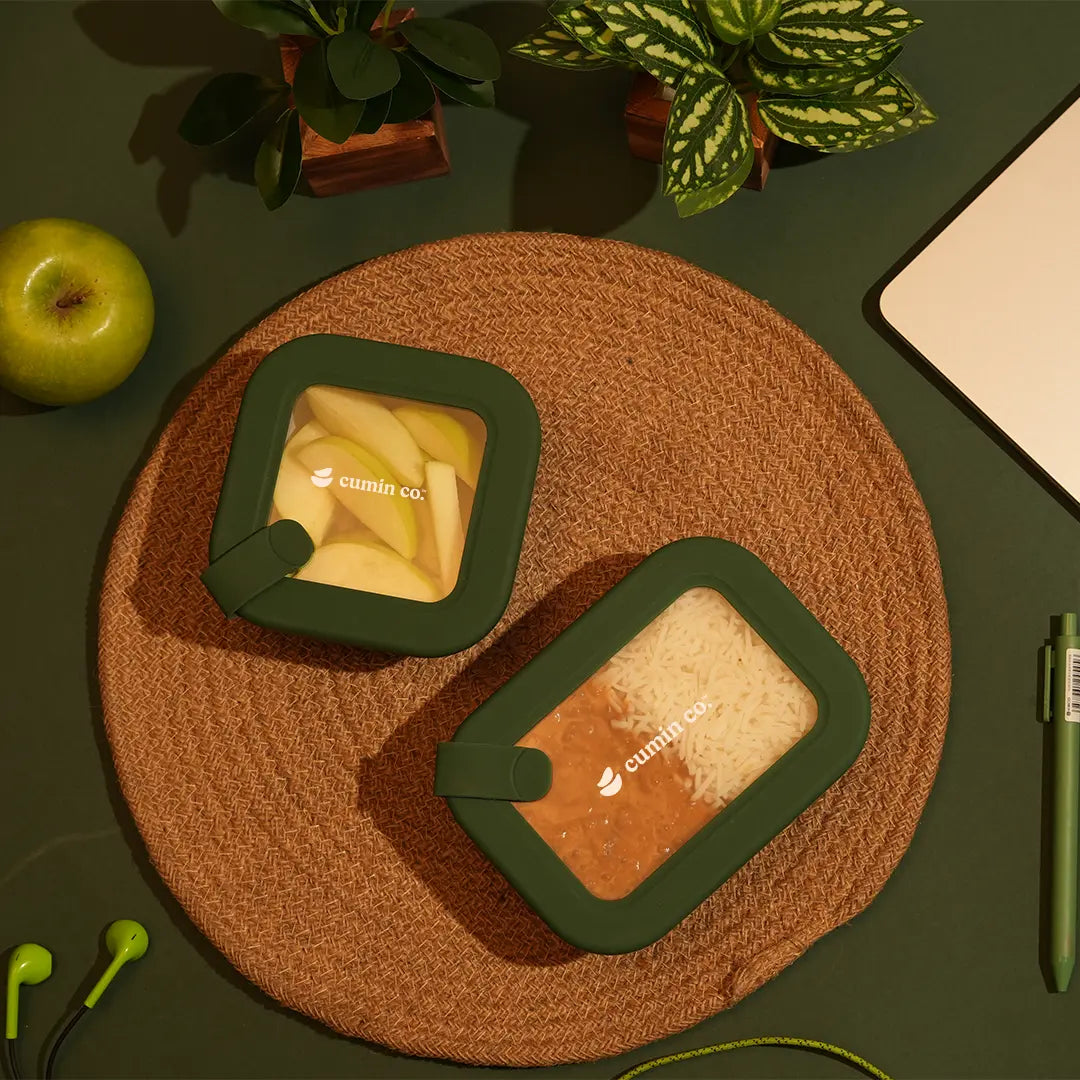


Borosilicate Glass Fridge Storage Containers That Keep Food Fresh, Visible & Toxin-Free: Airtight Fridge Organiser
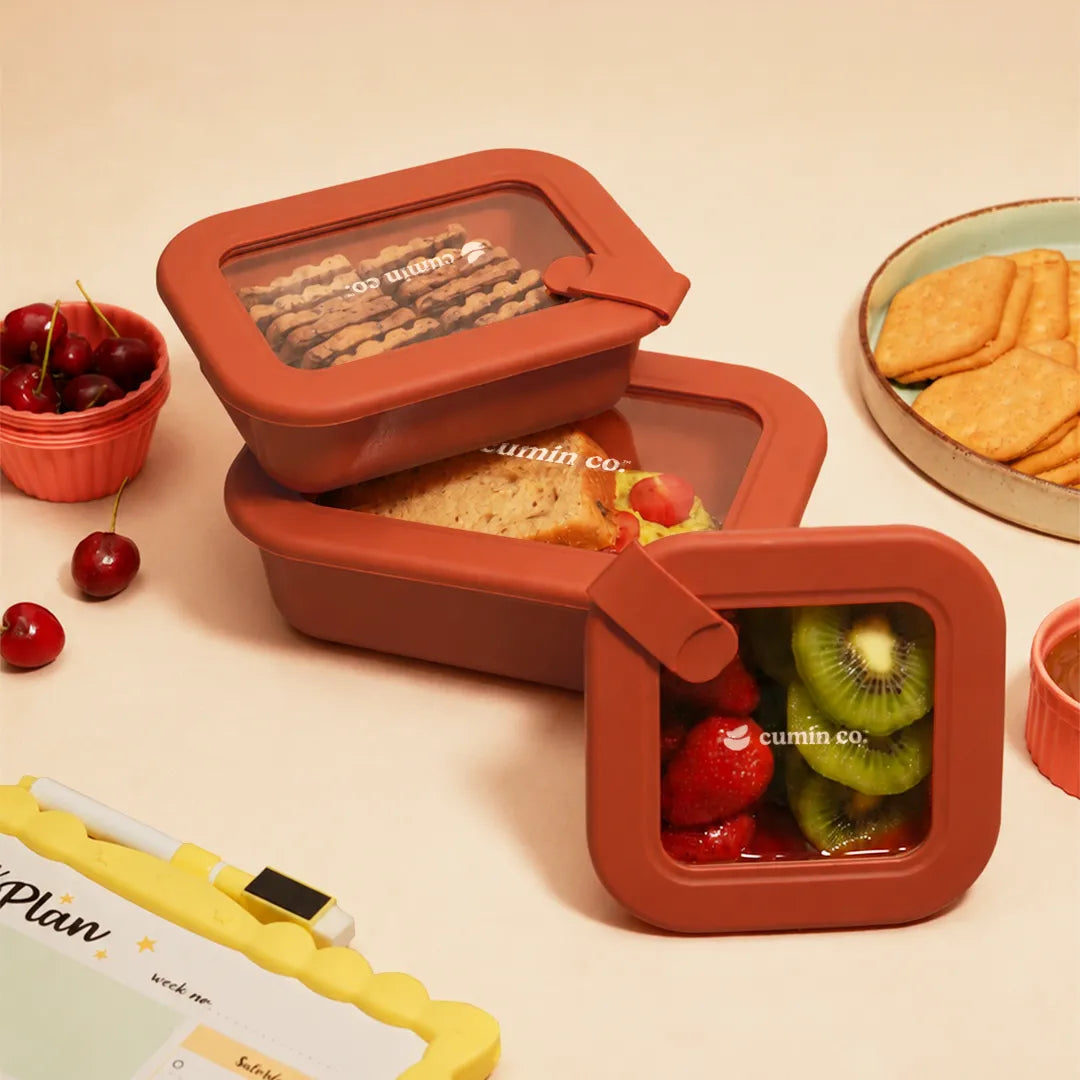
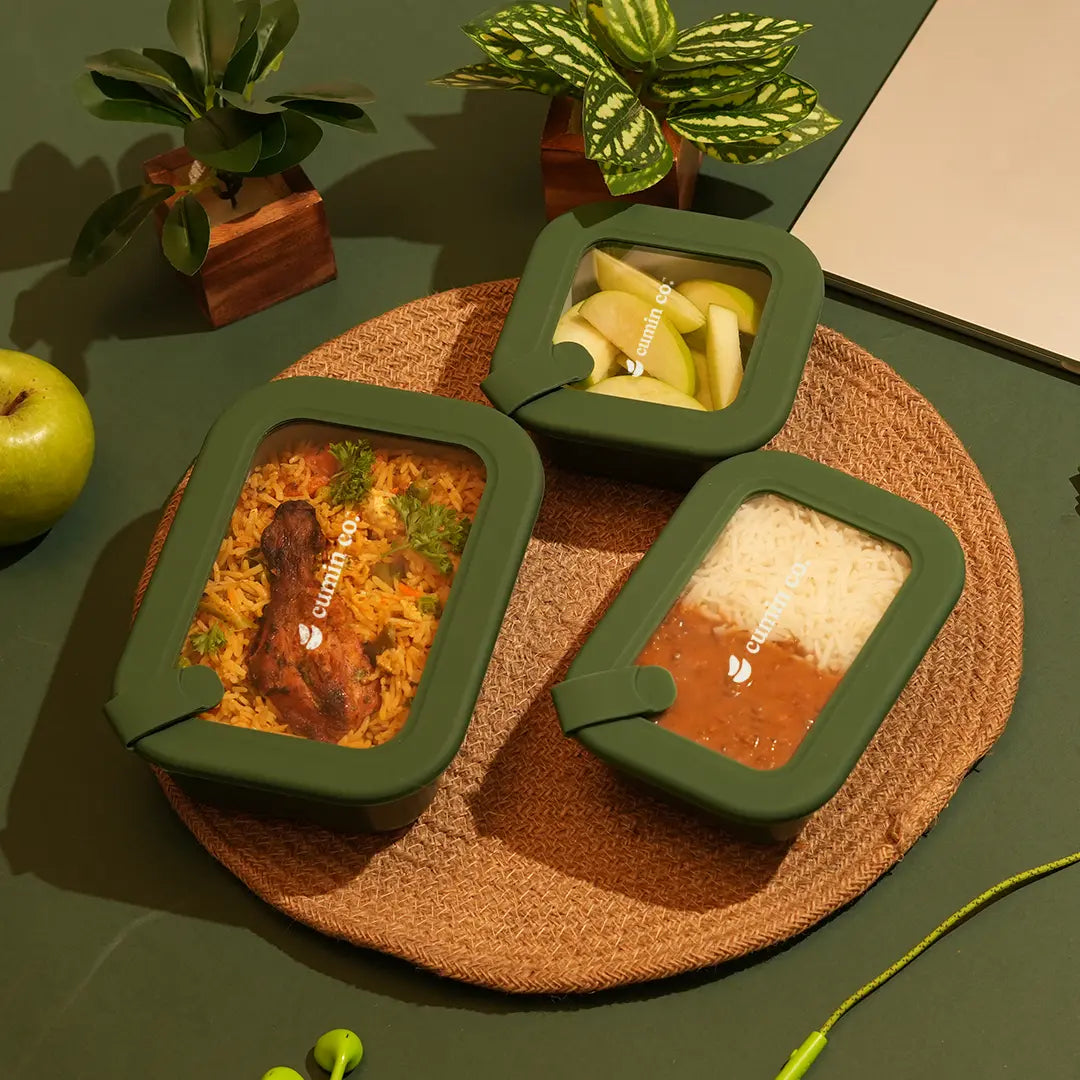
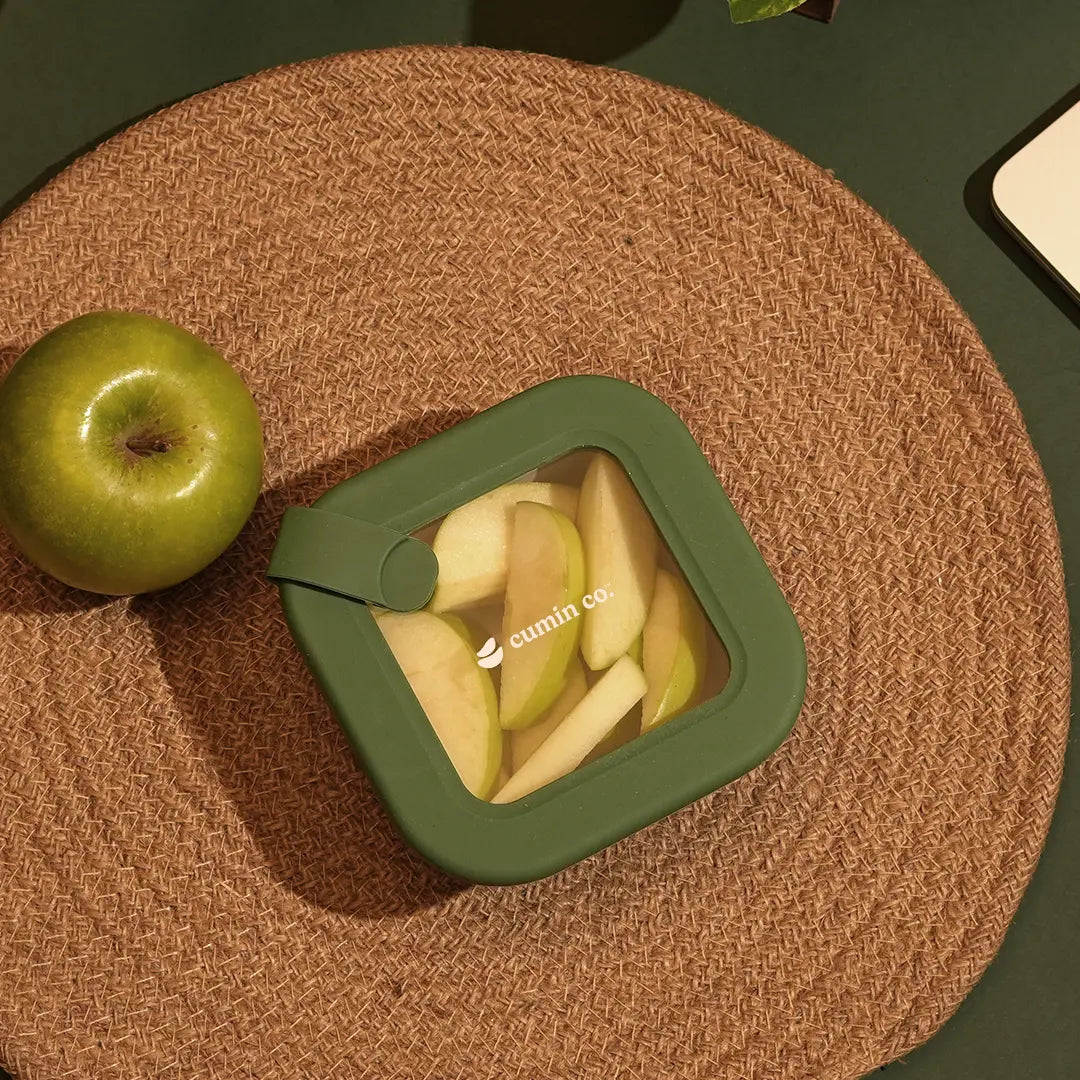
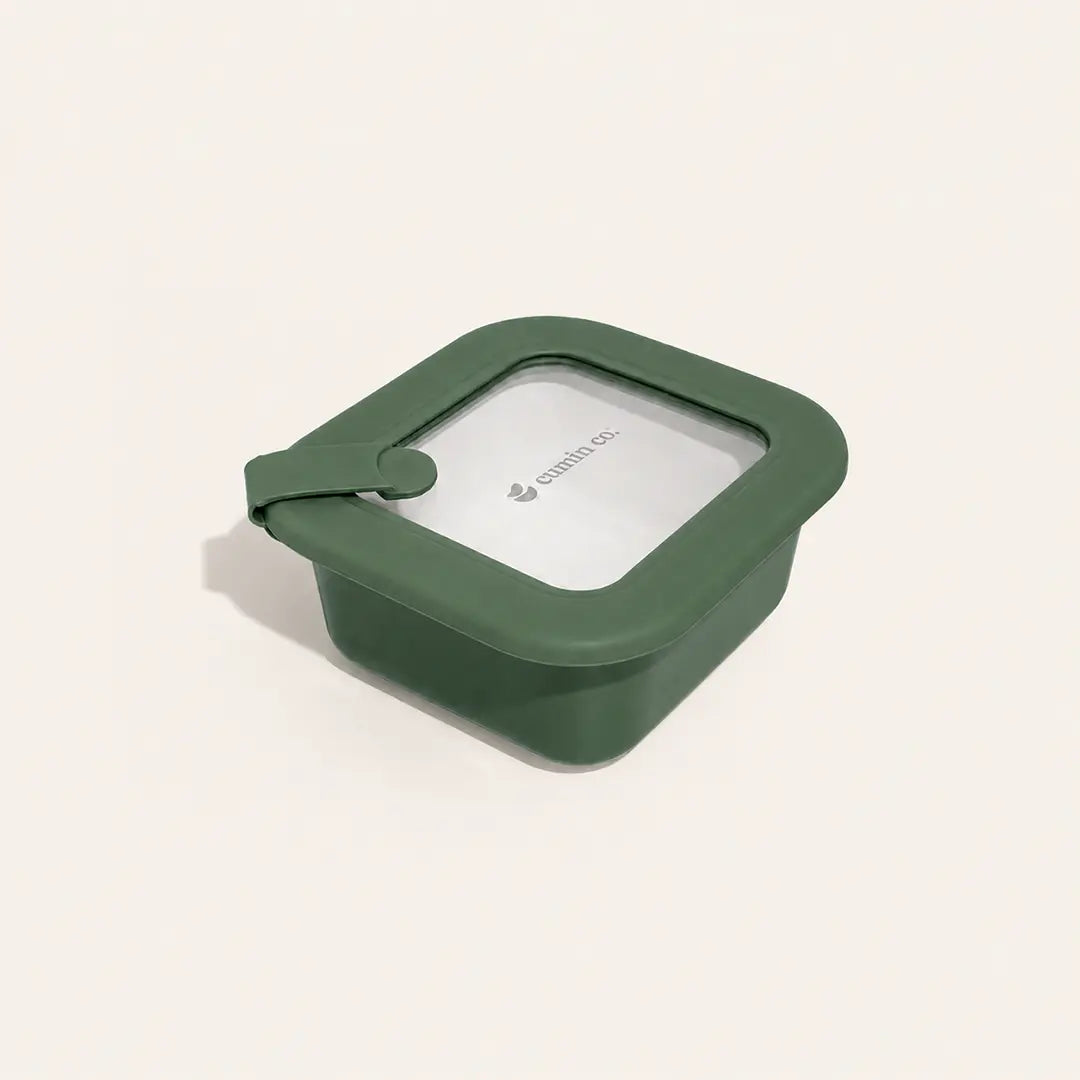
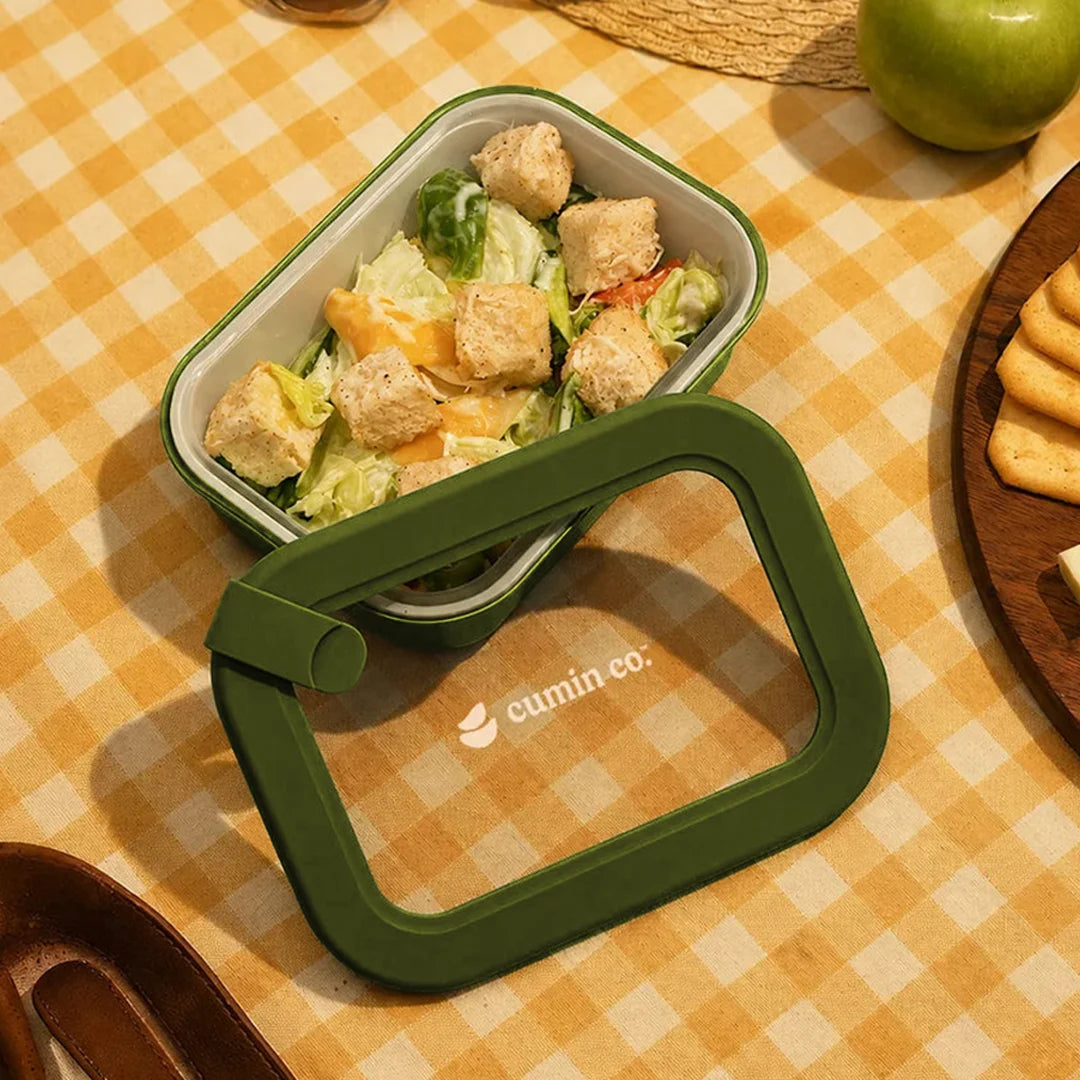
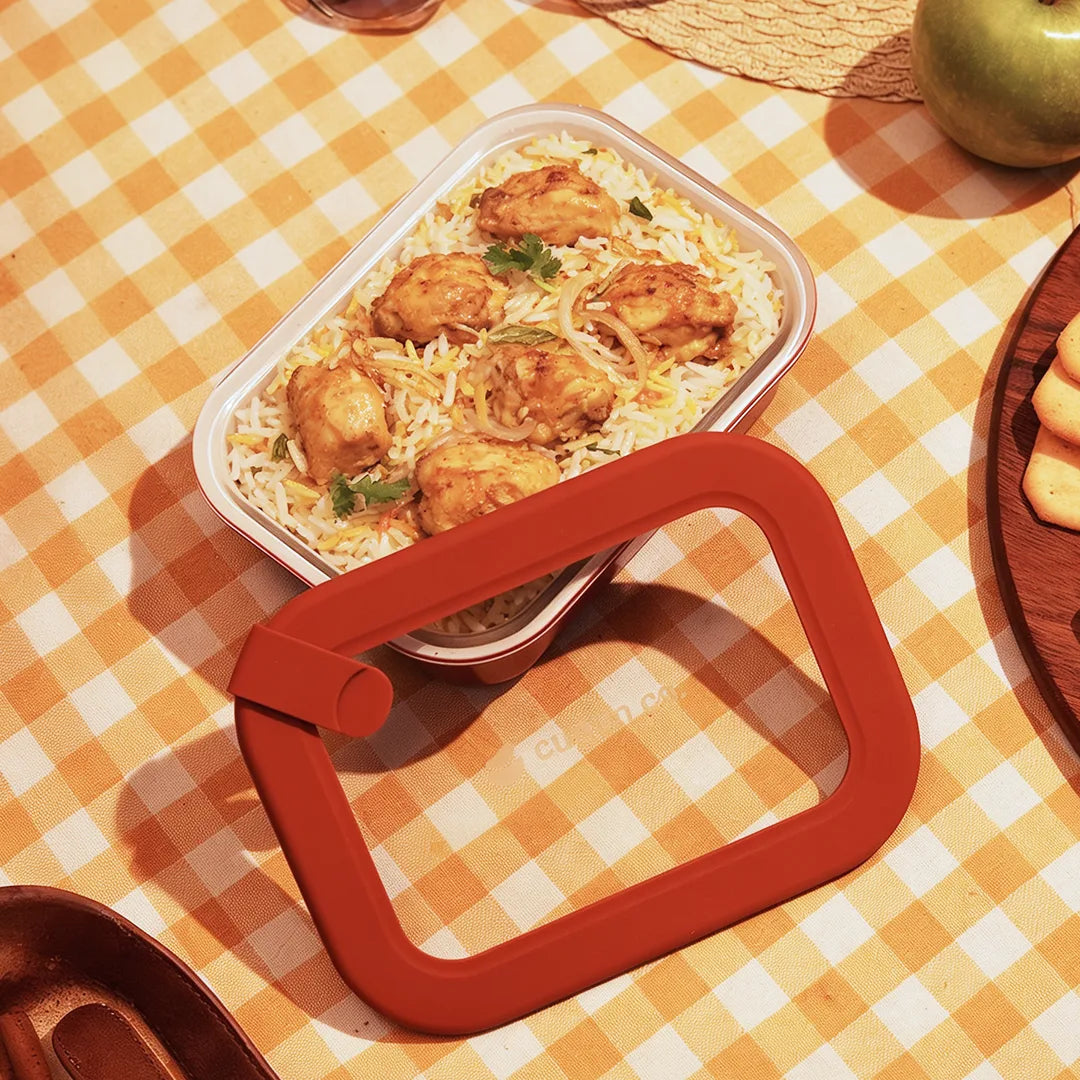
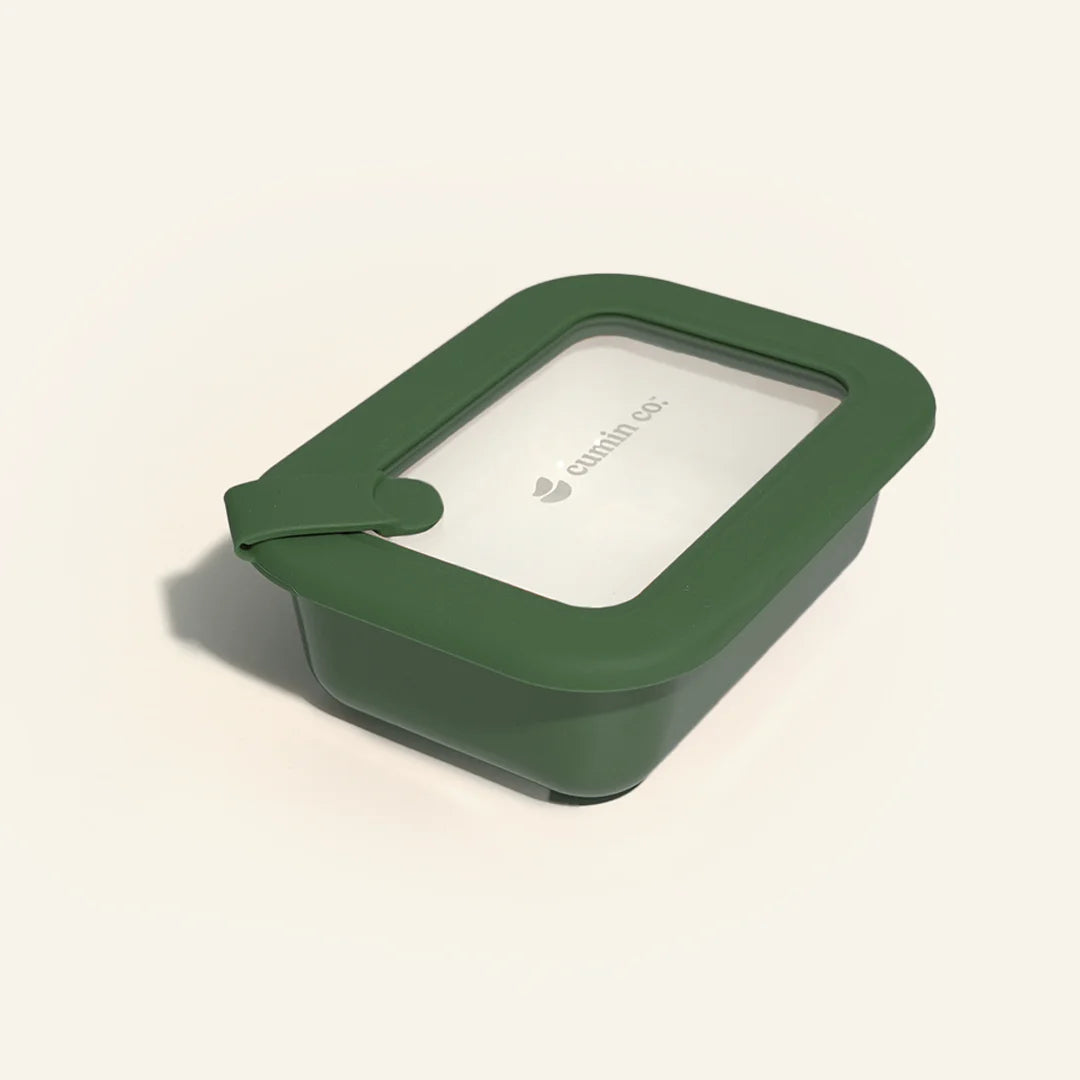
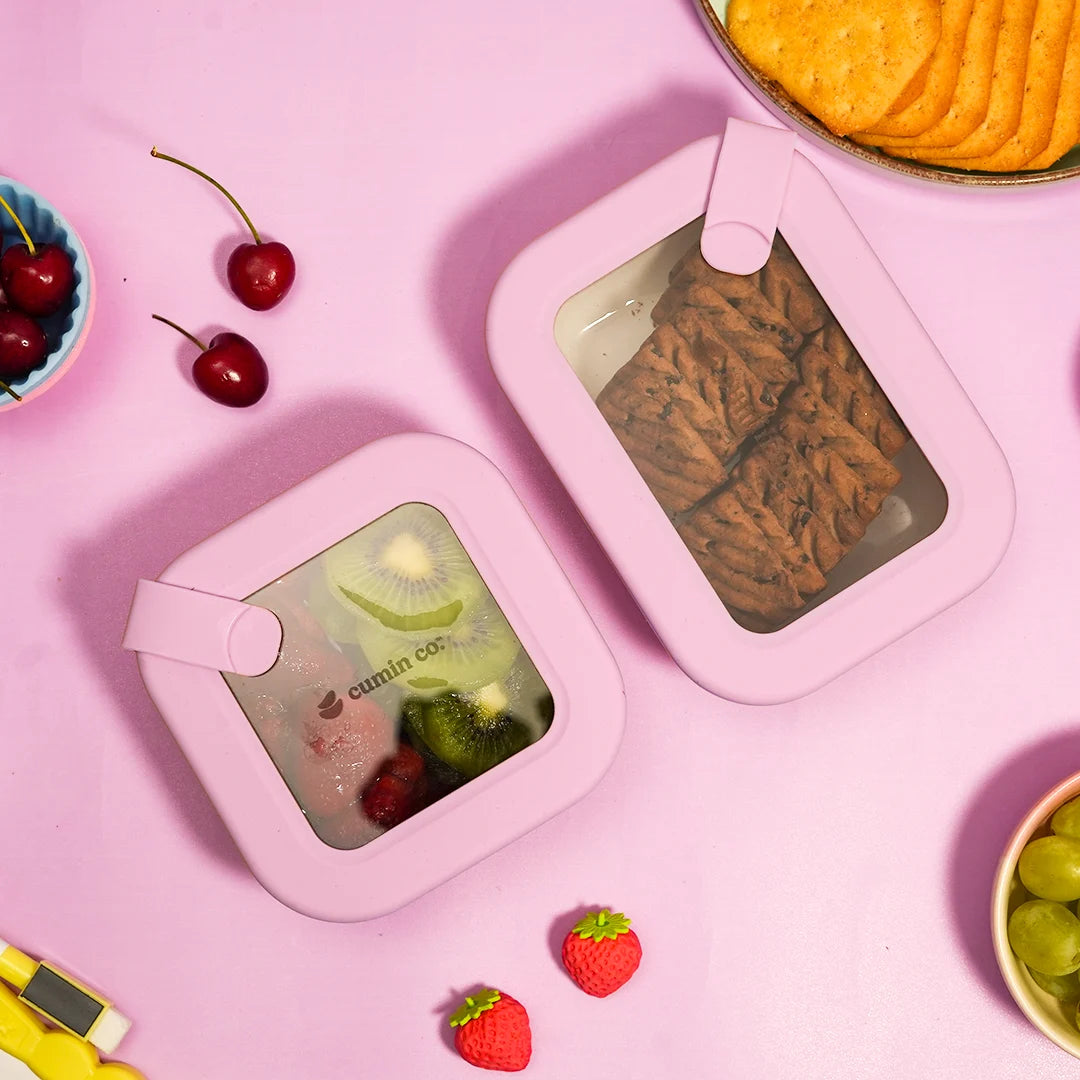
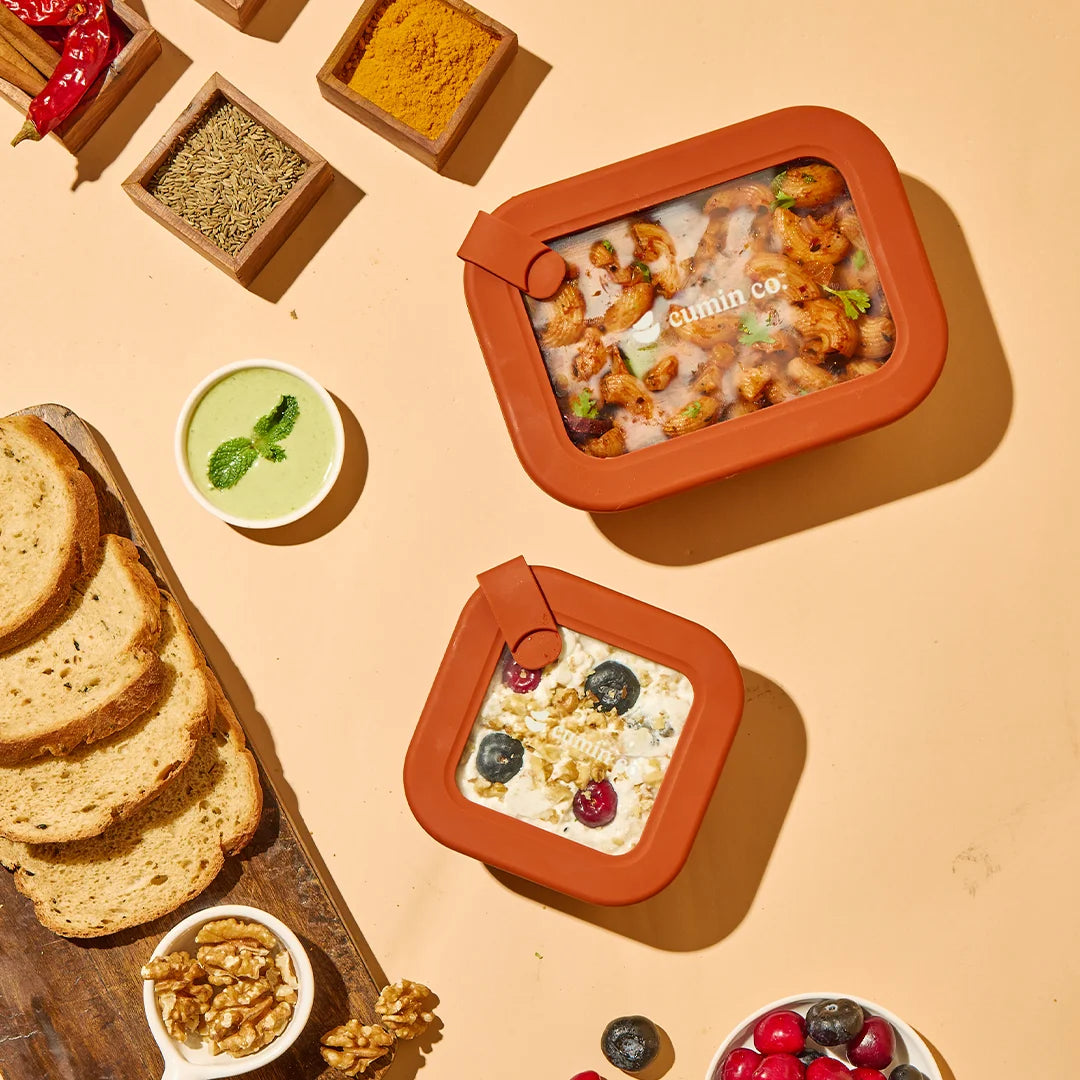
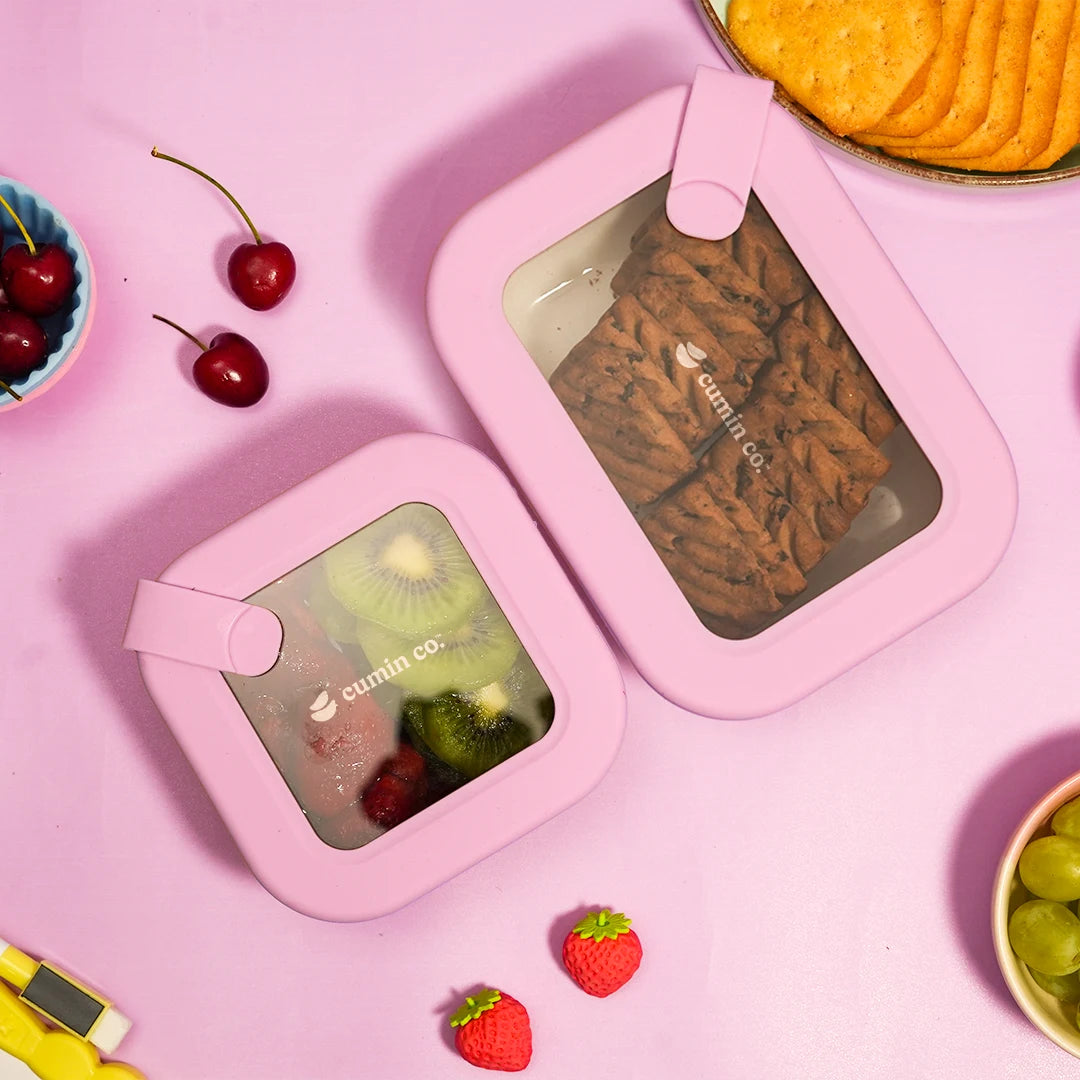
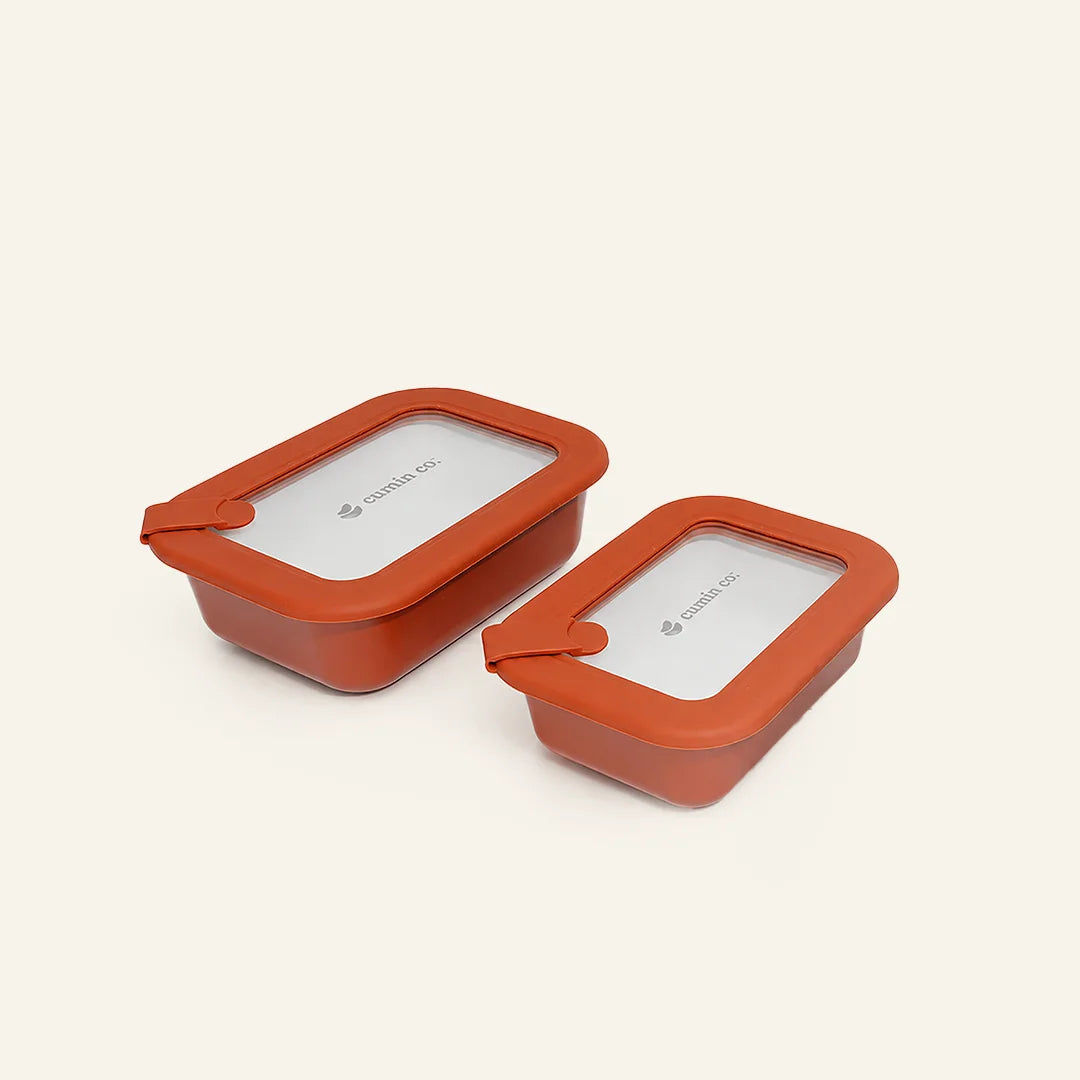
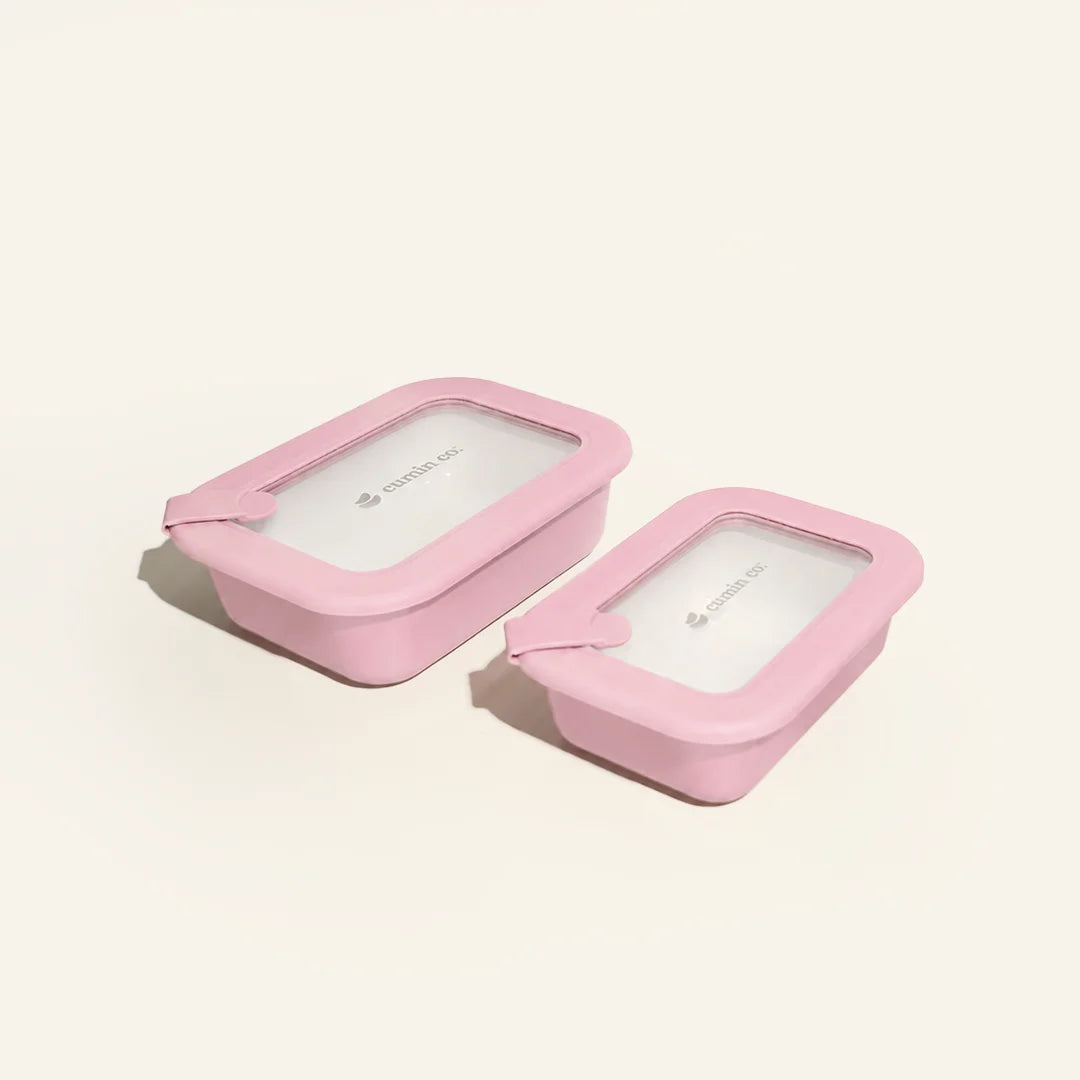
Open most Indian fridges and the story is the same. Stained containers, lids that no longer match their base, and at least one container at the back nobody can identify without opening it. Cumin Co.'s glass fridge containers are built to end that cycle. High borosilicate glass, BPA-free Silicone lids, and a surface you can see straight through. If you can see it, you eat it before it goes bad. Plastic rarely gives you that chance.
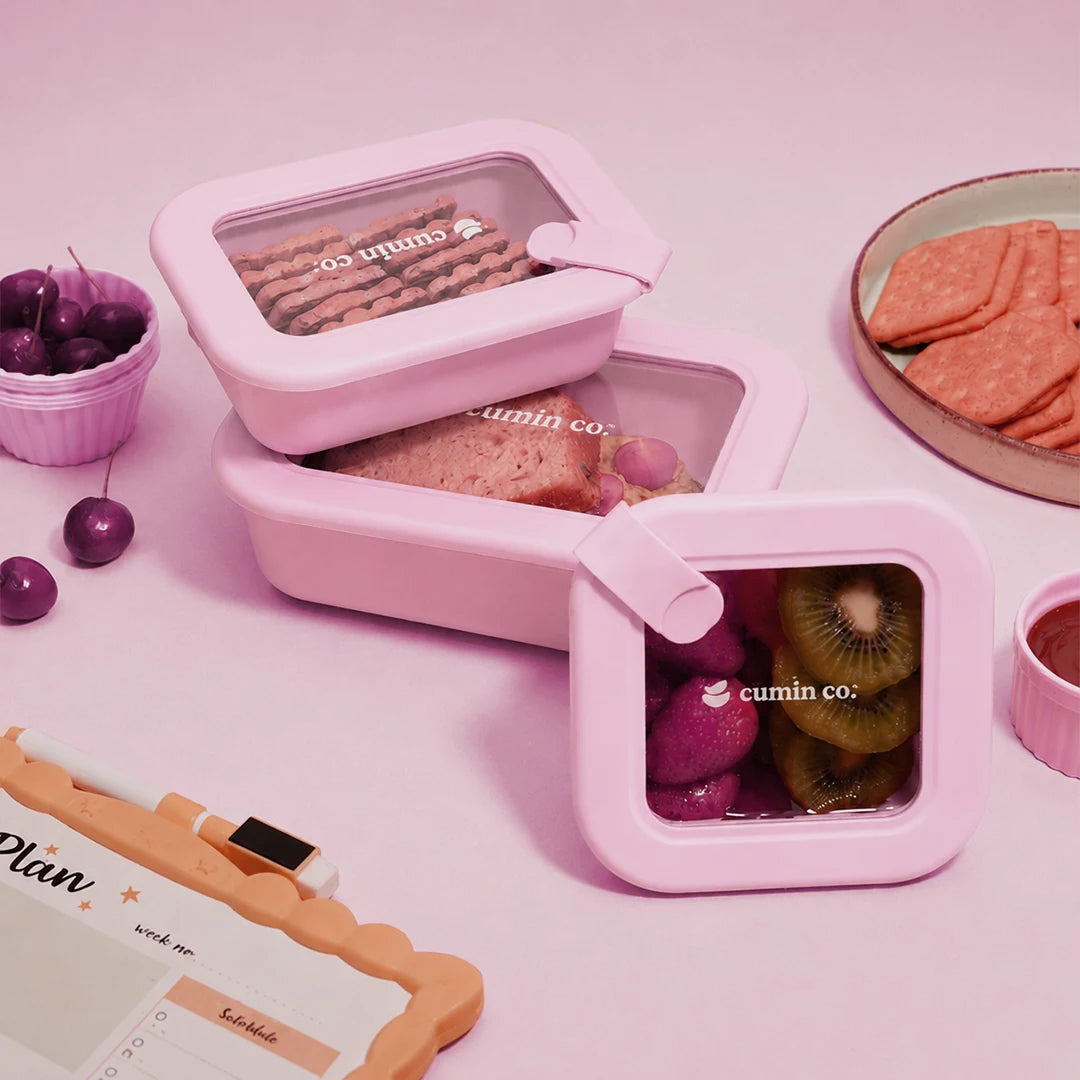
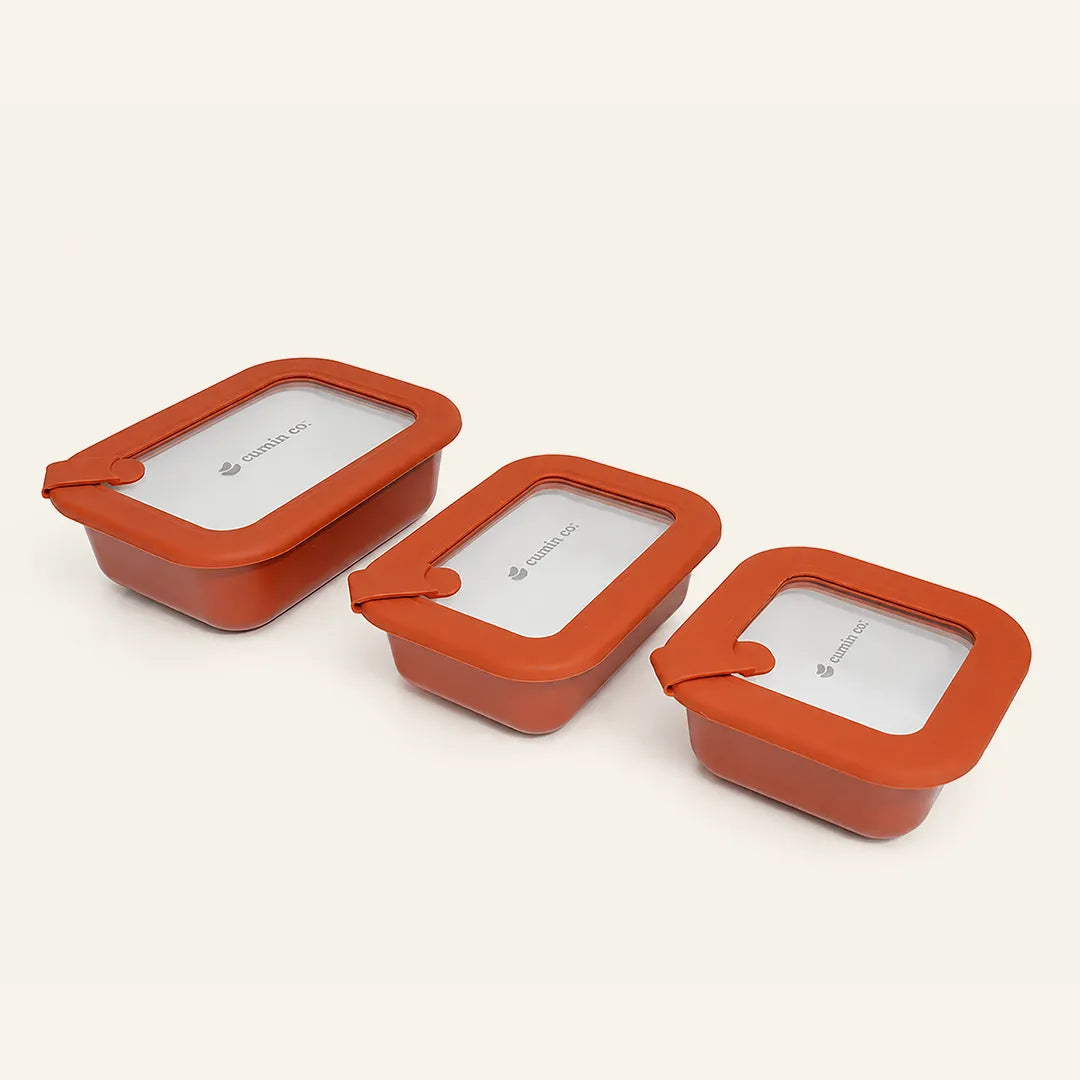
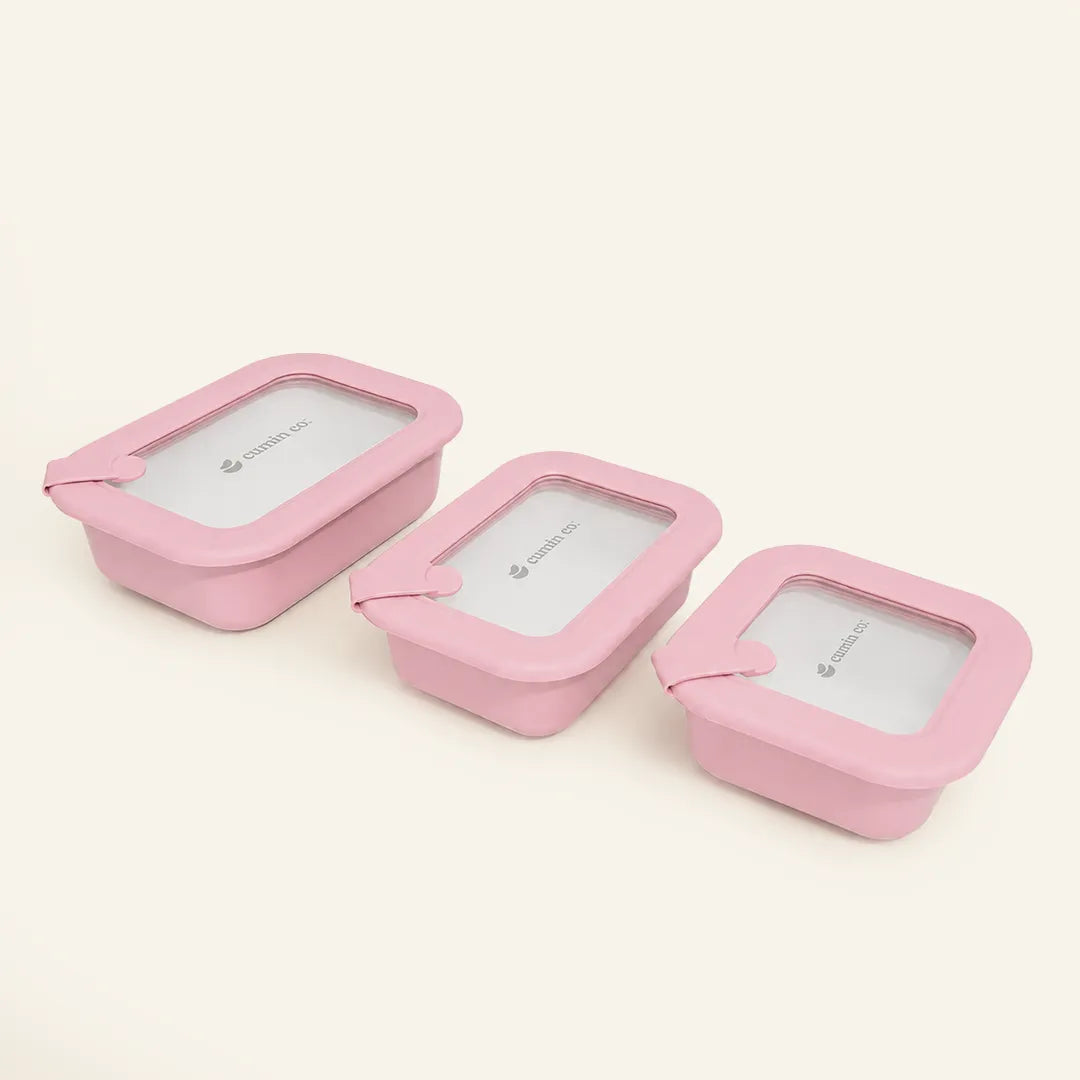
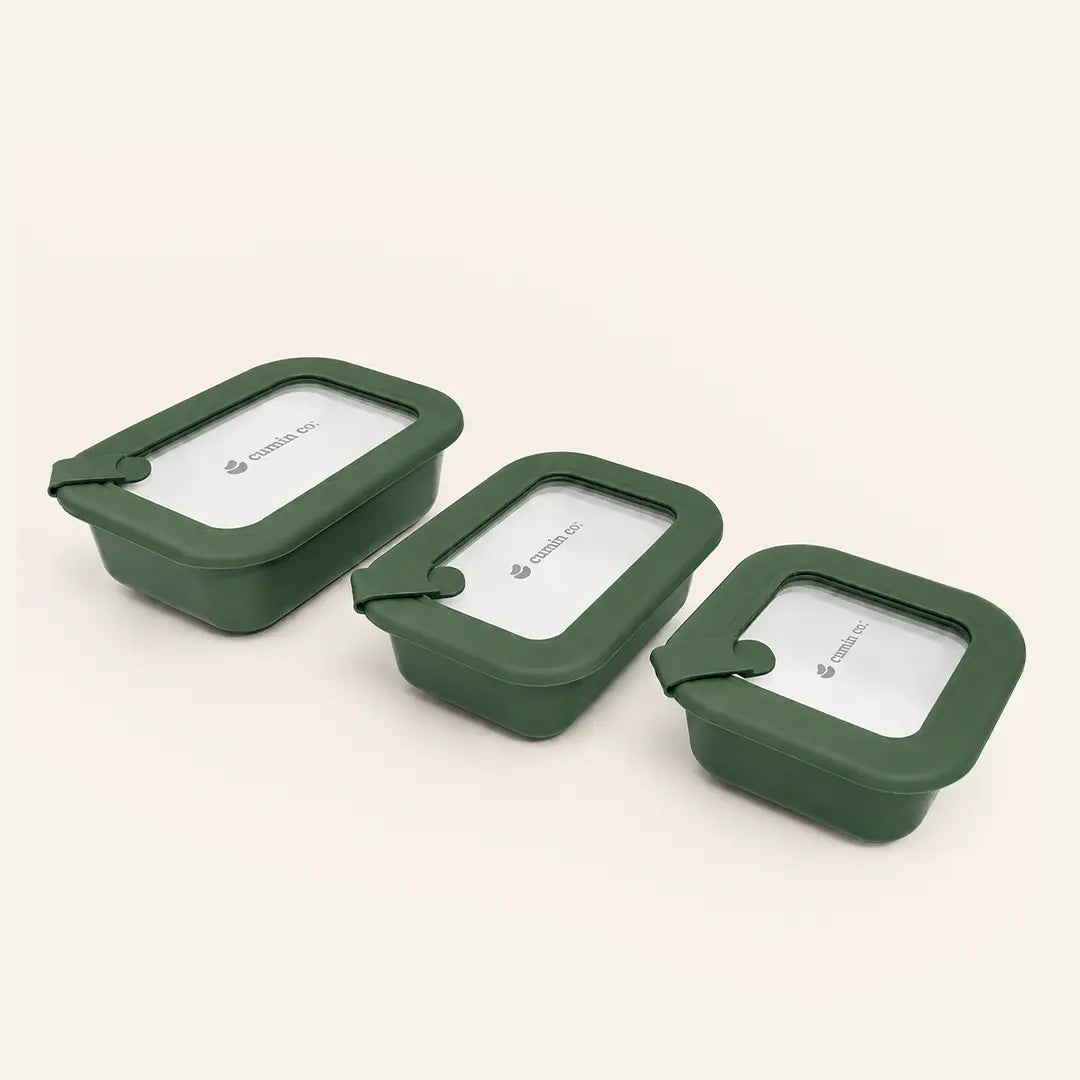
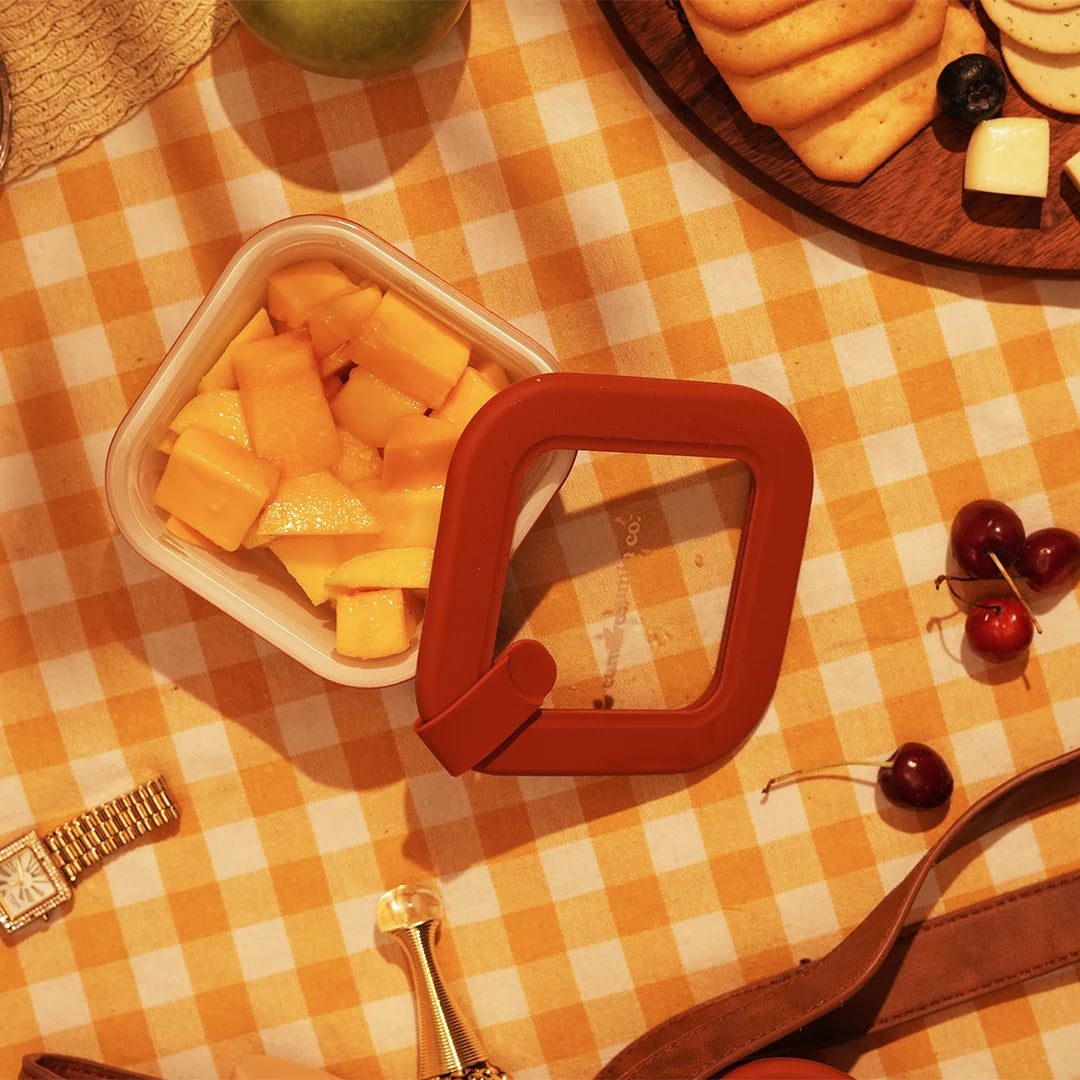
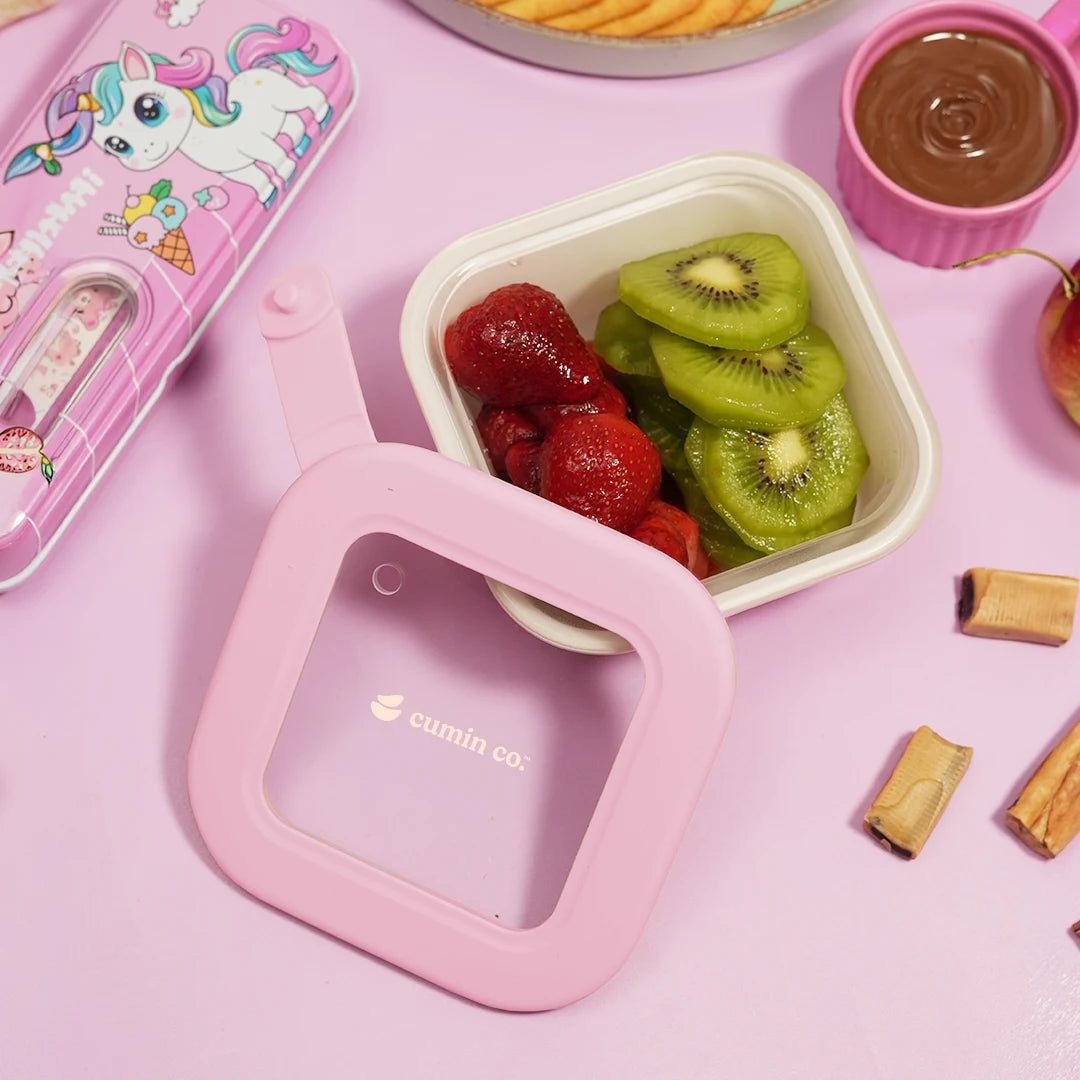
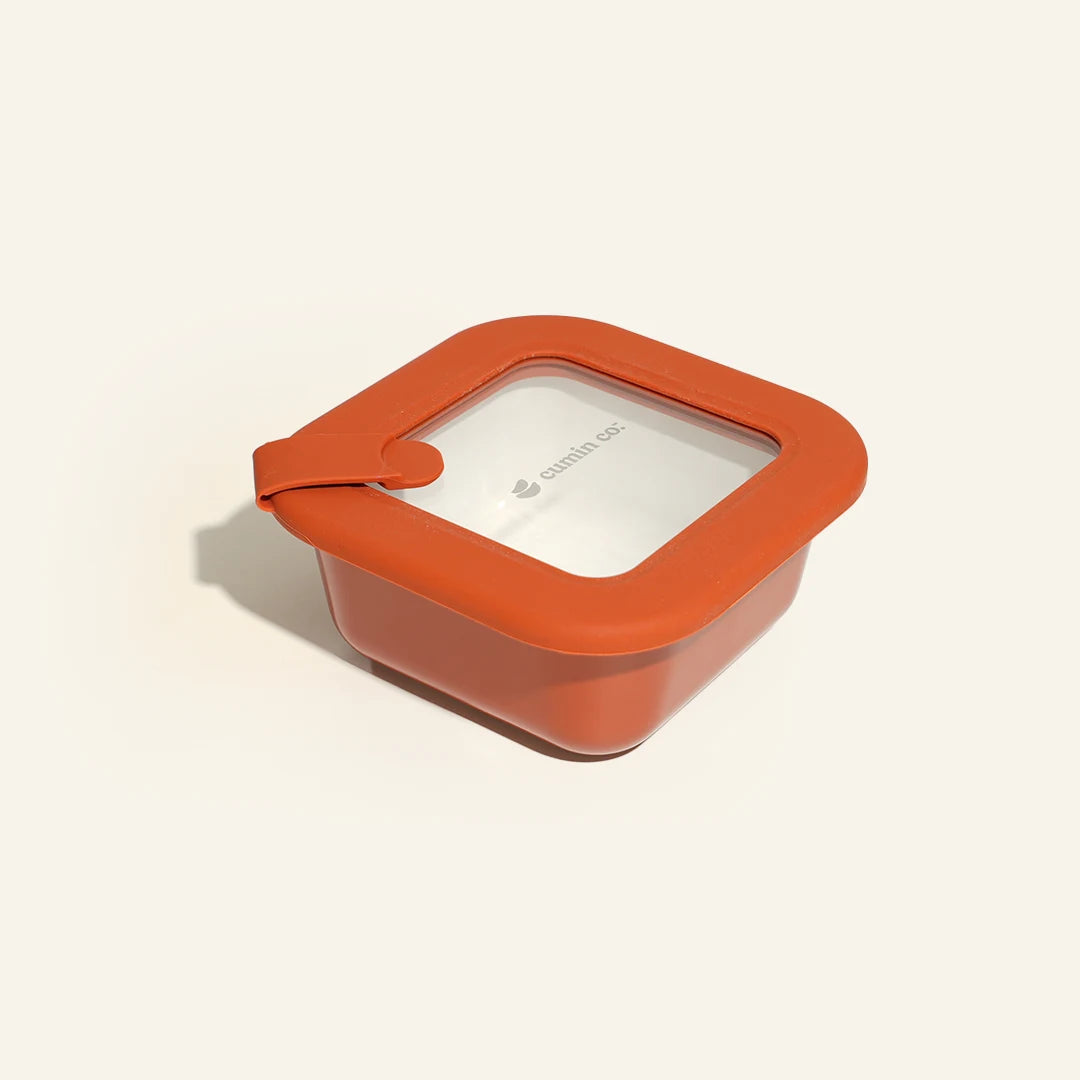
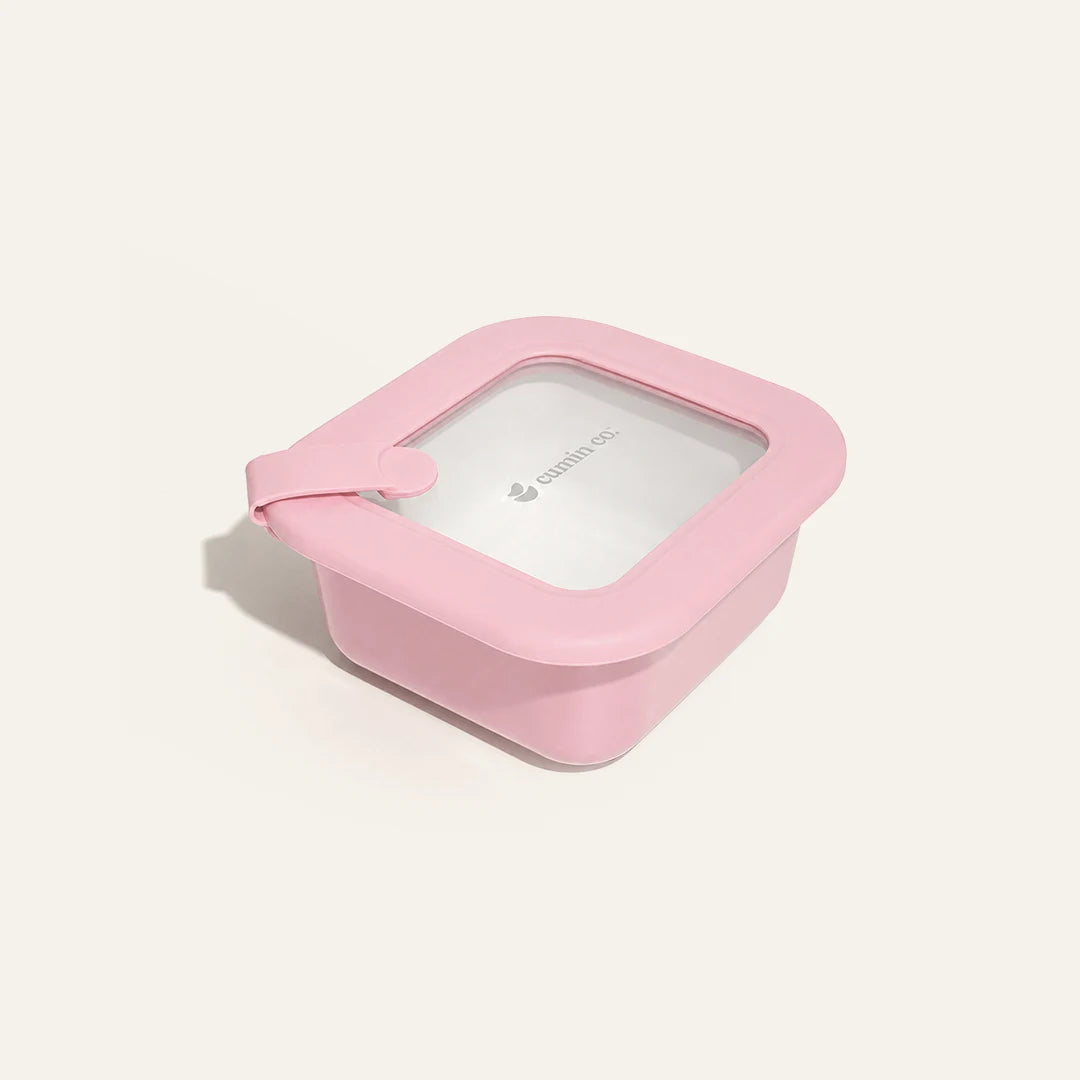
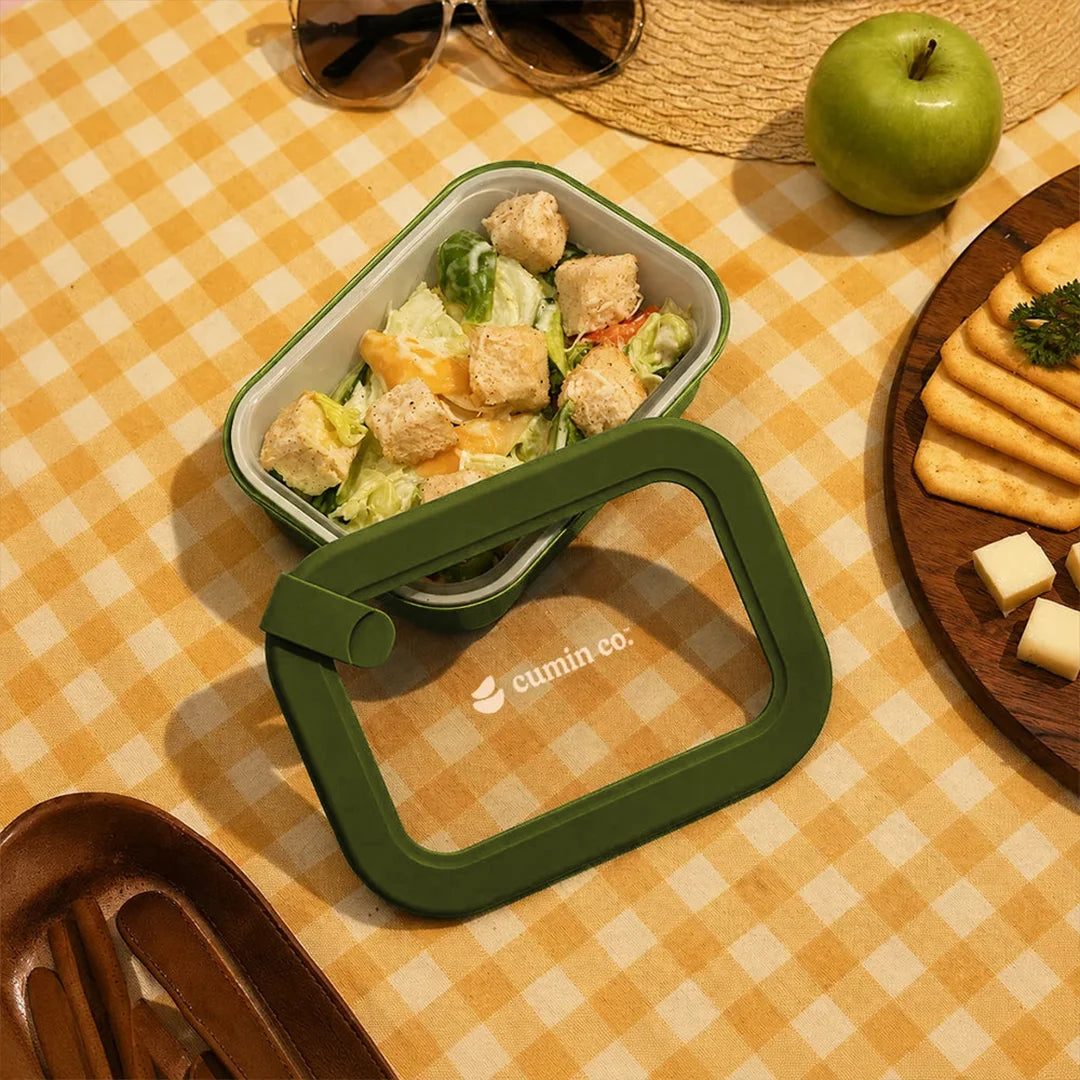
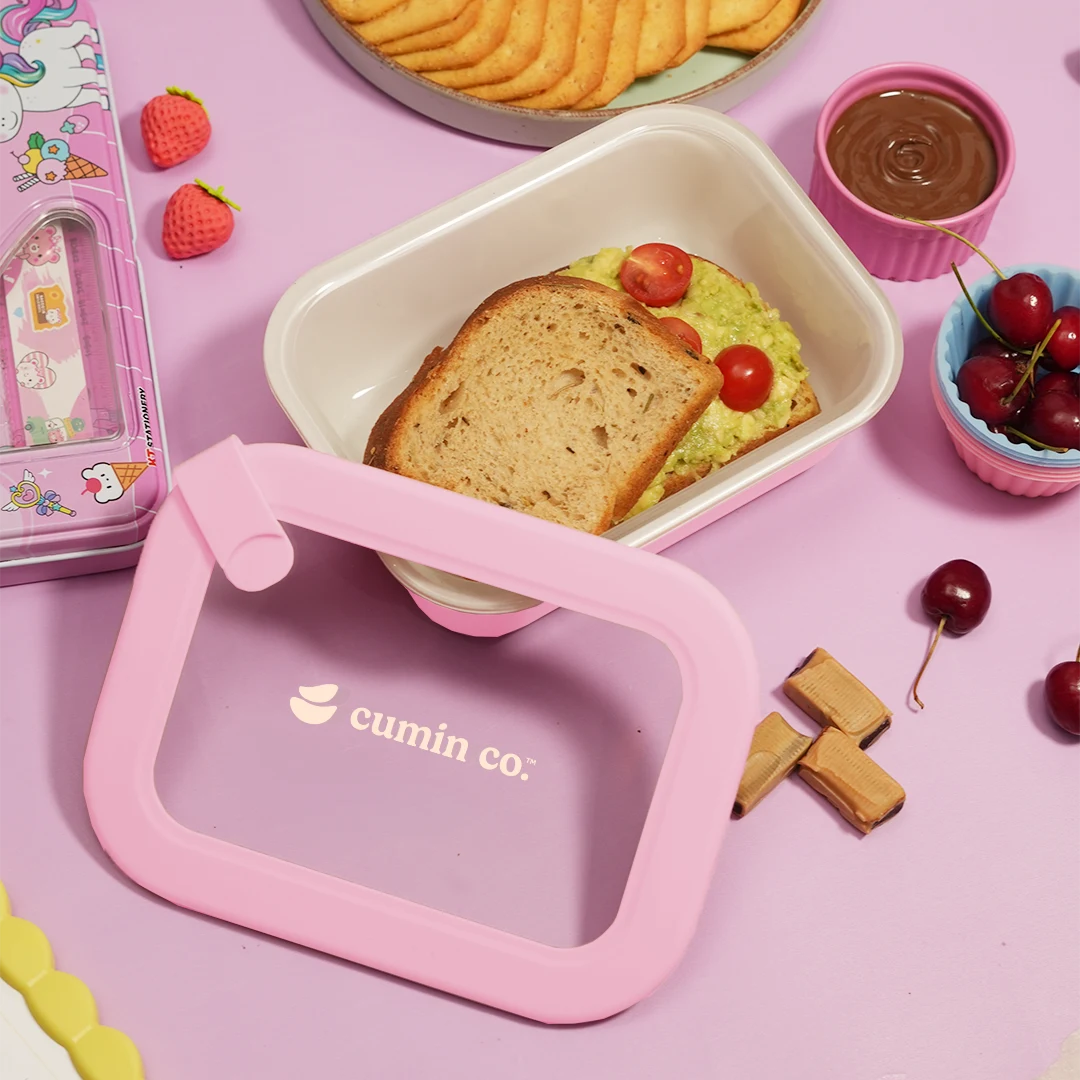
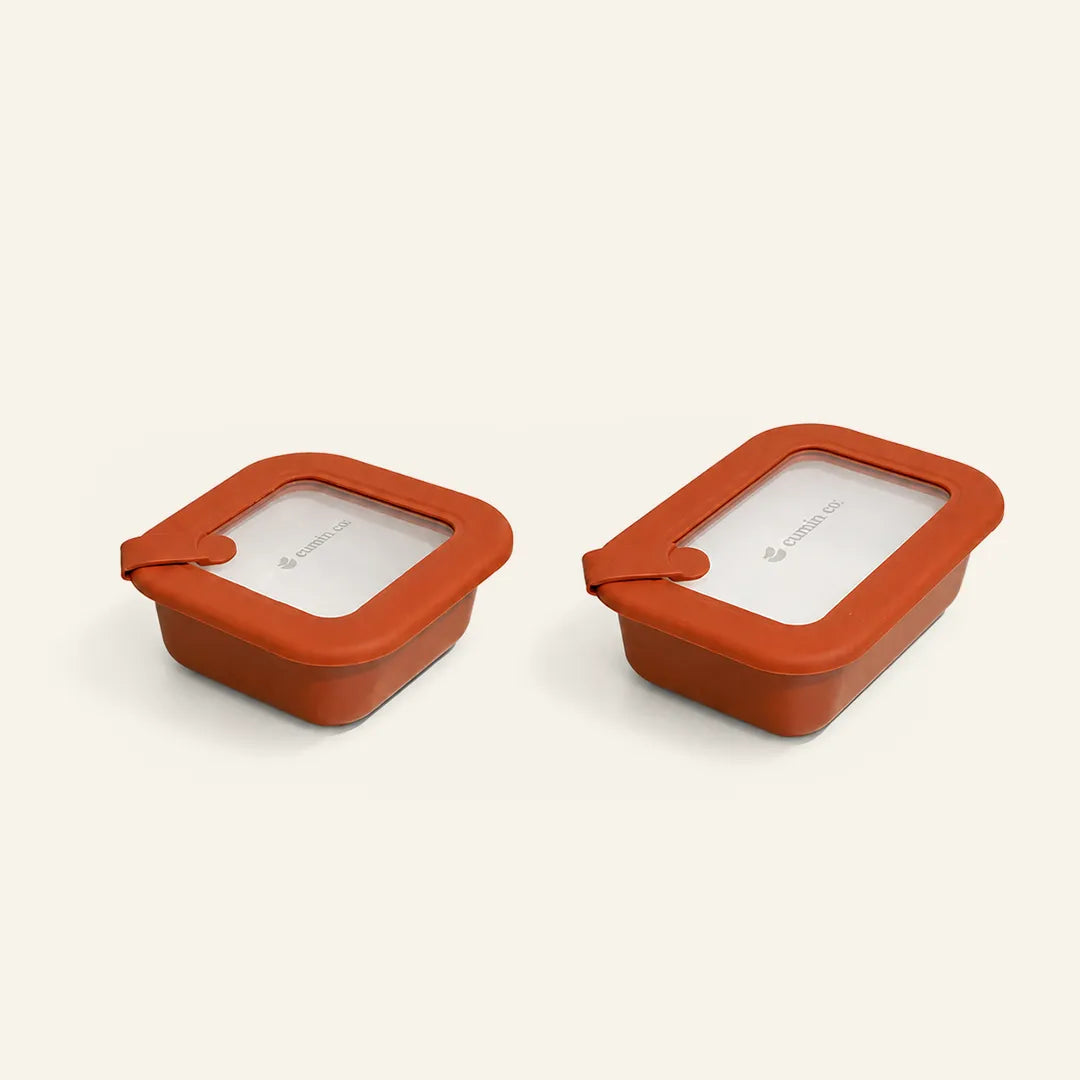
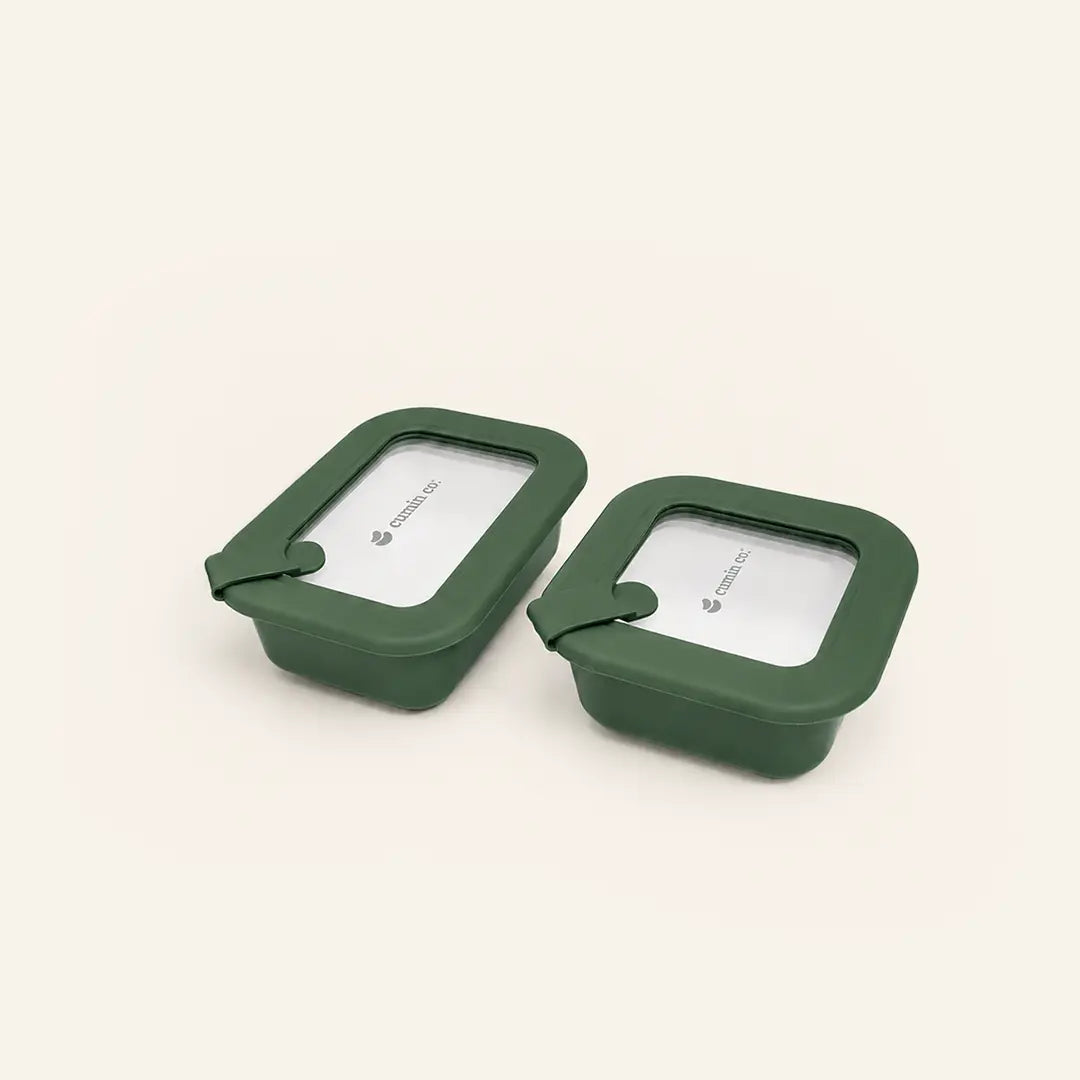
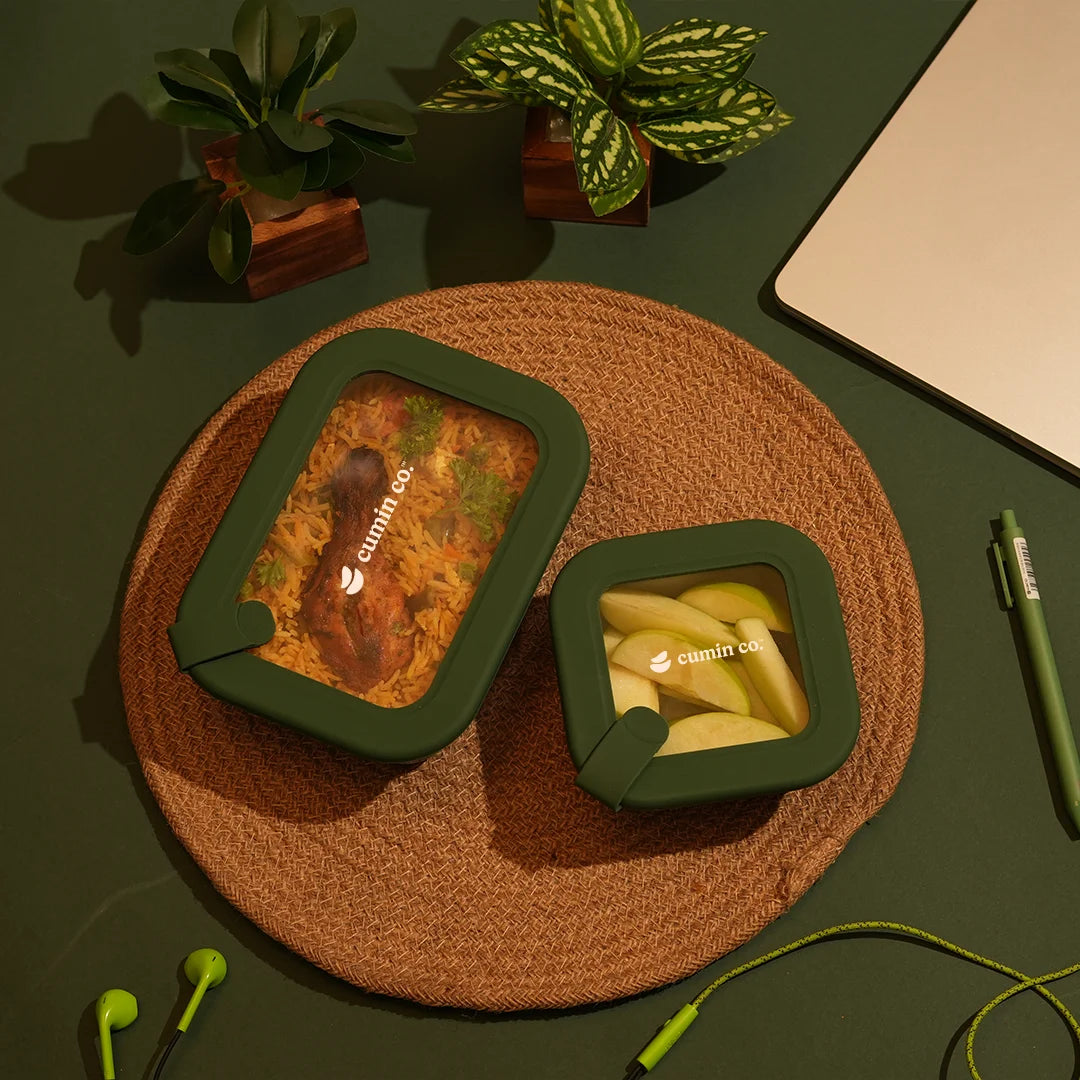
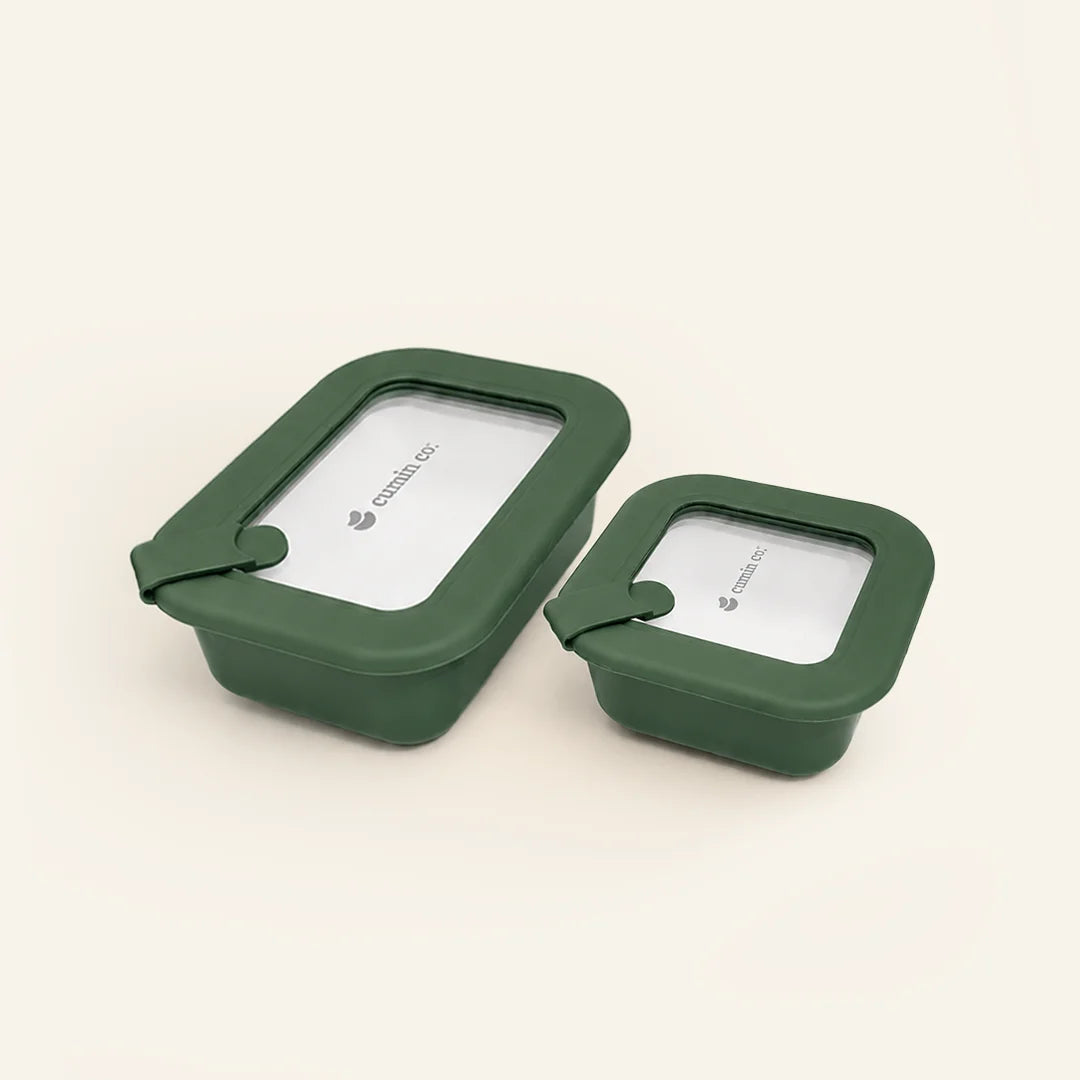
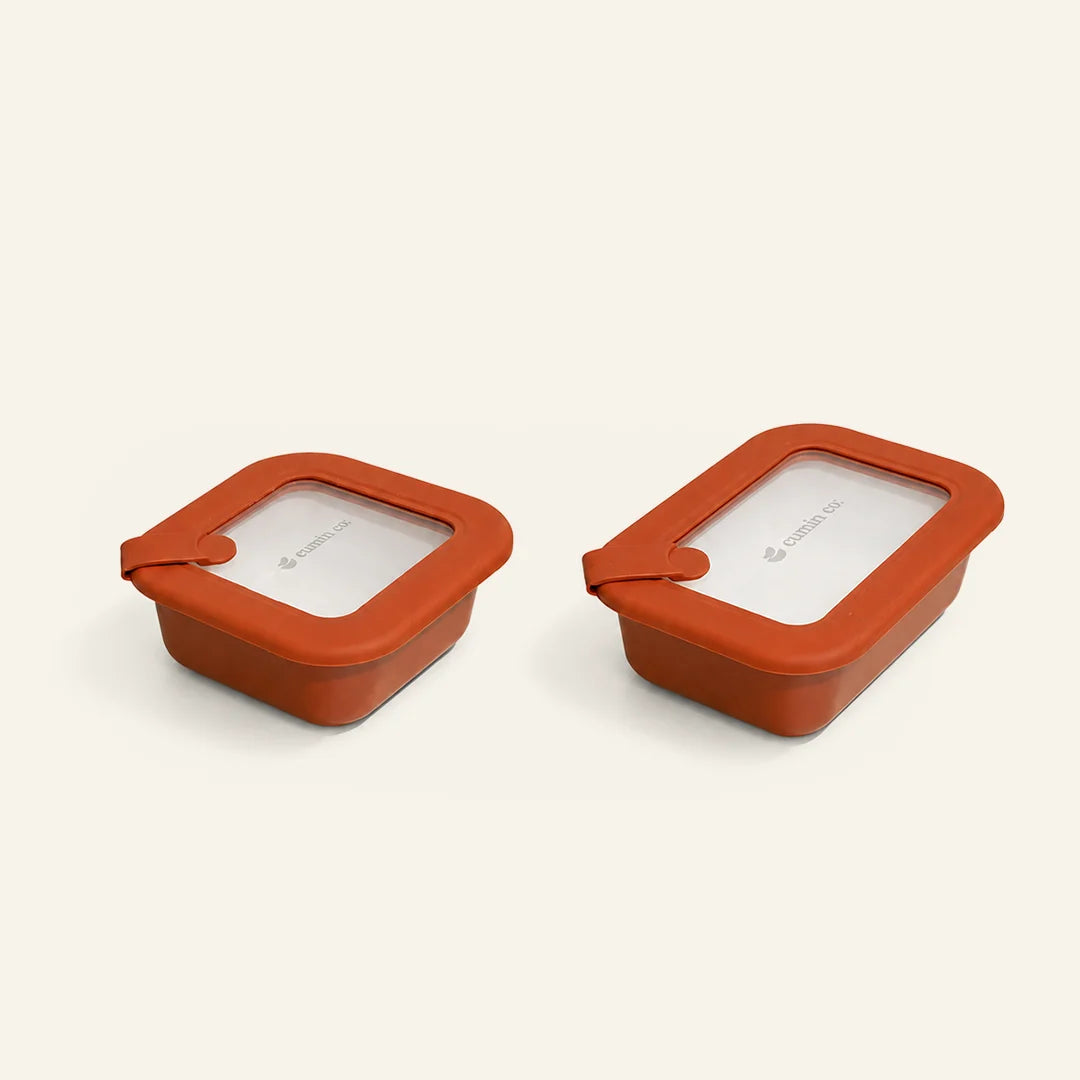
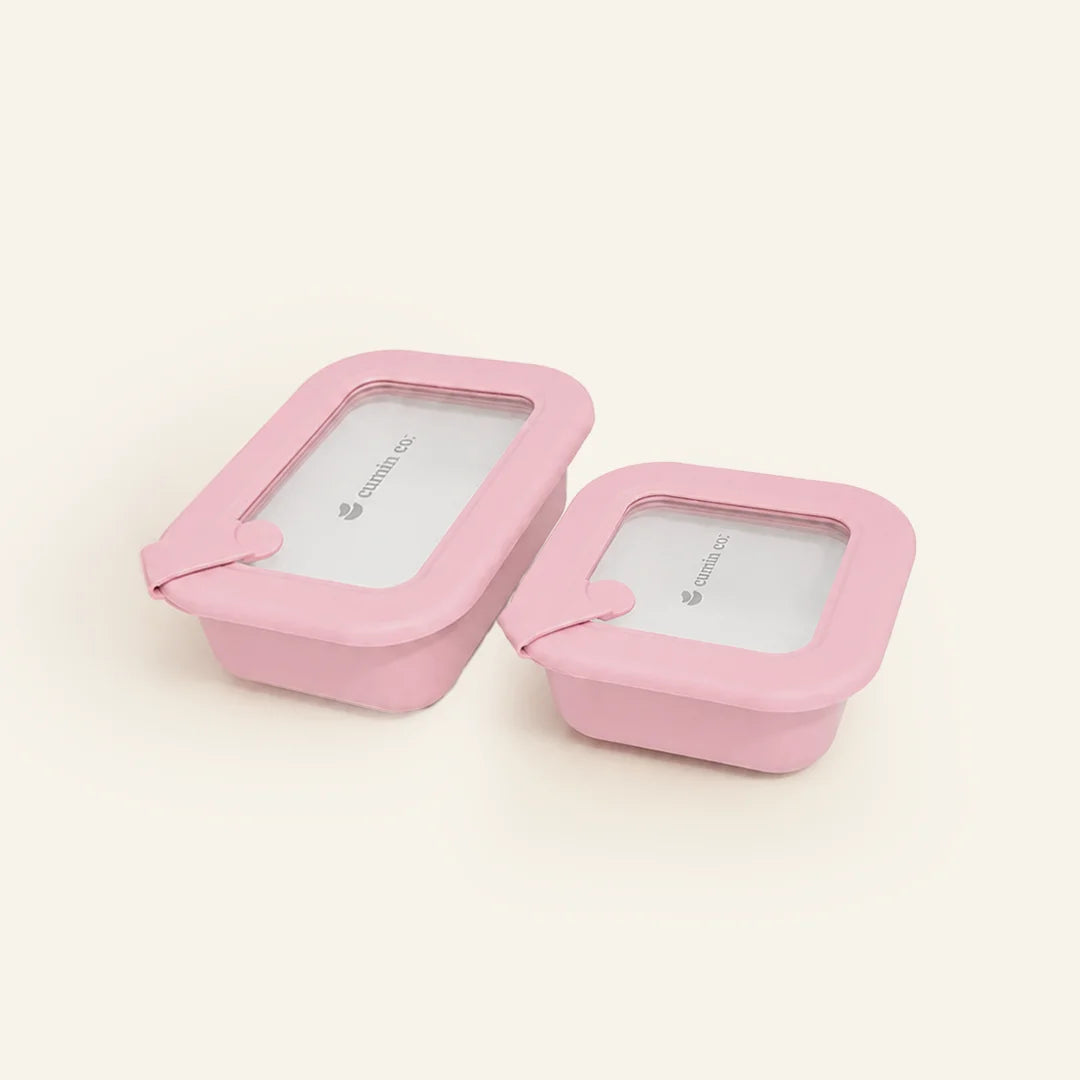
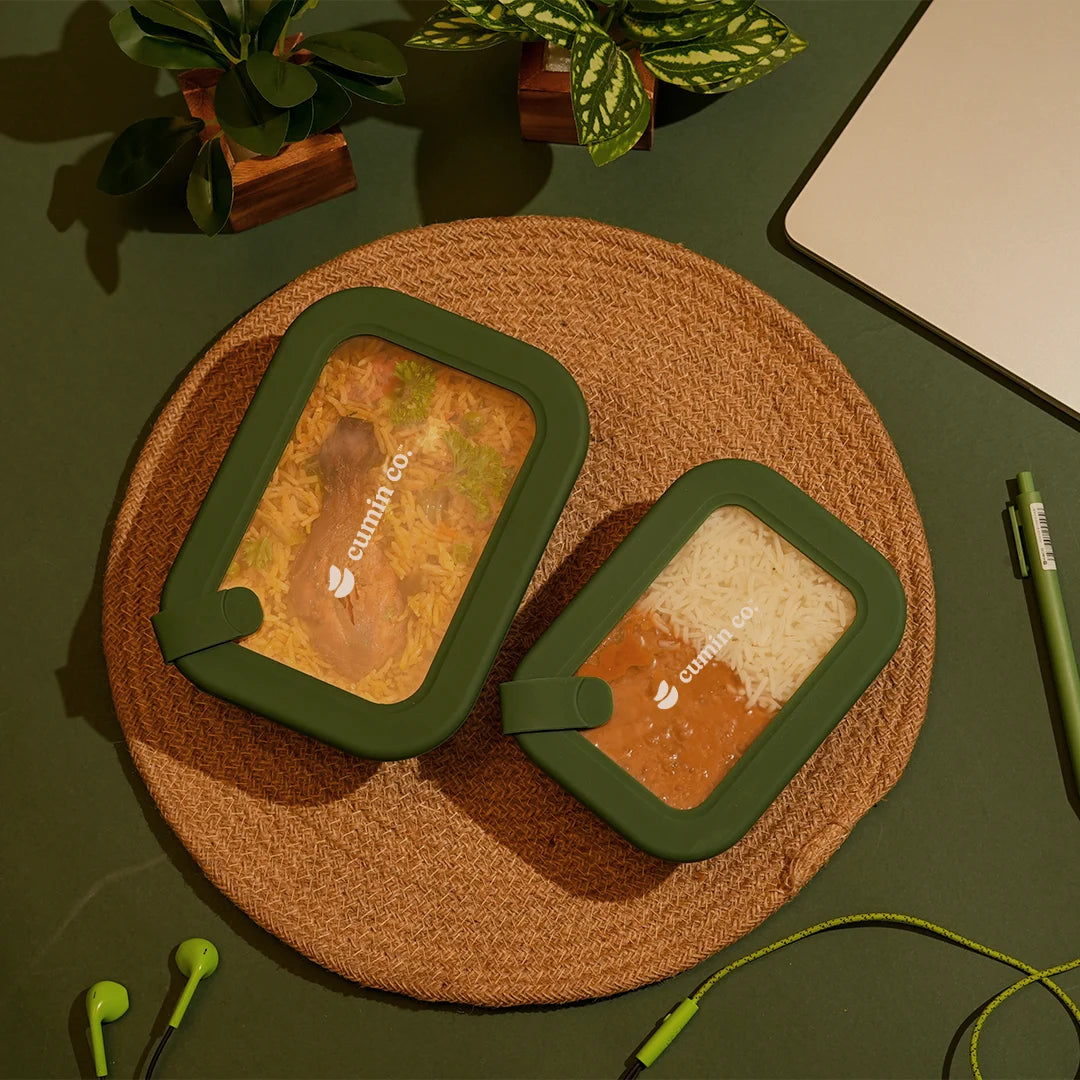
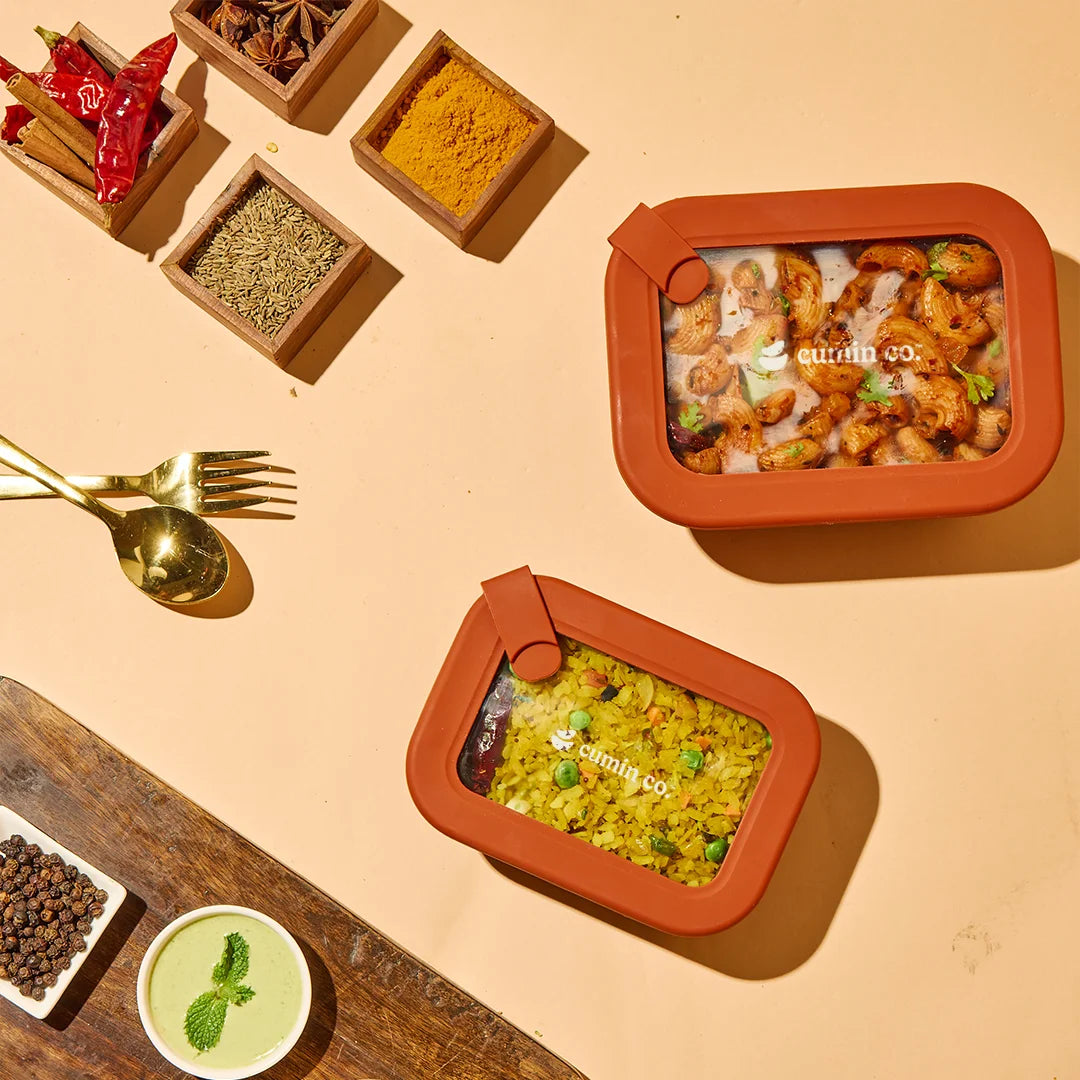
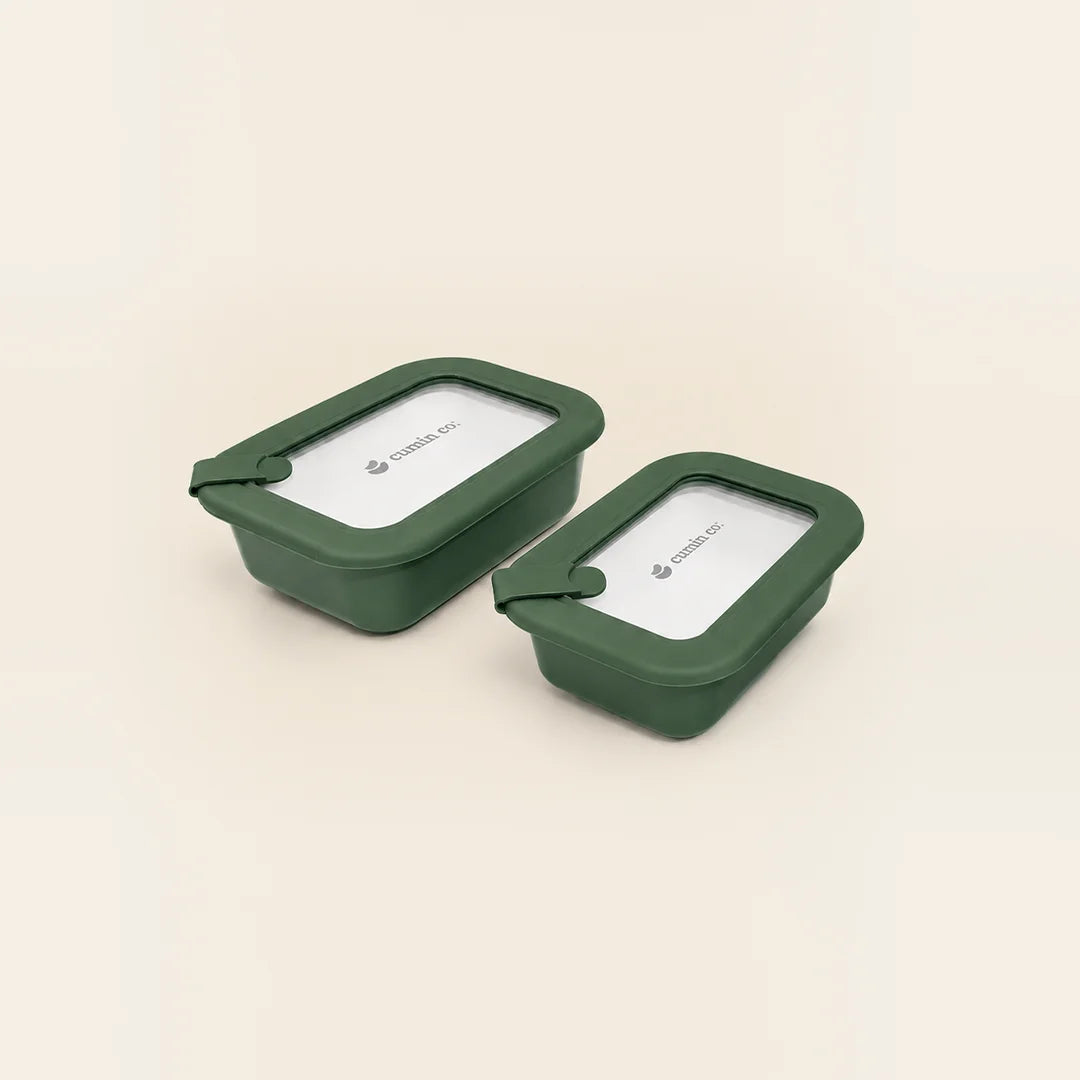
The STASH Series ships in three sizes, 320 ml, 370 ml, and 640 ml, and three colours: Moringa Green, Kulhad Rust, and Rosé. Every box in the line is microwave safe, freezer safe, and dishwasher safe, and the flat lids stack cleanly even on a shelf that is already full. The same container that holds tonight's leftovers reheats tomorrow's lunch, and it does that job for years rather than a single season.
Why Glass Food Storage Containers Beat Plastic Containers
Plastic containers have a short, predictable life. They stain within weeks, hold onto smells long after a wash, and their lids crack or go missing until half the stack is unusable. These fridge food storage containers were designed to skip that decline entirely, because the material itself does not stain, does not absorb odour, and does not degrade the way plastic does under heat and time.
Airtight Container for Fridge: Lock Freshness In, Keep Smells Out
A fridge is a shared space, and smells travel in both directions. Leftover fish curry has a way of turning up in your milk the next morning, and dal left uncovered picks up whatever else is on the shelf. An airtight container for fridge use solves both sides of that problem at once. The food grade silicone seal keeps strong smells locked inside the box and keeps the fridge's mixed air out of your food, so dal still tastes like dal two days later and butter never tastes faintly of yesterday's tadka. The leak resistant lid also means a gravy can sit on any shelf, at any angle, in a fridge that is packed edge to edge, without finding its way onto the shelf below.
Airtight Containers for Vegetables: Sabzi That Stays Crisp
The fastest way to waste vegetables is to leave them sitting in the thin plastic bag they came home in. Chopped vegetables,herbs, and curry leaves all lose moisture fast in a fridge's dry air, which is exactly why they wilt within a couple of days. Airtight containers for vegetables slow that process by sealing humidity in with the produce instead of letting it escape.
Freezer Safe Glass Containers: Batch Cook Sunday, Eat All Week
Most glass containers cannot handle a freezer, and there is a real reason for that. Ordinary glass only tolerates a temperature swing of about 40 to 60°C before it risks cracking. Borosilicate glass handles a swing closer to 160 to 170°C, which is the same reason laboratories rely on it. These freezer safe glass containers take a batch of rajma, dal makhani, or soup straight from the freezer into the microwave, with no anxious wait on the counter for it to defrost first. Cook once on a Sunday, portion it into boxes, freeze them, and pull one out each evening. The same container that froze the food is the one that reheats it.
Non-Toxic, Stain-Free Storage: No Haldi Ghosts
Every plastic container eventually tells you what it used to hold. Turmeric leaves orange corners, tomato leaves red lids, and old achaar never quite washes out. Borosilicate glass does not take part in any of that. It is completely non reactive, so it will not absorb colour, hold onto odour, or leach anything into acidic leftovers like sambar, rasam, or a tomato based gravy, no matter how long they sit in the fridge. Six months of daily use later, the box still looks close to how it did straight out of the box, clear and odour free because of what it is made from, not because of a label on the packaging.
Glass Storage Containers for Fridge vs Plastic vs Steel
Steel containers are genuinely tougher and will outlast almost anything. Plastic is the cheapest option on the shelf. Neither one, though, lets you see what is inside at a glance, and neither can move from freezer to microwave without a problem, since steel cannot go in a microwave at all and plastic tends to warp or crack under repeated temperature swings. Glass storage containers for fridge and freezer use are really the only option that lets you see the contents, freeze them, reheat them in the same box, and never end up with a stained or smelly lid.
Steel is unbeatable on toughness, plastic wins on price, but only borosilicate glass lets you see, freeze, and reheat in one container that never stains, smells, or leaches.
|
Feature |
Cumin Co. Borosilicate Glass Containers |
Plastic Containers |
Steel Containers |
|
See contents at a glance |
Yes, fully transparent |
Clouds and fades with age |
No, every box is a mystery |
|
Odour absorption |
Never, non-porous glass |
Holds smells for months |
Resists well |
|
Staining |
Never |
Stains permanently |
No stains |
|
Airtight seal |
Silicone lid, leak resistant |
Clip locks, clips crack, gaskets loosen |
Loose fitting lids, smells escape |
|
Freezer safe |
Yes. Freezer to microwave ready |
Turns brittle, cracks |
Yes, but can't reheat after |
|
Reheat in the same box |
Yes. microwave safe with lid-on heating |
Risky, can warp and leach |
No, never microwave steel |
|
Chemical leaching |
None. Non-reactive glass. BPA free lid |
Possible with heat and age |
None |
|
Weight |
Heavier |
Lightest |
Light |
|
Breakability |
Tougher than regular glass, not unbreakable |
Won't shatter |
Unbreakable |
|
Lifespan |
Years as glass doesn't age |
1 to 2 years typically |
Decades |
Best Selling Glass Fridge Storage Containers & Sets
Buying a set works out cheaper than picking containers one at a time, and each set is built around a different kind of kitchen.
|
Set |
Contents |
Price |
You Save |
|
Small + Medium + Large |
₹3,499 |
34% off ₹5,297 |
|
|
Medium + Large |
₹2,658 |
28% off |
|
|
Small + Large |
₹2,563 |
29% off |
|
|
Small + Medium |
₹2,373 |
28% off |
Which Fridge Food Storage Containers Do You Need?
Match the size to what actually lives in your fridge. Most households need about two Larges, two Mediums, and a couple of Smalls to retire their plastic collection completely.
|
Size |
Capacity |
Best For |
Fridge Shelf Fit |
|
Small, Stash Drip, ₹1,199 |
320 ml |
Chutneys, fruits, herbs, small leftovers |
Door shelf and tight corners |
|
Medium, Stash Rizz, ₹1,299 |
370 ml |
Dal, curd, gravies, single meal portions |
Stacks two high on standard shelves |
|
Large, Stash Aura, ₹1,499 |
640 ml |
Full sabzi, biryani leftovers, batch cook portions |
Main shelf, flat lid takes another box on top |
Fridge Organization Containers: Zone Your Refrigerator Like a Pro
Professional kitchens run on zones, and the same idea works just as well at home. Keep cooked leftovers in Medium containers on the top shelf, front and centre, so anything visible gets eaten before it has a chance to expire. Use small containers on the middle shelf for cut vegetables, soaked dal, or marinated paneer, essentially tomorrow's cooking already half done. Reserve the lower shelf for Large containers holding batch cooked mains, stacked flat lid-on-flat lid, and use the freezer as the long term reserve, with frozen portions labelled by date. Once everything is transparent and stackable, nothing gets lost at the back, and that alone tends to cut down on food waste, simply because you can see what you actually own.
How to Use Glass Freezer Containers Safely
The routine is short. Let hot food cool to room temperature before sealing and freezing it, and leave a little headspace since liquids expand as they freeze. To thaw, move the container from freezer to fridge overnight, or go straight to the microwave since borosilicate can handle that jump. What you want to avoid is pouring boiling water directly onto a frozen glass container. Because the glass itself is non porous, stains and smells never really set in, so a normal wash is enough to bring a box back to how it looked on day one.