


 Food Containers
 Cookware Sets
 Limited Edition Launches
 Bakeware
 Serveware
 Corporate Gifting


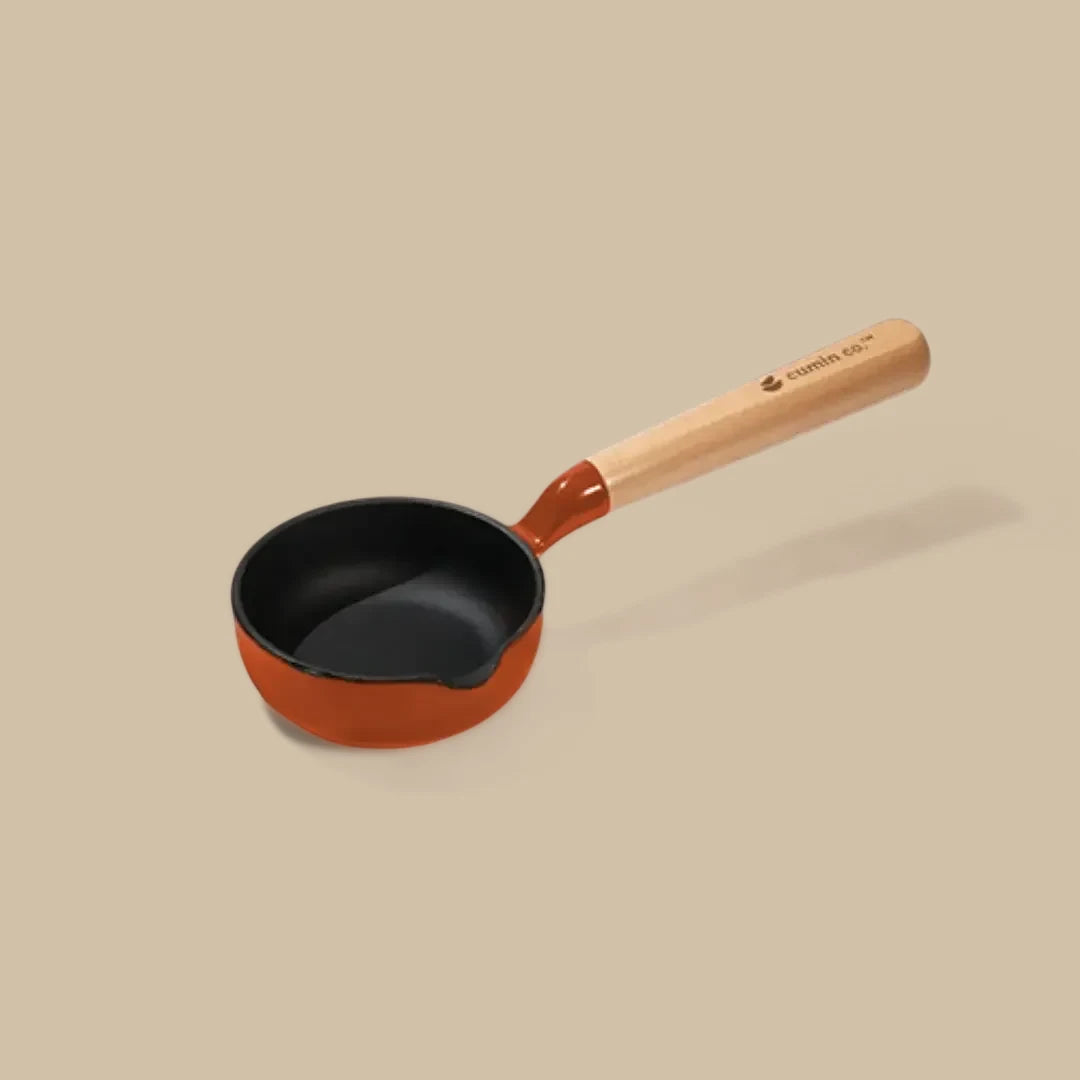
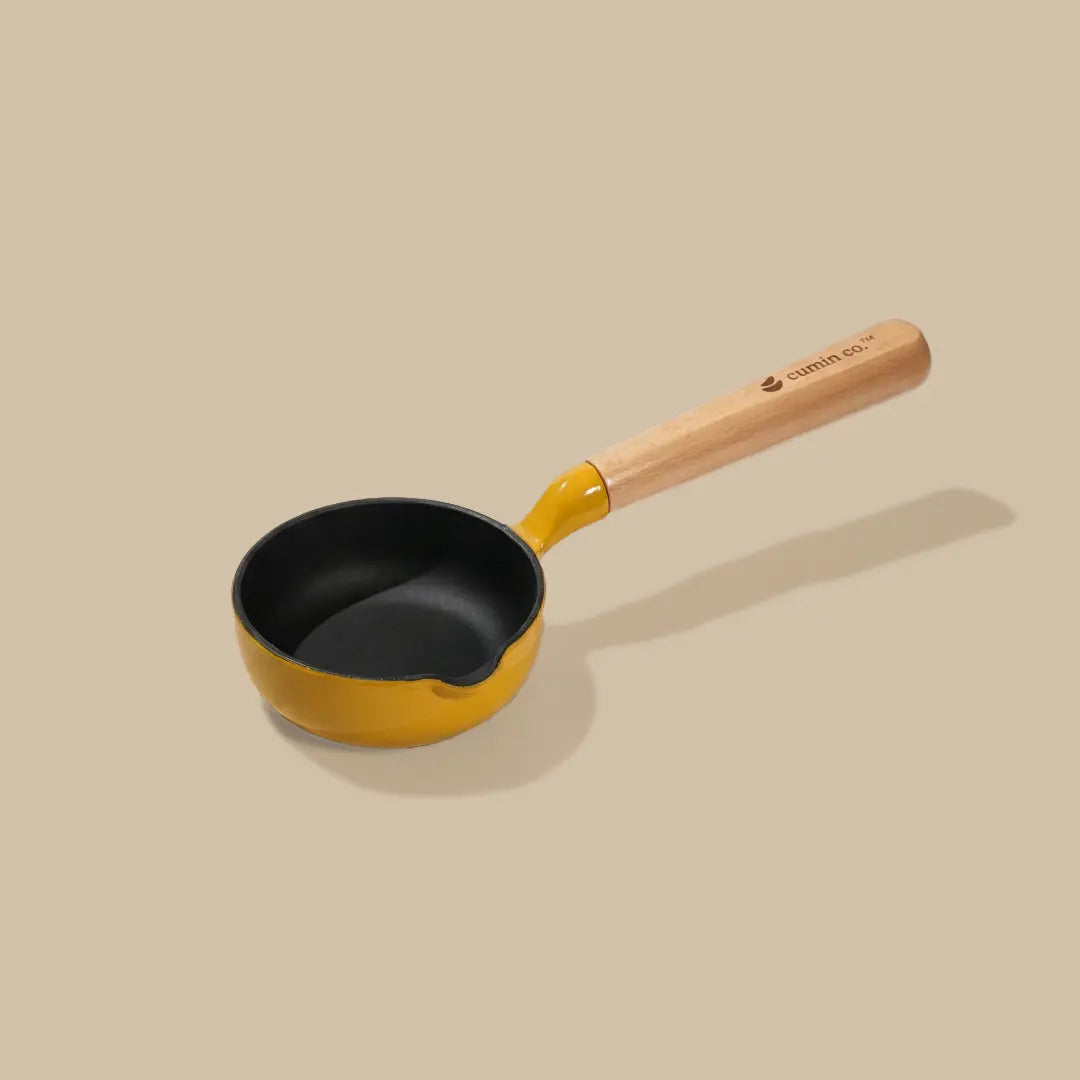


Enamel Cast Iron Tadka Pan Blogs



100% Toxin Safe Tadka Pan - Enamel Cast Iron Tadka Pan with Wooden Handle
In a lot of Indian kitchens, the smallest pan somehow gets used the most.
Morning tadka for dal. Garlic oil for noodles at night. Curry leaves crackling in hot ghee before lunch.
Tempering is an essential part of Indian cooking but needs a cookware that delicately balances heat.
If oil overheats suddenly, garlic burns before the jeera catches up. The handle gets too hot halfway through pouring.
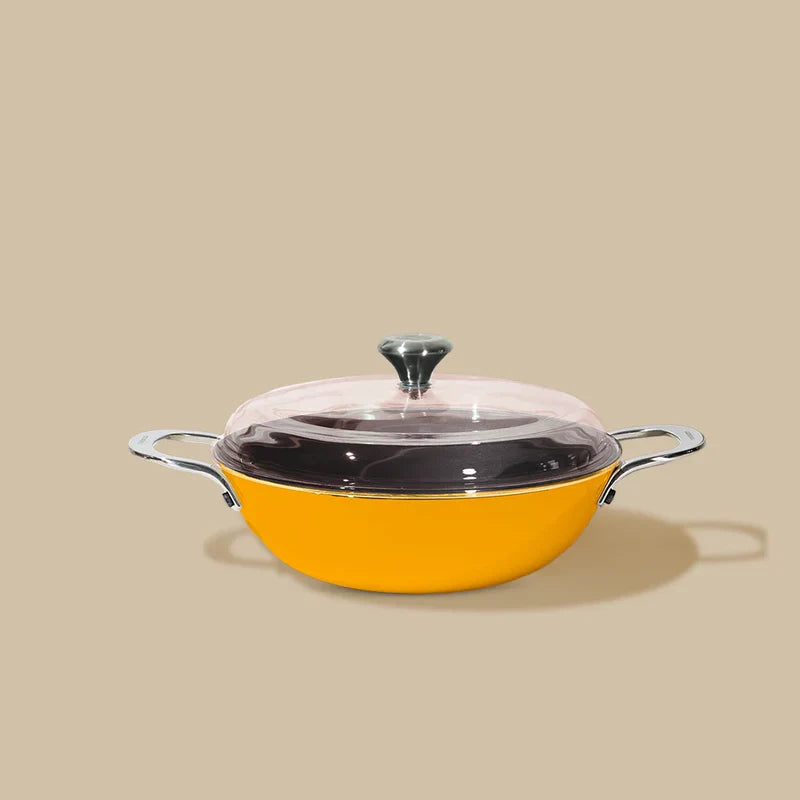
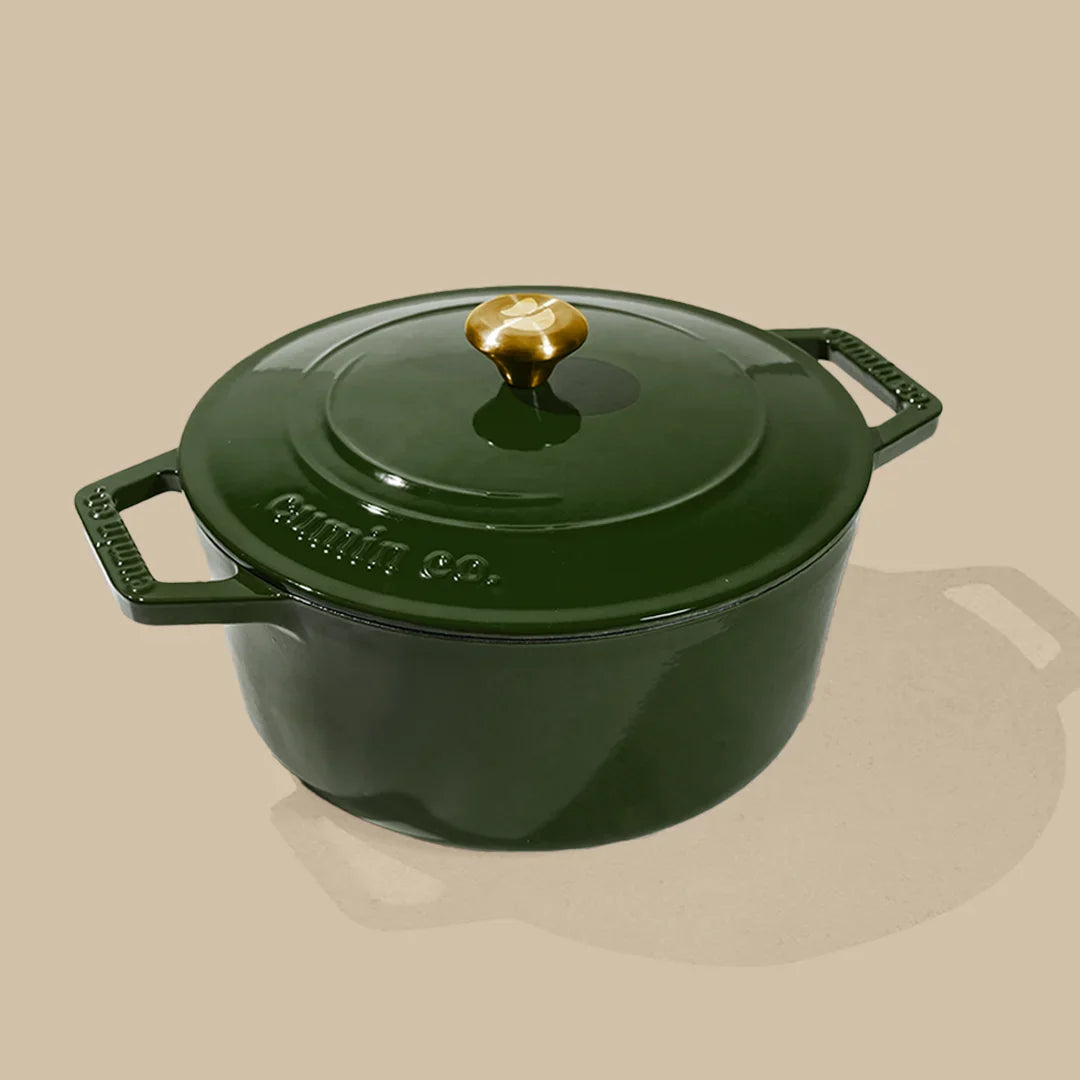
Cumin Co. tadka pan is made with Enviromax pro enamel-coated cast iron. No synthetic non-stick layer. No seasoning required either.
What is a Tadka Pan & Why Every Indian Kitchen Needs One?
Most Indian food feels unfinished without tempering. Dals, kadhis, saambhar, curd rice are all incomplete without tadka.
Hot oil hitting spices right at the end changes the smell of the entire dish and sometimes the whole kitchen.
That final drizzle of sizzling garlic, curry leaves, mustard seeds or hing does more than people give it credit for.
What Actually Makes a Good Tadka Pan
The shape and material used matters.
Too shallow and oil splashes out too easily. Too flat and the spices spread around instead of frying properly together. A slightly deeper curve usually works better because the oil stays concentrated near the center.
And the handle matters much more than people expect. Anybody who has awkwardly tried pouring hot tadka into dal while oil splutters everywhere already knows this.
Why Choose Enamel Cast Iron Tadka Pan Over Other Materials
Cast Iron Tadka Pan vs Non Stick Tadka Pan
A non-stick tadka pan feels easy in the beginning because it heats quickly and weighs almost nothing.
But repeated tadka is rough on coatings. Smoking oil every day at high heat can cause non-stick coatings to peel and flake. Eventually the center starts looking worn-out.
An enamel cast iron tadka pan behaves differently once it gets hot. The heat stays steadier while cooking, which helps while tempering spices quickly. Mustard seeds pop more evenly. Garlic gets time to turn golden instead of going dark immediately.
Cast Iron vs Stainless Steel Tadka Pan
Stainless steel heats very fast. Sometimes too fast for tadka. You look away for five seconds and suddenly the garlic tastes bitter.
Cast iron heats up more consistently giving more room for oil to heat evenly so that the aromatics do not turn bitter.
Enamel Coated Cast Iron vs Raw Cast Iron
Raw cast iron works beautifully until somebody leaves it wet after washing.Then comes the rust panic. Raw cast iron also required frequent seasoning.
An enamel-coated cast iron tadka pan removes most of that extra maintenance. No seasoning. No oiling after every wash. No worrying about moisture sitting overnight.
Wash it normally. Use it again tomorrow.
Key Features of Cumin Co. Enamel Cast Iron Tadka Pan
100% Toxin Safe & Chemical-Free Cooking
This pan is made without PFOA, PTFE, or lead-based coatings.
Smaller cookware usually reaches high temperatures faster than larger pans. Which is exactly why material quality matters more here than people think.
Steady Heat for Better Tadka
Thin pans get too aggressive sometimes. One second the oil seems fine. Next second the garlic has already browned too much and sometimes the oil also catches fire.
A heavier base slows that down, especially useful for spices like hing or curry leaves that burn quickly once the oil overheats.
Works on Gas & Induction Cooktops
Finding a proper induction tadka pan that still feels solid in hand can be strangely difficult.
This pan works on both gas and induction cooktops without feeling flimsy or overly lightweight. Useful for smaller kitchens where induction cooking happens daily.
Comfortable Handle & Easy Pour Spout
Tadka cooking already moves fast, the pan should not make it harder.
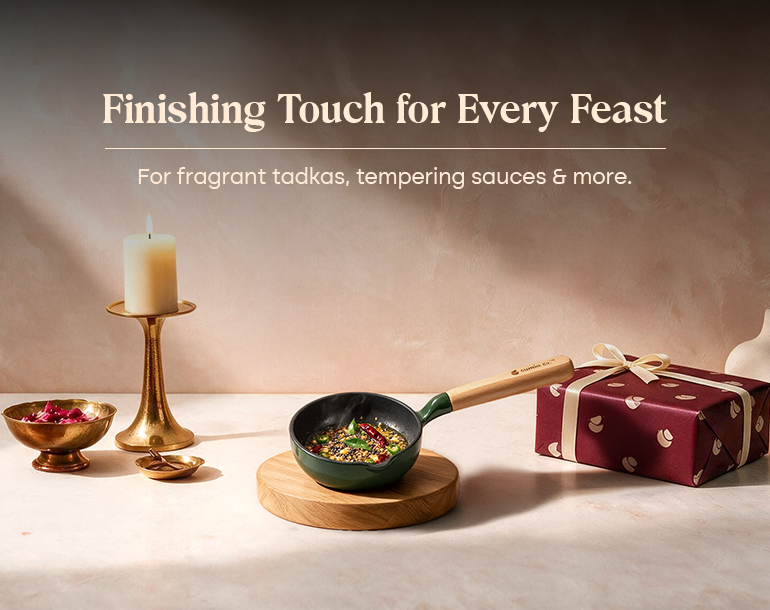
A long beechwood handle and an easy pour spout helps while pouring hot oil or ghee over food. Especially once the spices start spluttering aggressively.
Durable Enamel Coating (No Seasoning Needed)
Raw cast iron asks for attention constantly. Dry it immediately. Oil it properly. Don’t leave moisture sitting.
Our tadka pans come with 4 layers of enamel coating that make the pan stain & rust-resistant without any seasoning.
Cooking Compatibility of a Tadka Pan in Daily Cooking
Tadka for Dal, Kadhi & Curries
This is probably what the pan gets used for most.
Jeera in ghee. Garlic frying slowly. Dried red chilli darkening at the very end before everything gets poured over dal.
Tempering Spices for South Indian Dishes
South Indian tempering usually needs quick but controlled heat so that the aromatics do not burn or get bitter. Mustard seeds, urad daal, curry leaves, hing etc are ingredients that tend to turn black if the heat is uncontrolled
Making Chutneys & Garlic Oil Tadka
Smaller pans work better for garlic oil or chilli tempering because the oil stays pooled together instead of spreading thinly around the base. This helps in crisping the ingredients without burning them or turning them bitter.
Small Portion Frying & Quick Saute
Most homes use tadka pans for random small things too. Roasting garlic. Frying green chillies quickly. Toasting spices before grinding them.
The kind of cooking that keeps happening between larger meals.
Serving Hot Tadka Directly on Food
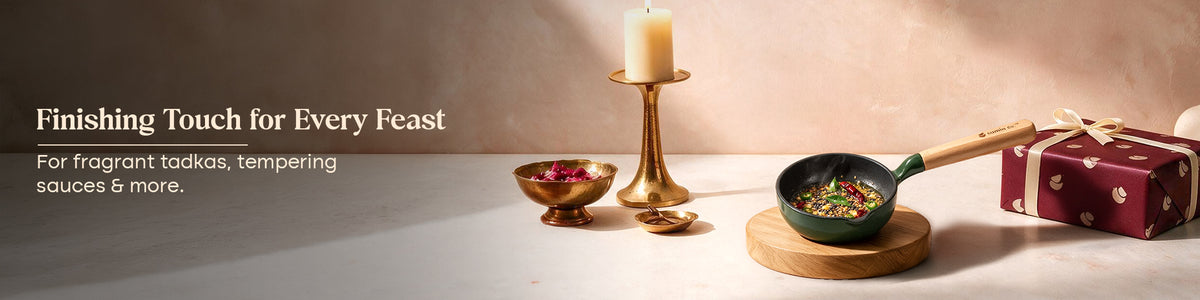
Cumin Co. tadka pan with long beechwood handle and easy-pour spout makes serving hot tadka directly on food safe and easy.
How to Use a Tadka Pan the Right Way
The Usual Tadka Process
Heat the oil or ghee first.
Then add mustard seeds or cumin. Only after they crackle properly should aromatics like garlic, curry leaves, hing or dried chillies go in.
Rushing this stage usually ends in burnt spices and bitter oil.
Common Mistakes While Tempering
Most problems start because the oil or ghee gets too hot too quickly. This leads to aromatics burning within seconds and turning the oil/ghee bitter instead of fragrant. That’s why it is important to use a tadka pan that heats consistently and evenly.
Using very little oil also causes spices to scorch faster than expected.
Why Cumin Co. Tadka Pan is the Healthier Choice
A lot of smaller tempering pans are made using lightweight aluminium or synthetic-coated materials because they are cheap and heat quickly.
The problem usually shows up later.
Repeated high heat slowly leads to coatings wearing off. This causes PFAS to leach into your food.
Our enamel cast iron tadka pan is built for regular Indian cooking without synthetic coatings. Which
And unlike cookware people keep replacing every couple of years, enamel-coated cast iron tends to stay useful for much longer.
FAQs on Tadka Pan
Is cast iron tadka pan safe for daily use?
Yes. Especially in kitchens where tempering happens constantly for dal, curries, sabzi, chutneys and leftovers.
The pan handles repeated high heat comfortably, which matters because tadka cooking is usually much harsher than regular cooking.
Can I use a tadka pan on induction stove?
Yes, provided the base sits flat enough for induction contact.
Some traditional rounded pans struggle slightly there.
Does enamel cast iron need seasoning?
No.
That’s usually the biggest reason people move from raw cast iron to enamel-coated cookware.
No seasoning routine. No drying rituals after washing.
What size tadka pan is best for home use?
Smaller sizes usually work better because tempering does not need large quantities of oil.
A compact pan keeps the spices closer together while cooking.
Enamel Cast iron tadka pan vs non stick which is better?
For occasional use, both work.
But daily Indian cooking tends to be rough on non-stick coatings because tadka often involves very high heat. Cast iron generally handles that kind of repeated cooking more comfortably over time.
For a deeper cookware comparison, read here:
Hard Anodized vs Stainless Steel vs Non Stick vs Cumin Co. Enamel Cast Iron?