 Shop All
 Food Containers
 Cookware Sets
 Limited Edition Launches
 Bakeware
 Serveware
 Corporate Gifting

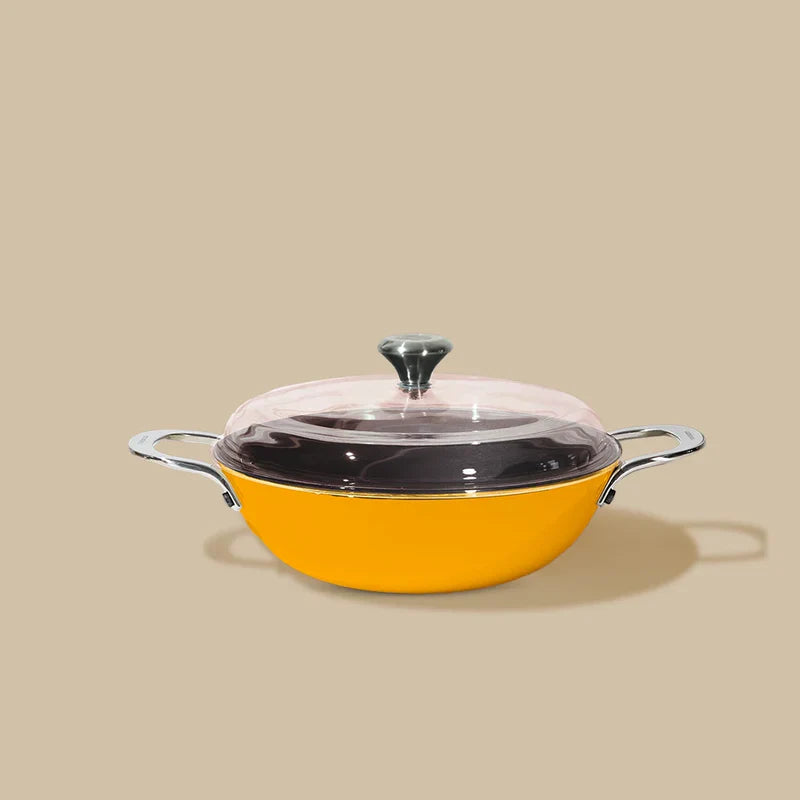

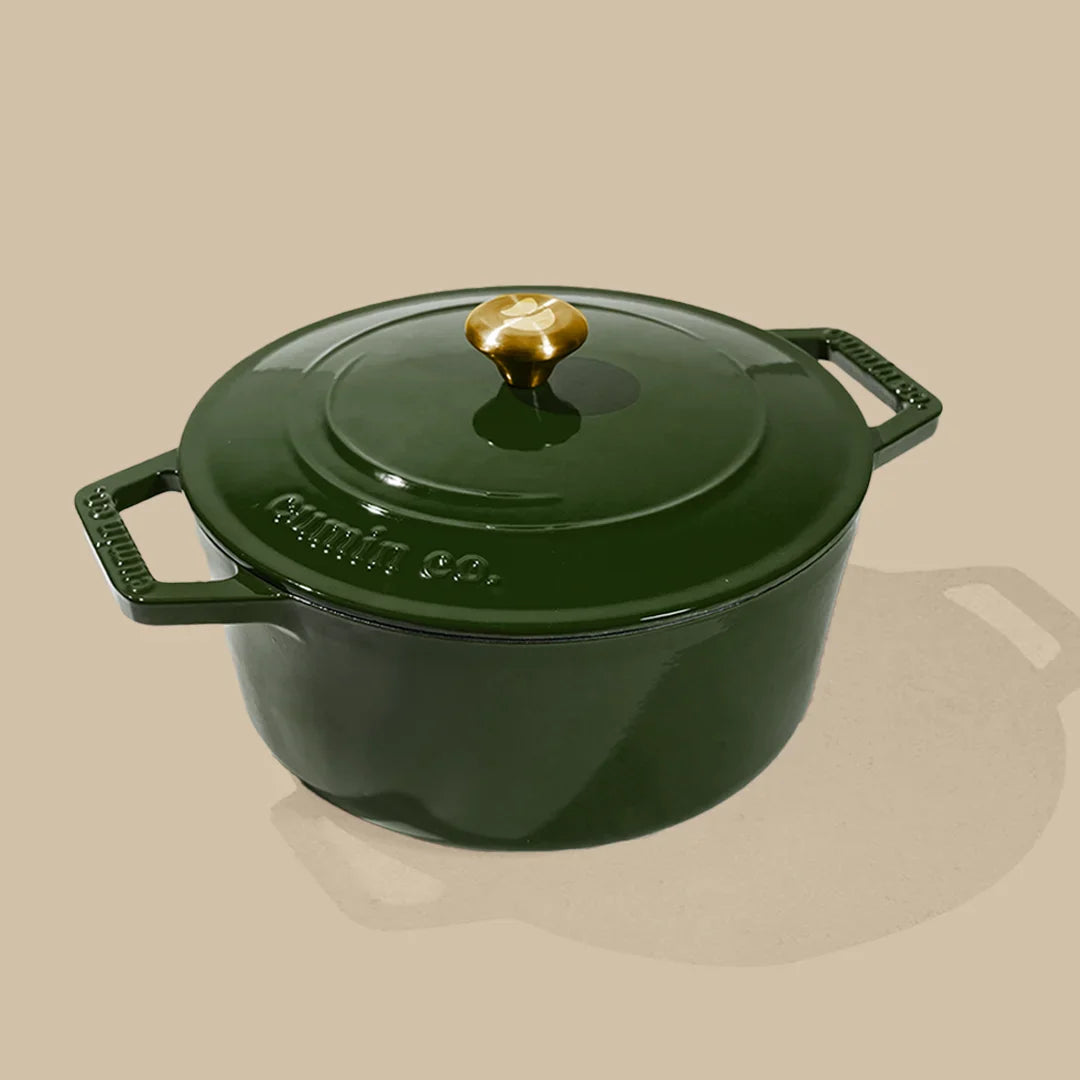
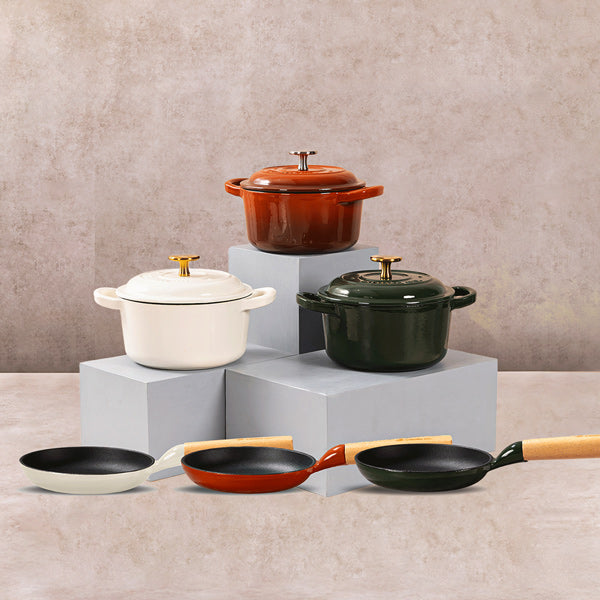

Indian sweets often fail right at the very beginning of making them. Besan scorches, browns and burns before it roasts to perfection, sugar syrup catches at one hot spot and either crystallizes or burns , and gulab jamun browns outside while staying raw inside because the oil temperature keeps swinging. A heavy enamel cast iron kadai fixes all three. Its weight and construction spreads heat evenly, holds a steady temperature for long roasting and simmering, and keeps the frying oil stable between batches.
This guide covers the three Diwali sweets most families still make at home: besan ladoo, kaju katli and gulab jamun. Each recipe gives exact quantities, the flame level at every stage, and the visual cue that tells you when different stages of cooking are done because sweet-making is judged by colour, smell and texture far more than by a timer.
Diwali, 2026 falls on Sunday, 8 November. If you're hosting a party or just cooking for a good time with family, all three sweets can be made ahead, and the timeline near the end shows exactly when.
One cast iron habit matters more than any other in sweet-making. Cast iron keeps cooking after you turn the flame off due to its superior heat conduction. The kadai body stores heat, so take besan, katli dough and syrup off the heat one stage earlier than you would with a and let the stored heat finish the job.
Which Cast Iron Kadai Size Is Best for Making Sweets?
Match the kadai to the job, not to the batch size printed on the box. Roasting and stirring need a smaller kadai so the layer of besan or dough stays thin and even. Deep frying needs a bigger one, because the listed capacity is brim full and safe frying oil sits below that level!
|
Kadai |
Size |
Specifications |
Best Sweet Job |
|
No. 8 Kadai LITE (without lid) |
1.5 L |
LITE enamel cast iron |
Kaju Katli, small batches of sugar syrup |
|
No. 9 Kadai LITE |
24 cm, 2.1 L |
2.4 kg with lid |
Besan ladoo for a family batch, halwa |
|
No. 10 Kadai (Classic) |
26 cm, 3 L |
3 kg, maximum thermal mass |
Frying gulab jamun, about 1 L oil |
|
No. 11 Kadai LITE |
28 cm, 3.9 L |
2.8 kg with lid |
Larger gulab jamun batches, double ladoo batch |
|
No. 13 Kadai LITE |
32 cm, 5.5 L |
4 kg with lid |
Bulk frying for gifting boxes |
All sizes have a flat base that works on gas, induction, ceramic and electric cooktops. The flat base matters more for sweets than for curries. On a round-bottom kadai, besan pools at the centre and burns there while the edges stay raw. Frying oil is also deep in the middle and shallow at the rim, so jamuns at the edge brown unevenly.
The surface is Cumin Co.'s patented Enviromax Pro titanium-infused enamel free from PTFE, PFOA, PFAS and heavy metals like lead, cadmium, mercury. For sweets, the practical benefit is simple. Milk, ghee and sugar don't pick up a metallic taste, and caramelised syrup lifts off with a soak instead of hard cleaning actions of a steel scrubber.
Besan Ladoo Recipe in a Cast Iron Kadai
Good besan ladoo depends on one thing: roasting the besan slowly in ghee until it smells nutty and turns golden-brown. The aroma is what most home cooks wait for. That takes 20 to 25 minutes on low heat. Rush it on a high flame and the ladoo tastes raw and sticks to the palate. A cast iron kadai makes the slow roast easier, because the heat stays even across the base and doesn't spike or come with hotspots. Also, better heat retention of the material means that the browning can continue even when it’s removed from the flame.
Makes: 16 to 18 ladoos | Time: 45 minutes plus cooling | Kadai: No. 9 Kadai LITE (2.1 L)
Besan Ladoo Ingredients
|
Ingredient |
Quantity |
|
Besan |
2 cups (240 g) |
|
Ghee/Clarified Butter |
3/4 cup (about 150 g), plus 1 to 2 tbsp if needed |
|
Powdered sugar |
1 cup (about 150 g) |
|
Green cardamom powder |
1/2 tsp |
|
Chopped almonds and pistachios |
2 tbsp |
How to Roast Besan for Ladoo Without Burning It
-
Warm the kadai on medium for 2 minutes, then lower the flame to low. Add the ghee and let it melt fully.
-
Add the besan. It will look like wet sand and feel heavy to stir. Stir every 30 seconds, scraping the base and sides with a wooden or silicone spatula.
-
At about 10 minutes, the mixture loosens and turns glossy. That's the ghee releasing. Keep the flame low.
-
At 18 to 22 minutes, the colour moves to a light golden-brown and the kitchen smells of roasted nuts.
-
Turn the flame off one shade before the colour you want. The kadai will deepen it by another shade over the next 3 to 4 minutes as it cools.
-
Stir in the cardamom and nuts. If the mixture looks dry and crumbly, add 1 to 2 tbsp of warm ghee.
When to Add Sugar to Besan Ladoo
Add sugar only when the besan is warm, not hot. You should be able to hold your palm on the mixture comfortably. In a cast iron kadai, that takes 15 to 20 minutes, longer than in steel, so tip the besan onto a wide plate to cool faster. Sugar added to hot besan melts, and the ladoos turn sticky and spread.
Mix in the powdered sugar, then press 2 tbsp of the mixture firmly in your palm and roll it into a ball. If it won't hold, the mixture is either too cold or too dry. Warm 1 tbsp of ghee and work it in.
Storage: in a dry glass container at room temperature, besan ladoo keeps well for about 2 weeks.
Kaju Katli Recipe in a Cast Iron Kadai
Kaju katli is the least forgiving of the three. Cook the dough 60 seconds too long and it cracks when rolled. Take it off too early and it never sets. The trick in cast iron is to stop cooking while the dough is still slightly soft, because the kadai's stored heat keeps working on it after the flame is off.
Makes: about 25 diamonds | Time: 30 minutes plus cooling | Kadai: No. 8 Kadai LITE (1.5 L) or No. 9 Kadai LITE
Kaju Katli Ingredients
|
Ingredient |
Quantity |
|
Raw cashews (whole or broken) |
1 cup (150 g) |
|
Sugar |
1/2 cup (100 g) |
|
Water |
1/4 cup (60 ml) |
|
Ghee |
1 tsp, plus a little for your palms |
|
Cardamom powder or rose water |
Optional, a pinch or 1/2 tsp |
|
Edible silver leaf |
Optional |
How to Grind Cashews for Kaju Katli
Grind the cashews in short 3 to 4 second pulses, shaking the jar between pulses, until you have a fine powder. Grinding continuously warms the nuts and releases their oil, which turns the powder into paste. Sift it, and regrind only the coarse bits, again in pulses.
Kaju Katli Syrup and Dough: The Stage That Decides Everything
-
Put the sugar and water in the kadai on medium heat. Stir only until the sugar dissolves, then stop stirring.
-
Let it bubble for 1 to 2 minutes, until it feels slightly sticky between two fingers. You don't need full one-string consistency here, since the cashew powder will thicken it.
-
Lower the flame to its lowest setting and add the cashew powder all at once. Stir continuously.
-
At 4 to 6 minutes, the mixture leaves the sides and gathers into one soft mass that follows the spatula.
-
Test it. Pinch off a small piece, cool it for 20 seconds, and roll it between greased fingers. If it forms a smooth, non-sticky ball, turn off the flame immediately.
-
Add the ghee and stir for 30 seconds more off the heat, then move the dough to a greased plate at once. Leaving it in the hot kadai will dry it out.
How to Roll and Cut Kaju Katli
When the dough is warm enough to handle, knead it for 1 minute with greased palms until smooth. If it cracks, sprinkle on a few drops of warm milk and knead again. If it's sticky, rest it for 5 minutes. Roll it between two sheets of butter paper to 4 to 5 mm thick, apply the edible silver sheets if you're using it, and cut into diamonds with a sharp knife while it's still slightly warm. Let the pieces set for 30 minutes before separating them.
Storage: in a closed container, kaju katli keeps for about a week at room temperature and 2 to 3 weeks in the fridge.
Gulab Jamun Recipe: Frying in a Cast Iron Kadai
Soft gulab jamun comes down to frying slowly in low, steady oil, about 140 to 150°C, for 8 to 10 minutes, so the centre cooks before the outside browns. A heavy cast iron kadai holds that steady low temperature well. When cold jamuns go in, the kadai body feeds heat back into the oil, so the temperature dips less and recovers faster than it would in a thin pan.
Makes: about 20 jamuns | Time: 50 minutes plus 2 hours soaking | Fry in: No. 10 Kadai (3 L) or No. 11 Kadai LITE (3.9 L) | Syrup in: No. 7 Sauce Pan (1.3 L)
Gulab Jamun Ingredients
For the jamuns
|
Ingredient |
Quantity |
|
Milk powder (full-fat) |
1 cup (120 g) |
|
Flour |
1/4 cup (30 g) |
|
Baking soda |
1 pinch (no more than 1/8 tsp) |
|
Ghee, melted |
2 tbsp |
|
Milk, warm |
1/4 to 1/3 cup, added gradually |
|
Ghee or oil for frying |
About 1 L |
For the syrup
|
Ingredient |
Quantity |
|
Sugar |
1 1/2 cups (300 g) |
|
Water |
1 1/2 cups (360 ml) |
|
Cardamom pods, crushed |
4 |
|
Rose water |
1 tsp |
|
Saffron |
A few strands, optional |
How to Make Gulab Jamun Syrup
Make the syrup first, so it's ready and warm. Put the sugar, water and cardamom in the sauce pan, bring it to a boil on medium, and simmer for 5 to 6 minutes, until it's slightly sticky but has no stringy texture. Add the rose water and saffron, then keep it on the lowest flame. The syrup should be warm, not boiling, when the fried dough balls go in. Boiling syrup makes them shrink and harden.
Gulab Jamun Dough: Soft, Not Kneaded
Mix the milk powder, flour and baking soda. Rub in the ghee with your fingertips, then add the warm milk a tablespoon at a time, folding instead of kneading, until you have a soft, slightly sticky dough. Rest it, covered, for 10 minutes. With greased palms, roll 20 small balls that are completely smooth. They'll roughly double in size when they fry. Any crack on the surface will split open in the oil.
How to Fry Gulab Jamun at the Right Temperature
-
Pour about 1 L of ghee or oil into the kadai, which is roughly one third of a 3 L kadai's depth, and heat it on medium-low.
-
Test with a small piece of dough. It should sink, then rise slowly with fine bubbles within 5 to 6 seconds. If it rises instantly and browns, the oil is too hot, so turn the flame off for a minute.
-
Lower the flame to low and slide in 6 to 8 jamuns, no more than about a third of the oil's surface.
-
Leave them alone for the first minute. Then swirl the oil gently with a spoon so they roll and colour evenly. Don't push them with the spoon.
-
Fry for 8 to 10 minutes, until deep golden-brown all over.
-
Lift them out, drain for 30 seconds, and drop them into the warm syrup. Wait 30 to 60 seconds between batches so the oil settles back to temperature.
Soak for at least 2 hours before serving. For a party, move the jamuns and syrup into a ceramic 8x8 baking tray and serve them in the same dish. The stoneware holds warmth, so they can be gently warmed in the oven or microwave before guests arrive.
Storage: in syrup, covered, gulab jamun keeps 3 to 4 days in the fridge. Warm it briefly before serving.
Diwali Sweets Make-Ahead Timeline, Mistakes and Storage
When to Make Diwali Sweets Before Diwali 2026
Make the sweets in order of shelf life, longest-keeping first, so the last days before Diwali stay free for savoury cooking.
|
Sweet |
Make On |
Date (2026) |
Keeps For |
Store In |
|
Besan ladoo |
D-5 |
Tue, 3 Nov |
About 2 weeks |
Dry glass container, room temperature |
|
Kaju katli |
D-3 |
Thu, 5 Nov |
About 1 week, 2 to 3 weeks chilled |
Closed container, butter paper between layers |
|
Gulab jamun |
D-1 |
Sat, 7 Nov |
3 to 4 days chilled |
In syrup, covered, in the fridge |
These keeping times are general home-kitchen guidance for sweets made with fresh ingredients and clean, dry utensils. Humidity and ingredient quality shorten them. Glass containers like Cumin Co.'s Stash Series are handy here. Borosilicate glass with silicone lids doesn't absorb ghee or smells, and the ladoos and katli stay visible, so nothing gets forgotten at the back of a cupboard.
6 Mistakes That Ruin Homemade Diwali Sweets
-
Roasting besan on a high flame. The outside browns, the inside stays raw, and the ladoo tastes floury. Use a low flame, 20 to 25 minutes, no shortcuts.
-
Adding sugar to hot besan. It melts and the ladoos spread. Wait until the mixture is palm-warm.
-
Overcooking kaju katli dough. Dough that looks done in the kadai is already overdone, because cast iron keeps cooking it. Turn off the flame at the soft-ball test and move it to a plate right away.
-
Grinding cashews continuously. Heat from the mixer turns cashew powder into paste. Pulse in 3 to 4 second bursts.
-
Frying gulab jamun in hot oil. They brown in two minutes and stay raw and hard inside. Keep the oil low and give them 8 to 10 minutes.
-
Plunging a hot kadai into cold water. Enamel is a glass surface fused to iron, and sudden temperature change can craze it. After frying, let the kadai stand a few minutes before washing. Soak caramelised syrup in warm water and it lifts off without scrubbing.
How to Serve and Gift Diwali Sweets
Serve ladoo and katli at room temperature on a platter. Serve gulab jamun warm, two per person, in individual Mini Cocottes with a spoon of syrup, so guests aren't passing a sticky dish around. For gifting, pack each sweet separately. Katli absorbs moisture from jamun syrup and ladoo crumbs, and turns soft within a day if you box them together.
Diwali Sweets FAQs
Can you make Indian sweets in a cast iron kadai?
Yes. A heavy cast iron kadai suits Indian sweets well, because it spreads heat evenly for slow roasting and keeps frying oil steady. Enamel cast iron also gives you a non-reactive surface, so milk, ghee and sugar don't pick up a metallic taste, and it needs no seasoning.
Which kadai is best for besan ladoo?
A 24 cm, 2.1 L kadai such as the No. 9 Kadai LITE suits a family batch of 16 to 18 ladoos. It's small enough that the besan stays in a thin, even layer that roasts without burning.
Why are my besan ladoos sticky?
The sugar went in while the besan was still hot, so it melted. Let the roasted besan cool until it's comfortably warm to the touch, about 15 to 20 minutes in a cast iron kadai, before mixing in the powdered sugar.
Why does my kaju katli crack when I roll it?
The dough was overcooked. Turn the flame off as soon as a small piece rolls into a smooth, non-sticky ball, and move the dough out of the kadai at once. If it still cracks, knead in a few drops of warm milk.
Why are my gulab jamuns hard or raw inside? The oil was too hot. Gulab jamun needs low oil, around 140 to 150°C, for 8 to 10 minutes. A test piece of dough should sink and rise slowly in 5 to 6 seconds, not shoot up and brown.
How far ahead can I make Diwali sweets? Besan ladoo can be made about 5 days ahead, kaju katli about 3 days ahead, and gulab jamun the day before. For Diwali 2026 on 8 November, that means 3, 5 and 7 November.
Can I clean a cast iron kadai after making sugar syrup? Yes. Let the kadai cool for a few minutes, then fill it with warm water and soak. Hardened syrup dissolves within minutes. Avoid wire scrubbers, and never put a hot enamel kadai under cold running water.