 Food Containers
 Cookware Sets
 Limited Edition Launches
 Bakeware
 Serveware
 Corporate Gifting


How to Hold Chopsticks Correctly: A Step-by-Step Guide for Home Cooks
The right way to hold chopsticks comes down to one distinction. The bottom stick stays still, anchored against the base of your thumb and ring finger, while the top stick does all the work, pinching against it like a pencil. Get that one thing right and everything else, noodles, rice, sushi, ramen night at home, follows in a few minutes of practice.
You don't need a trip to Tokyo to learn this skill. Most people learn how to use chopsticks because there's a bowl of ramen in front of them, a noodle night planned for Friday, or a new set sitting in a kitchen drawer that's been intimidating them for weeks. This guide is for that person, not a tourist memorising etiquette, but someone who wants to eat comfortably at their own table, in their own home.
What Is the Right Way to Hold Chopsticks?
The correct grip has three parts. The bottom chopstick rests in the crook between your thumb and index finger, stabilised by your ring finger, and it never moves. The top chopstick is held the way you'd hold a pencil, between the tips of your thumb, index, and middle fingers, and it's the only one that moves, pinching down against the stationary bottom stick to pick things up.
Almost every beginner mistake comes from breaking that rule, letting both sticks move, or letting the bottom one drift. Once the bottom stick is truly still, the grip stops feeling like a balancing act and starts feeling like a pinch and an extension of your hand, which is really all it is.
The 5-Step Chopstick Grip, Explained
Here's the grip broken into five steps you can actually follow with your hands, not just your eyes.
Step 1: Rest the First Stick
Lay the bottom chopstick in the web between your thumb and index finger, letting it rest along the base of your ring finger. This stick is your anchor. It shouldn't move again until you put the chopsticks down.
Step 2: Anchor It with Your Ring Finger
Curl your ring finger slightly so its side supports the bottom stick from underneath, near the first knuckle. This is what keeps the anchor stick from sliding around once you start using the top one. Skip this step and the whole grip feels wobbly.
Step 3: Hold the Second Stick Like a Pencil
Pick up the top chopstick the same way you'd hold a pen, resting on your middle finger, controlled by your thumb and index finger from above. Ignore any urge to grip it with your whole hand. A light, pencil-style hold is what gives you control.
Step 4: Align the Tips
Bring the two tips level with each other before you try to pick anything up. If the tips are uneven, you'll end up stabbing at food instead of pinching it. A two-second check here saves a lot of frustration.
Step 5: Practice the Pinch-and-Release Motion
Move only your thumb, index, and middle fingers to bring the top stick down toward the bottom one, then release back open. The bottom stick shouldn't shift at all during this motion. If it does, go back to Step 2 and reset your ring finger.
Common Chopstick Mistakes (and How to Fix Them)
Most chopstick frustration traces back to one of a handful of habits.
|
Mistake |
Why It Happens |
The Fix |
|
Both sticks moving at once |
The bottom stick isn't anchored, so it shifts along with the top one |
Re-anchor the bottom stick against your ring finger before you try again |
|
Gripping too high on the sticks |
Feels more in control, but it actually reduces precision and tires your hand faster |
Move your grip down closer to the lower third of the sticks |
|
Crossing the tips |
Uneven tip alignment or too much pressure on the top stick |
Reset the tips level (Step 4) before each pickup, not just once at the start |
|
Using your whole fist instead of fingertips |
Muscle memory from holding a fork or spoon |
Consciously hold the top stick like a pencil, fingertip control, not a fist grip |
|
Tense, tired hand after a few minutes |
Squeezing harder than necessary to compensate for a shaky grip |
A correct grip should feel light. If your hand is tiring fast, the anchor stick likely isn't stable |
How to Use Chopsticks for Noodles, Rice, and Sushi
The core grip stays the same across foods. What changes is the small adjustment for each one.
Noodles & Ramen
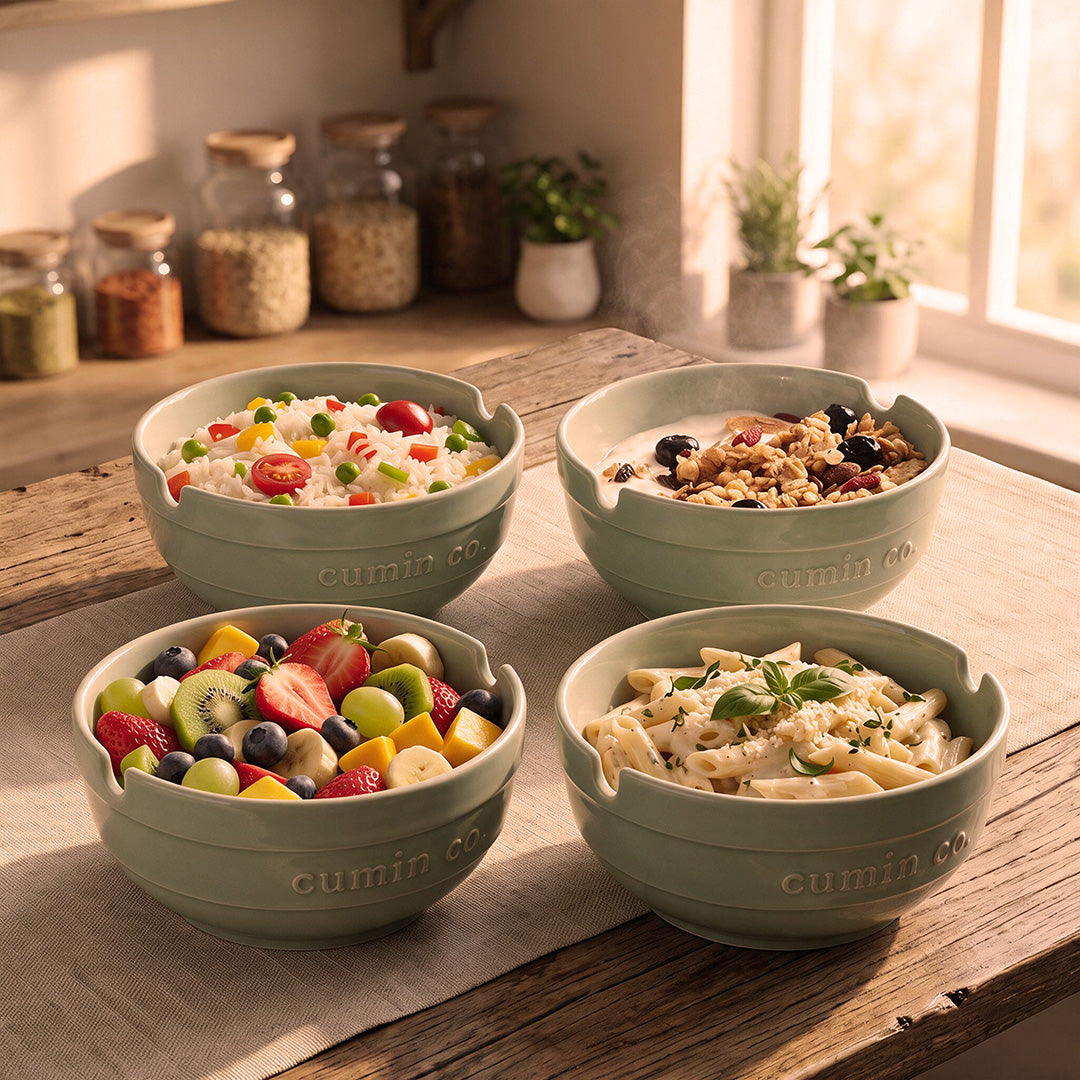
Slide the chopsticks under a manageable portion of noodles, lift with a slight twist to gather stray strands, and use the edge of the bowl to help corral anything loose. Between mouthfuls, resist the urge to lay your chopsticks flat across the table. A bowl with a built-in rim notch, like the one on Cumin Co.'s Noodle/Meal Bowl, gives them somewhere to rest without sliding back into the broth.
Rice & Small Bites
Rice is easier than it looks. Rather than pinching individual grains, use the chopsticks to scoop a small clump against the side of the bowl, tilting the bowl slightly toward your mouth. For small bites, dumplings, cubed tofu, vegetables, pinch gently from the sides rather than stabbing down through the middle, which is more likely to send food skidding off the plate.
Sushi
A single piece of nigiri or a maki roll should be picked up on its side, not from directly above, so the rice doesn't crumble under pressure. Dip fish-side down if you're using soy sauce, and use just enough pressure to lift. Sushi rice is looser than steamed rice and falls apart easily if pinched too hard.
Chopstick Etiquette: What to Avoid at the Table
A few habits are worth knowing even if you're eating at home rather than out. Standing chopsticks upright in a bowl of rice resembles a funeral incense ritual in several East Asian cultures and is considered bad luck, so always rest them flat instead. Passing food directly from your chopsticks to someone else's is avoided for the same reason. And pointing or gesturing with chopsticks mid conversation, while common by accident, reads as impolite in more formal settings.
That last point raises a practical question. If you can't stand your chopsticks up and shouldn't leave them balanced on the table, where do they actually go between bites? A dedicated chopstick rest solves this in restaurants, but at home it's just as easy to rest them across the rim of your bowl, which is exactly the problem that the rim notch molded into Cumin Co.'s Ramen/Meal Bowl was designed to solve, giving your chopsticks or a spoon a clean, stable place to sit mid meal.
Teaching Kids and Left-Handed Chopstick Tips
Kids generally pick up chopsticks faster with training chopsticks, versions with a hinge or connector near the top that removes the need to coordinate two separate sticks at once. Most children can transition to standard chopsticks somewhere between ages 5 and 7, though it varies widely, and there's no benefit to rushing it.
For left-handed users, the grip and finger mechanics are exactly the same, just mirrored. There's no correct handedness for chopsticks the way there sometimes is for scissors or certain sports equipment, so left-handed beginners should simply follow the same five steps with the other hand.
Chopstick Materials Compared: Wood, Bamboo, Melamine, and Steel
The material a pair of chopsticks is made from changes how they feel in your hand almost as much as grip technique does.
|
Material |
Grip & Feel |
Durability |
Food-Contact Notes |
Best For |
|
Wood (e.g., acacia) |
Slightly textured surface grips food well, warm to the touch |
Holds up for years with proper hand washing, can dry out or split if soaked repeatedly |
Look for a finish specifically rated food safe, since raw or poorly sealed wood can absorb moisture and odours |
Beginners and everyday use |
|
Bamboo |
Similar grip to wood, lighter weight |
Very durable for the weight, some inexpensive versions are more disposable grade |
Usually food safe, but quality varies widely between brands |
Everyday use, travel |
|
Melamine |
Smooth, slippery surface, harder to control |
Very durable, resists chipping |
Food safe when manufactured to standard, but the smooth surface makes technique errors more obvious |
Households that already have the technique down |
|
Stainless steel |
Smooth and often the hardest for beginners to control, common in Korean dining |
Extremely durable, dishwasher friendly |
Inert and food safe by nature of the material |
Confident users, high durability households |
Cumin Co.'s chopsticks are made from acacia wood with a tested, food-safe finish, colour matched to the Kairi and Rosé colourways of the Noodle/Meal Bowl. Wood is a genuinely good starting material for anyone still building the grip. The slight texture and light weight does some of the gripping work for you, which smoother materials like melamine or steel won't. The honest trade-off is that wood needs a bit more care than steel or melamine, worth knowing before you buy rather than after.
How to Care for and Store Your Chopsticks
Wood and acacia chopsticks should be hand washed and dried promptly rather than left to soak or run through a dishwasher. Repeated soaking and dishwasher heat are what cause a wood finish to dull or the wood itself to split over time. Store them upright or flat in a dry space rather than sealed in a damp container.
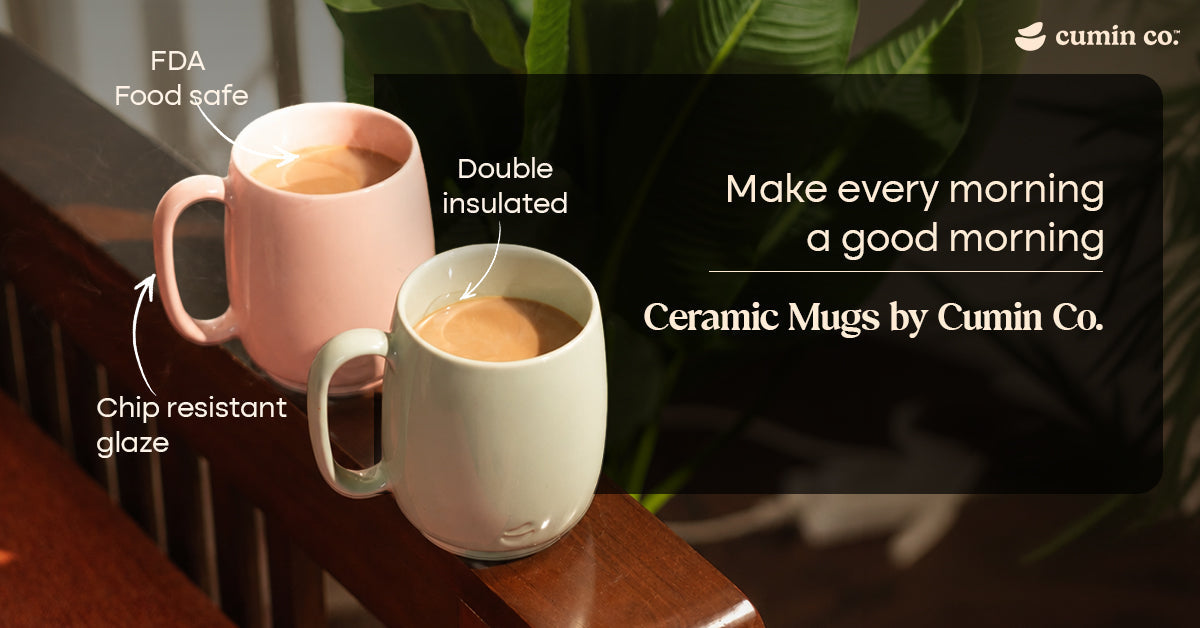
This is different from ceramic tableware, which can generally handle both. Cumin Co.'s ceramic Ramen/Meal/Noodle Bowl, for instance, is dishwasher safe, microwave safe, and made with a premium lead free, cadmium free, FDA food-safe glaze, all lab tested, but that's a property of the glazed ceramic, not something that carries over to the wood chopsticks that pair with it. Keep the two care routines separate: wash the bowl however's convenient, and give the chopsticks the quick hand wash they need.
How to Choose Your First Pair of Chopsticks
For a first pair, look for chopsticks on the shorter, lighter side with some texture near the tip rather than a fully smooth surface, since both make the grip easier to learn and hold onto. Square or hexagonal chopsticks, rather than fully round ones, also tend to be easier to control, since they don't roll between your fingers as easily.
If you're setting up for noodle nights at home, it's worth thinking about the chopsticks and the bowl together rather than separately, which is the idea behind Cumin Co.'s Ramen Set: the 15 cm Ramen/Meal Bowl paired with a matching set of acacia chopsticks in the same colourway, with the bowl's built-in rim notch giving the chopsticks somewhere to rest mid meal. The chopsticks aren't bundled in by default with the bowl on its own, since most people use the bowl for dal-chawal or curd rice on any given night, not noodles, so the Ramen Set is offered as its own option for anyone who wants the complete pairing.
Bringing It to the Table
The grip itself takes minutes to learn and a few meals to make automatic. The rest is just repetition. Picking up a pair for the first time or finally getting comfortable with a set that's been sitting in a drawer both lead to the same goal: eating comfortably, without thinking about your hands.
If you're setting up for your first noodle night at home, the Ramen Set pairs Cumin Co.'s Noodle/Meal Bowl with a matching set of chopsticks, built with small details, like the rim's chopstick notch, that make the difference between fumbling and actually enjoying the meal.
FAQ
Is it rude to leave chopsticks standing straight up in a bowl of rice?
Yes. In most East Asian dining cultures, standing chopsticks upright in rice resembles a funeral ritual and is considered bad luck. Rest them flat across the bowl's rim or on a chopstick rest between bites instead.
Can left-handed people use chopsticks the same way as right-handed people?
Yes. The grip and finger mechanics are identical, just mirrored to the left hand. There's no correct handedness for chopsticks, unlike some Western table etiquette around cutlery.
Are wooden chopsticks dishwasher safe?
Generally no. Wood and acacia chopsticks should be hand washed and dried promptly, since prolonged soaking or high dishwasher heat can dull the finish and cause splitting over time.
What's the fastest way for an adult to learn to use chopsticks?
Practice picking up small, low-stakes objects like dried beans or peanuts for a few minutes a day rather than starting with slippery restaurant food. The pinch-and-release motion becomes automatic within about a week of short daily practice.
Do chopsticks work for Indian food like dal-chawal or curd rice, or only noodles? Chopsticks aren't built for wet, saucy dishes like dal or curd rice, a spoon works better there. They're best suited to noodles, rice, sushi, and other drier or bite-sized foods, which is why they're typically offered as an optional add-on rather than a default utensil.
Why do my chopsticks keep slipping or crossing instead of pinching together? This usually means the bottom stick isn't properly anchored against the base of your thumb and ring finger. It should stay still while only the top stick moves. Re-anchoring the bottom stick fixes the crossing motion almost immediately.
What material chopsticks are best for a beginner? Wood or bamboo chopsticks are generally easiest for beginners, because their textured, slightly grippy surface prevents food from sliding, unlike smooth metal or melamine chopsticks. Acacia wood in particular holds up well to daily use while staying comfortable to grip.
Where should I rest my chopsticks between bites if there's no chopstick rest on the table? The edge of your plate or bowl works in a pinch, but a bowl with a built-in rim notch, designed specifically to cradle chopsticks or a spoon, keeps them from sliding into your food or off the table entirely.