 Food Containers
 Cookware Sets
 Limited Edition Launches
 Bakeware
 Serveware
 Corporate Gifting


15 Ways to Use Ceramic Bowls & Ramekins From Microwave to Table
A ceramic bowl and a ramekin can do far more than hold food at the table. Depending on their size and the manufacturer's specifications, they can be used for reheating, baking, prepping, portioning and serving.
Yet most kitchens tend to use them for a handful of familiar jobs. Bowls hold cereal, dal and soup. Ramekins are often brought out for desserts or the occasional baked dish.
There is plenty more they can do. Here are 15 practical ways to use ceramic bowls and ramekins, along with some guidance on choosing the right size and using them safely in the microwave, oven, refrigerator and dishwasher.
What Is the Difference Between a Ceramic Bowl and a Ramekin?
A ramekin is generally a small, straight-sided ceramic vessel designed for individual portions and, when specified as oven safe, for baking. Common capacities range from around 60 ml to 250 ml.
A ceramic bowl is generally wider and deeper, with capacities that can range from a few hundred millilitres to much larger serving sizes. Its shape makes it practical for eating, mixing and serving.
The straight sides of a ramekin are particularly useful for dishes such as soufflés, baked custards and individual gratins. They provide a defined cooking vessel and help create an even portion.
A bowl's wider opening makes it more convenient for foods that need stirring, scooping or mixing. The curved shape also makes it comfortable for serving dishes such as dal, soup, noodles and rice.
The most important consideration is not simply the shape, however. It is whether the particular ceramic piece has been tested and rated for the job you intend to use it for.
15 Ways to Use Ceramic Bowls and Ramekins Every Day
Uses in the microwave
1. Reheat Dal, Sabzi and Rice Straight in the Bowl
One of the simplest uses for a microwave-safe ceramic bowl is reheating leftovers.
Transfer your dal, sabzi or rice directly into the bowl, cover it loosely with a microwave-safe cover or plate, and heat until warmed through. Stirring halfway through can help distribute the heat more evenly, particularly with thicker foods or larger portions.
Always check that the bowl is specifically labelled microwave safe before using it.
2. Bake a Single-Serve Mug Cake or Brownie in a Ramekin
A small ramekin can be useful for individual desserts such as a mug cake or brownie, provided it is specifically rated for microwave use.
Leave enough room for the batter to rise rather than filling the ramekin to the top. Cooking time depends on the recipe, quantity and microwave, so start with the time specified in the recipe and check the centre before adding more time.
Let the dessert stand for a short while before eating, as the centre can remain hot after the microwave has stopped.
3. Melt Ghee, Butter, Chocolate and Jaggery
A small microwave-safe ramekin is ideal when you need to melt a small quantity of butter, ghee or chocolate.
Use short intervals and stir between each one. This is particularly useful for chocolate, which can overheat even when it does not look completely melted.
For jaggery or other ingredients that contain less moisture, use a suitable recipe method and take care when removing the hot ramekin.
4. Poach an Egg in the Microwave
A ramekin can be used to prepare a simple poached egg in the microwave, but eggs need special care.
If the yolk is left intact, pierce it before microwaving to allow steam to escape. Cover the ramekin loosely and cook in short intervals, checking the egg as you go.
Cooking times vary considerably between microwaves, so follow a tested recipe rather than relying on a single fixed time.
5. Steam Vegetables With a Plate as the Lid
A microwave-safe ceramic bowl can be used to steam small portions of vegetables.
Place the vegetables in the bowl with a small amount of water and cover loosely with a microwave-safe plate or lid. The cover helps retain steam while still allowing pressure to escape.
Cooking time depends on the vegetable and the quantity. Check for tenderness before serving.
Uses in the oven:
6. Bake Individual Gratins, Mac and Cheese and Lasagna
An oven-safe ramekin is useful for individual portions of dishes such as gratins, baked pasta, mac and cheese and mini lasagnas.
The smaller vessel also makes portioning straightforward. Because the food is divided into individual dishes, each portion can develop its own browned top during baking.
Check the manufacturer's maximum oven temperature before using a ceramic ramekin in the oven.
7. Make Crème Brûlée and Baked Custard in a Water Bath
Ramekins are commonly used for baked custards and crème brûlée.
For delicate custards, a water bath helps moderate the heat reaching the ramekins and can promote gentler, more even cooking. Place the ramekins in a baking dish and carefully add hot water around them, following the recipe's instructions.
The water should not enter the ramekins, and care is needed when removing the hot baking dish from the oven.
8. Bake Eggs, Mini Shakshuka and Roasted Garlic
An oven-safe ramekin can turn out individual baked eggs, small portions of shakshuka or roasted garlic.
Cooking temperature and time depend on the recipe, the quantity and the vessel. For baked eggs in particular, keep an eye on the yolk and remove the ramekin when the eggs are cooked to your preferred level.
Ceramic remains hot after coming out of the oven, so always place it on a heat-resistant surface and use oven gloves.
Uses in prep and storage
9. Set Curd and Hung Curd in Individual Portions
A clean ceramic bowl can be useful for preparing and serving curd, provided it is suitable for food use and thoroughly clean.
For setting curd, the important factors are the milk temperature, starter culture, time and ambient temperature. The vessel itself is only one part of the process.
Small ramekins can also be useful when portioning curd or hung curd for individual servings.
10. Hold Your Mise en Place Before a Tadka
Small ramekins are excellent for organising ingredients before cooking.
Measure out jeera, hing, curry leaves, chillies or other tempering ingredients into separate bowls before heating the oil or ghee. Once the pan is hot, everything is ready to go.
It is a small habit, but it makes fast cooking much easier to manage.
11. Marinate Small Batches Without a Metallic Edge
Glazed ceramic is a practical option for preparing small batches of acidic marinades containing ingredients such as lemon juice, vinegar, tamarind or yoghurt.
The glaze provides a barrier between the food and the ceramic body. Use food-safe, intact glazed ware and avoid pieces with damaged or heavily crazed surfaces.
For larger quantities or longer storage, use a container specifically designed for food storage.
12. Portion and Store Meal Prep in the Fridge
Ceramic bowls can be convenient for portioning leftovers and meal-prep dishes in the refrigerator.
If the same bowl is also rated for microwave use, you may be able to reheat the food in it without transferring it to another vessel. However, this depends on the manufacturer's instructions.
Avoid taking a very cold ceramic vessel directly into a very high-temperature environment unless the manufacturer specifically states that it can handle that transition. Thermal shock can cause ceramic to crack.
If you need a genuinely leak-proof container for transporting food, choose a storage vessel with a properly fitted lid, such as a borosilicate glass container designed for that purpose.
Uses on the table
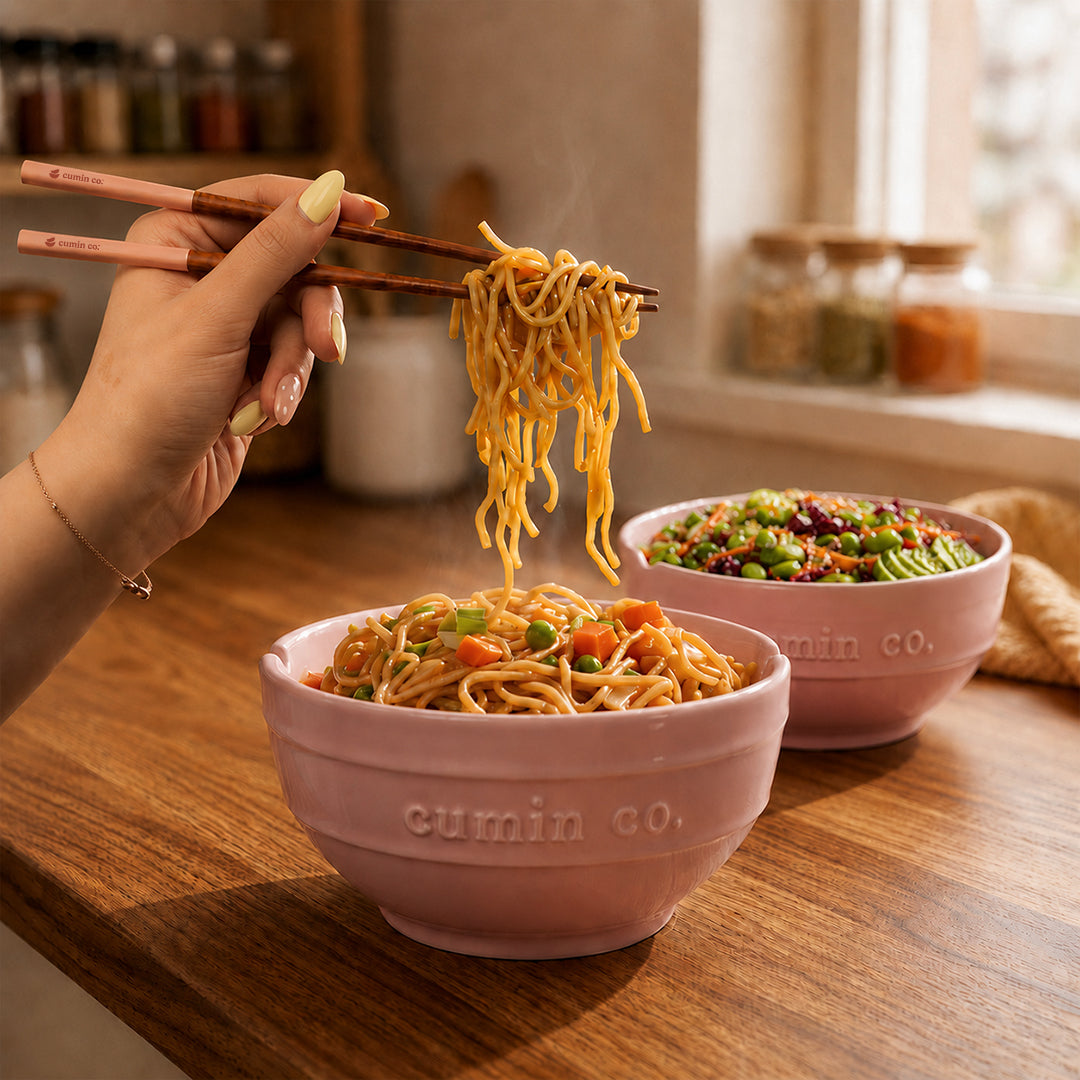
13. Serve Ramen, Khichdi, Soup and Noodle Bowls
A deeper ceramic bowl is well suited to foods such as ramen, khichdi, soup and noodle dishes.
The right size depends on the portion and the food. A larger bowl gives you enough room for broth and toppings, while a medium bowl works well for everyday servings of rice, dal and similar dishes.
For hot food, warming the bowl with hot water before serving can help reduce the initial temperature drop. Always empty and dry the bowl before adding food.
14. Serve Chutney, Raita, Pickle and Dips
Small ramekins are useful for serving chutney, raita, pickle, sauces and dips.
Place a few around a thali, dining table or sharing platter and you have an easy way to keep accompaniments separate from the main dish.
A small vessel also makes it easier for everyone at the table to serve themselves without mixing different flavours.
15. Serve Dessert, Ice Cream, Kheer and Mithai
Ceramic bowls and ramekins work equally well for desserts.
Use a smaller ramekin for mithai, sauces or individual baked desserts, or choose a larger bowl for kheer, ice cream and fruit.
For ice cream, a chilled bowl can help slow down melting slightly. It is a simple step that can make serving dessert a little more relaxed.
Are Ceramic Bowls Microwave Safe?
Many ceramic bowls are microwave safe, but the material name alone is not enough to determine this.
Look for the manufacturer's microwave-safe guidance. Ceramic pieces with metallic decoration or trim should not generally be used in a microwave, as metal can cause arcing.
The condition and construction of the bowl also matter. A damaged, cracked or heavily crazed piece should not be used for microwave heating.
It is also important to remember that microwave-safe does not mean that the bowl itself will remain cool. Food heats in the microwave and transfers heat to the vessel, which is why a microwave-safe ceramic bowl can still become hot enough to require oven gloves or a cloth.
Why Did Ceramic Bowl Crack in the Microwave?
One possible reason is thermal shock. Ceramic is a rigid, brittle material, so a sudden temperature difference can create stresses within the piece.
Several factors can influence how well a ceramic vessel handles temperature changes:
Coefficient of thermal expansion: Different ceramic bodies expand by different amounts when heated. The formulation of the clay body and glaze affects how the finished piece responds to temperature changes.
Glaze fit: The glaze and ceramic body need to be compatible as they expand and contract. Poor compatibility can contribute to crazing, which appears as a network of fine lines across the glaze, or shivering, where the glaze begins to separate from the body.
Porosity: Ceramic bodies vary in porosity depending on how they are formulated and fired. More porous ceramics can absorb more water, while highly vitrified ceramics generally absorb very little. The appropriate level depends on how the vessel is designed and used.
Wall thickness and evenness: Uneven sections can heat and cool at different rates. Abrupt changes in thickness can also create areas where stress becomes concentrated.
Myth vs fact
Myth: "Microwave-safe" means the bowl cannot crack.
Fact: A microwave-safe rating means the manufacturer has indicated that the product is suitable for microwave use under specified conditions. It does not mean the vessel is immune to damage from every temperature change or form of misuse.
The honest limitation: ceramic is not automatically thermal-shock-proof. If you regularly need to move a container directly between extreme temperatures, check the manufacturer's instructions carefully and choose a material specifically designed for that use.
How Do I Know if Ceramic Dishware Is Lead-Free and Food Safe?
You cannot reliably determine whether ceramic dishware is food safe simply by looking at it.
Food-contact ceramicware can be tested for the release of substances such as lead and cadmium. One common testing approach uses an acidic solution to extract substances that could potentially migrate from the ceramic into food, after which the solution is analysed against the applicable regulatory limits.
The exact testing method and limits depend on the market and the standard being followed.
Those limits are public, and here is what they actually are:
|
Standard |
Small hollowware (<1.1 L) — Lead |
Small hollowware — Cadmium |
Cups & mugs — Lead |
|
IS 9806:2001 (BIS, India) |
2.0 mg/L |
0.50 mg/L |
0.5 mg/L |
|
FDA CPG 545.450 / 545.400 (US) |
2.0 µg/mL |
0.5 µg/mL |
0.5 µg/mL |
The applicable requirements, testing conditions and limits should always be checked against the current version of the relevant standard or regulation rather than assumed from a general claim such as "food safe".
Does "lead-free" mean no lead at all? Not necessarily. In regulatory and testing contexts, claims relating to lead content or lead release can have specific meanings depending on the jurisdiction and the applicable rules. The most useful question to ask a brand is what standard the product has been tested against and whether supporting documentation is available.
Where the real risk sits: older, damaged, poorly made or decorative ceramicware can warrant extra caution, particularly where the piece was not intended for food contact. Do not assume that an attractive handmade or decorative piece has been tested for food use.
Glass vs Ceramic Bowls: Which Is Better for Daily Use?
Neither material is better for every situation. Ceramic and borosilicate glass have different strengths.
Ceramic is often preferred for serving because of its appearance, weight and ability to retain heat. Borosilicate glass is useful when visibility, storage and resistance to temperature changes are priorities.
|
Ceramic (glazed, vitrified) |
Borosilicate glass |
|
|
Heat retention |
Generally good for serving |
Generally lower than ceramic |
|
Thermal shock tolerance |
Depends on the ceramic body and product rating |
Generally designed for better thermal-shock resistance |
|
Microwave |
Yes, if rated |
Yes, if rated |
|
Oven |
Yes, if rated |
Yes, if rated |
|
Freezer |
Only according to manufacturer's instructions |
Depends on the specific product and manufacturer's instructions |
|
Weight |
Generally heavier |
Generally lighter |
|
Staining & odour |
Low with a suitable intact glaze |
Low |
|
Failure mode |
Can chip or crack |
Can break or shatter |
|
Best for |
Serving, table use, baking and reheating when rated |
Storage, visibility and products designed for temperature changes |
One distinction is important: borosilicate glass and ordinary soda-lime glass are not the same material. Borosilicate glass is formulated to offer greater resistance to thermal shock than conventional soda-lime glass.
That does not mean every borosilicate glass product can automatically move from freezer to oven. Always follow the instructions for the specific product.
When glass is the better buy: if you need a fitted, leak-resistant lid, want to see the contents easily, or need a storage container designed for frequent temperature changes, a purpose-built borosilicate glass container may be more suitable like STASH.
Are Ceramic Bowls Dishwasher Safe, or Do They Need Hand Washing?
Many glazed ceramic bowls are dishwasher safe, but this depends on the product.
Check the manufacturer's instructions before putting a piece in the dishwasher. Metallic decoration, delicate overglaze decoration and certain handmade finishes may require hand washing.
There is also a simple mechanical risk. Non chip resistant ceramic bowls can chip if they knock against one another or against other hard objects during a wash cycle. Stacking them with enough space between pieces can help reduce that risk.
How to Remove Stains, Curry Marks and Crazing Lines from Ceramic
Turmeric, tomato and other strongly coloured foods can leave marks on ceramic surfaces.
For ordinary surface stains, a paste made with bicarbonate of soda and water can be used as a gentle cleaning option. Apply it to the mark, leave it briefly and wipe clean.
Avoid abrasive steel scrubbers on glazed surfaces because they can scratch the glaze.
If the lines are fine and spread across the glaze, they may be crazing rather than food stains. Crazing itself cannot simply be cleaned away because the lines are cracks in the glaze.
If a piece is cracked, chipped or showing significant glaze damage, it is better to stop using it for food and follow the manufacturer's guidance.
How to Choose Ceramic Bowls and Ramekins That Last
-
Look for numbers, not adjectives. "Oven safe" and "microwave safe" are useful only when backed by the manufacturer's instructions and, where relevant, temperature limits.
-
Ask which lead and cadmium standard it is tested to. Look for a specific standard or regulation and ask whether testing documentation is available.
-
Check whether the body is vitrified or otherwise suitable for the intended use. Vitrification affects water absorption and durability, but the term "ceramic" alone does not tell you how a particular piece will perform.
-
Run a finger around the foot ring. It should be smooth and well finished, without sharp edges or rough burrs.
-
Check that the walls are even. Consistent construction is useful for both durability and everyday handling.
-
Ask whether you can buy one more in two years. Colours and collections can change over time. If you are buying a set for everyday use, continued availability can make replacing a single broken piece much easier.
FAQs
Are ceramic bowls microwave safe?
Many glazed ceramic bowls are microwave safe, but you should always check the manufacturer's rating. Avoid microwave use with metallic decoration and do not use pieces that are cracked, chipped or otherwise damaged.
Is it safe to put a cold ceramic bowl in a hot microwave?
A fridge-cold ceramic bowl can experience a sudden temperature change when heated. If the manufacturer does not specify that the product can handle rapid temperature changes, allowing it to warm slightly before heating is a sensible precaution. Avoid moving ceramic directly between extreme temperatures unless the product is specifically designed for it.
Why did my ceramic bowl crack in the microwave?
Thermal shock is one possible cause. A sudden temperature difference can create stress within the ceramic. Existing chips or cracks, uneven construction, the particular ceramic body and the temperature change involved can all affect the outcome.
Are ceramic bowls dishwasher safe or do they need hand washing?
Many glazed ceramic bowls are dishwasher safe, but check the manufacturer's instructions. Pieces with metallic decoration, delicate finishes or existing damage may need to be hand washed.
How do I know if ceramic dishware is lead-free and food safe?
You cannot reliably tell by looking. Food-contact ceramicware can be tested for the release of substances such as lead and cadmium using recognised testing methods. Ask the manufacturer which standard the product has been tested against and whether test documentation is available.
Are ceramic bowls good for meal prep?
Yes, provided the bowl is suitable for food storage and the manufacturer permits the intended use. A microwave-safe bowl can also make reheating convenient. The main limitation is that many ceramic bowls do not have leak-proof lids, so a purpose-built storage container is usually a better choice for transporting food.
Can I use a ramekin for rice or curry, not just dessert?
Absolutely. Ramekins can be used for small portions of rice, dal, curry, chutney, sauces and other foods. Their compact size also makes them useful for portioning ingredients during cooking.
What size ceramic bowl is best for everyday meals?
There is no single ideal size because it depends on what you eat most often. A bowl around 500–600 ml can be a versatile option for many everyday foods, while larger 700–900 ml bowls are better suited to generous portions, ramen and brothy noodle dishes. If you are buying just one bowl, choose the capacity that matches your most common meals.