 Shop All
 Food Containers
 Cookware Sets
 Limited Edition Launches
 Bakeware
 Serveware
 Corporate Gifting

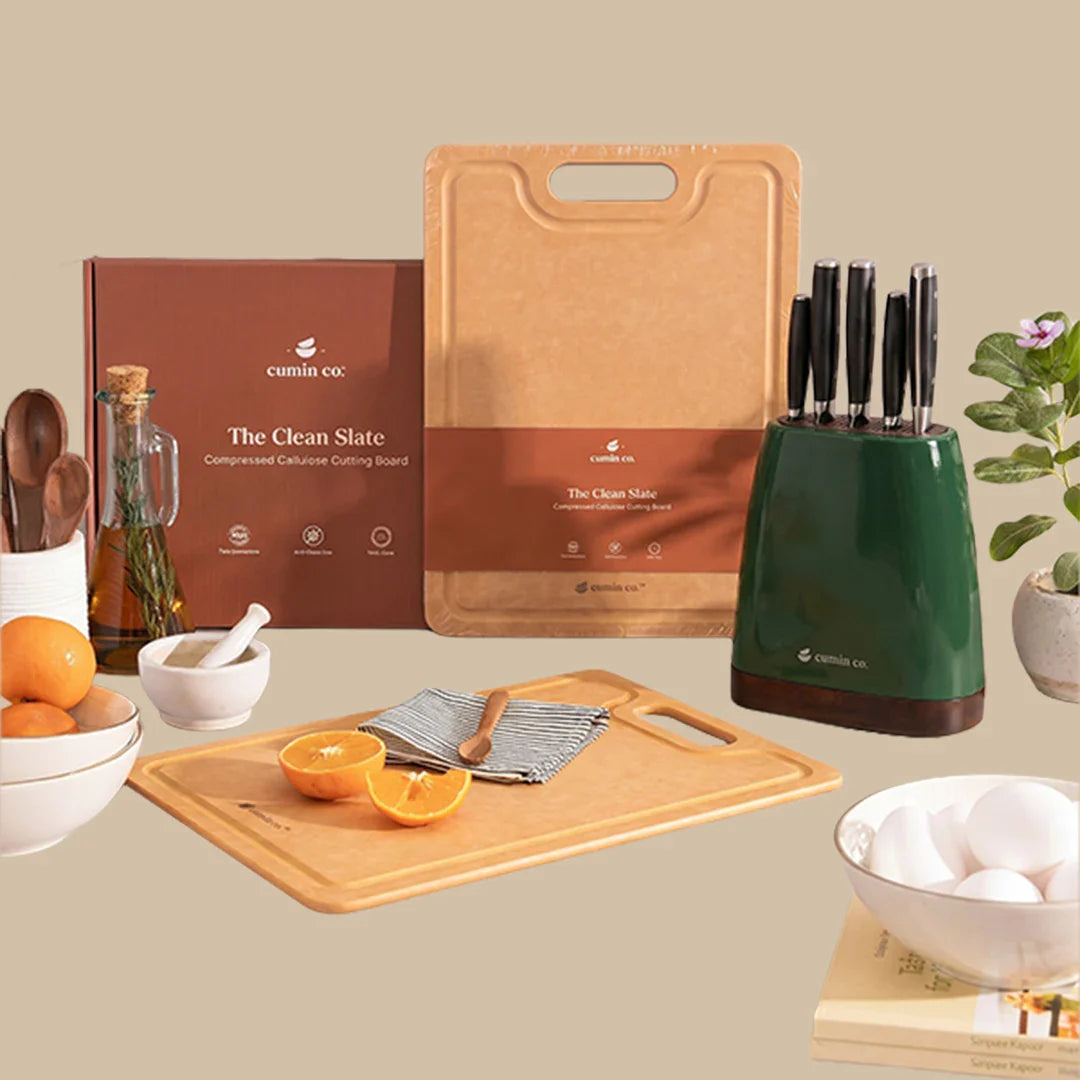

A good kitchen rarely comes together in one shopping trip. It usually builds itself slowly around the things you keep reaching for every single day. A dependable kadai. One good tawa. A knife that cuts cleanly. Here’s a more realistic guide to the kitchen essentials that actually matter.
Why Having the Right Kitchen Essentials Matters?
Most badly set up kitchens are not missing more things.
They’re missing the right ones.
You notice it quickly once daily cooking starts. A pan heating unevenly while onions burn only on one side. Tiny chopping boards where half the coriander ends up on the counter. Cheap spatulas bending slightly near heat after two weeks.
And honestly, what you cook in matters more now than people used to think.
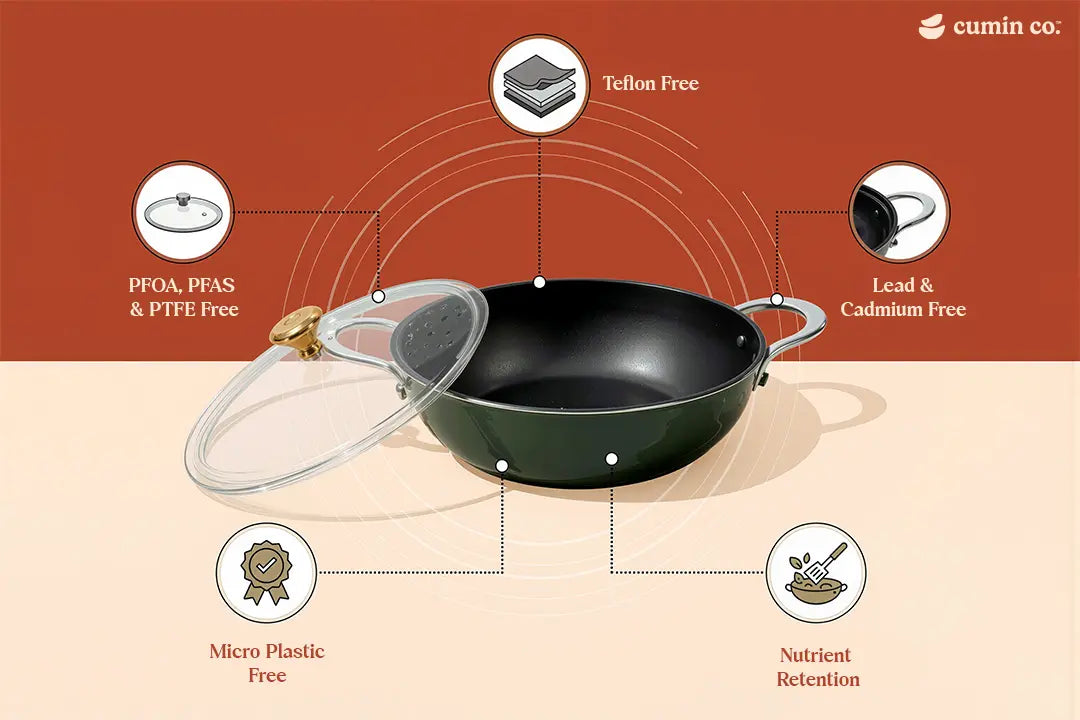
A lot of coated cookware slowly changes after repeated high-heat cooking. Especially in Indian kitchens where tadkas, frying, and long bhunas happen almost daily. The center starts looking worn out first usually. Food behaves differently after that.
That’s partly why more people are moving toward safer, longer-lasting cookware instead of treating pans like something temporary.
Good kitchen essentials products usually disappear into routine after a while. Which honestly is probably the best compliment cookware can get.
That’s also why brands like Cumin Co. focus so heavily on toxin-free enamel cast iron cookware designed for everyday Indian cooking instead of occasional use.
Kitchen Essentials Cookware — The Foundation of Your Home Kitchen
1. Toxin Free Kadai / Wok — The Most-Used Vessel in Indian Kitchens
If somebody cooks Indian food regularly, the kadai usually becomes the hardest-working thing in the kitchen without anybody discussing it much.
Sabzis. Frying. Reheating leftovers. Curries that somehow take longer than expected every single time.
For smaller households, a 2–3L kadai usually feels enough. Bigger families generally end up preferring 3.9L or larger because it simply gives more room while cooking.
This is also where cheap cookware starts becoming annoying surprisingly fast. Uneven heat. Loose handles. Oil temperatures drop too quickly while frying.
Heavier cast iron cookware behaves differently once it gets properly hot. Onion masalas cook more evenly. Frying feels steadier too.
And enamel-coated cast iron removes most of the maintenance drama people associate with traditional cast iron.
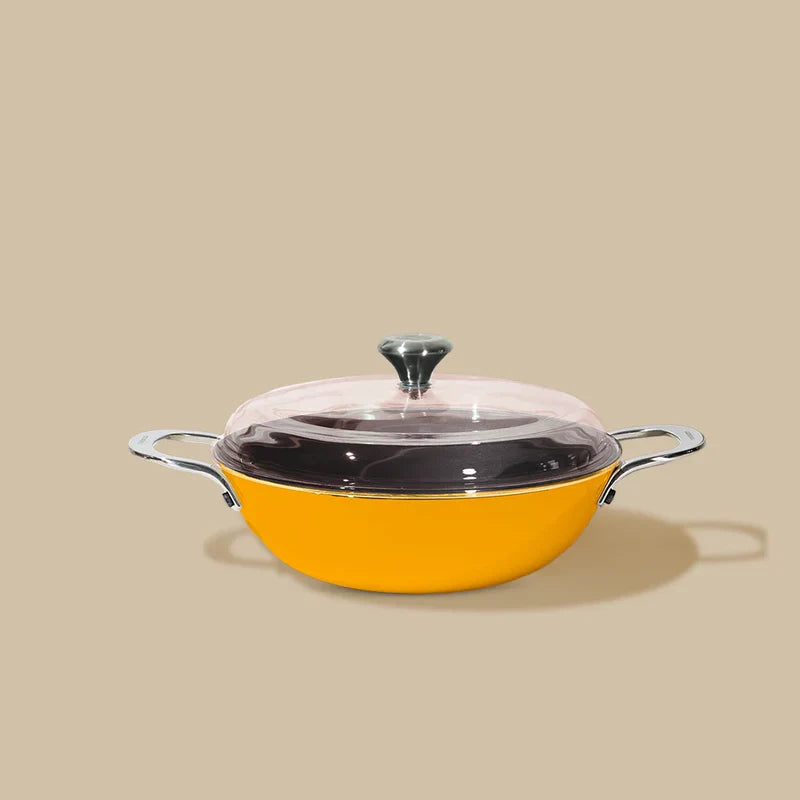
Cumin Co.’s Enamel Coated Cast Iron Kadai comes in 2.1L, 3L, 3.9L and 5.5L sizes. All toxin-free. All induction compatible.
2. Non Toxic Naturally Non Stick Tawa — Non-Negotiable for Every Indian Kitchen
Most kitchens quietly revolve around one tawa.
Rotis in the morning. Dosas on weekends. Leftover parathas reheated directly over heat because that somehow tastes much better than microwaving them.
A dosa tawa is generally flatter and wider, while a roti tawa has slightly curved edges that make flipping easier.
26cm works comfortably for smaller homes. If you cook for families or enjoy larger dosas, 28–30cm usually feels much more practical.
A lot of people also get tired of replacing damaged non-stick tawas repeatedly. Once the coating starts changing, the entire pan somehow feels irritating to cook in.
A cast iron tawa takes slightly longer to heat, but the cooking feels far more even afterward.
Explore Cumin Co.’s Dosa & Roti Tawa collection for healthier everyday cooking.
3. Heat Retaining Frying Pan / Skillet
People buy frying pans imagining omelettes.
Then suddenly the same pan is making paneer, sautéed vegetables, fish fry, grilled sandwiches, late-night Maggi. All of it.
A 20cm pan usually works for one or two people comfortably. Families generally end up preferring 24–26cm because the extra space helps more than expected.
This is another place where lighter coated cookware starts feeling temporary after a while. Tiny scratches near the center. Food sticking randomly one day and not the next.
Enamel-coated skillets feel calmer somehow. Less delicate. Less high-maintenance mentally.
Explore Cumin Co.’s Enamel Cast Iron Frying Pan collection.
4. Safe & Slow Cooking Dutch Oven
A Dutch oven is one of those pieces people think they’ll use occasionally.
Then winter arrives and it never really leaves the stove.
Slow-cooked dals. Soups. Biryani. Long-simmered curries that need patient heat instead of aggressive flames.
For smaller homes, 2.5L usually works well. Larger families generally prefer 4–5L because batch cooking becomes easier.
Good cast iron Dutch ovens hold heat beautifully once warmed up properly. Which matters more than people think during slower cooking.
Less scorching. Better simmering. Food just cooks more evenly overall.
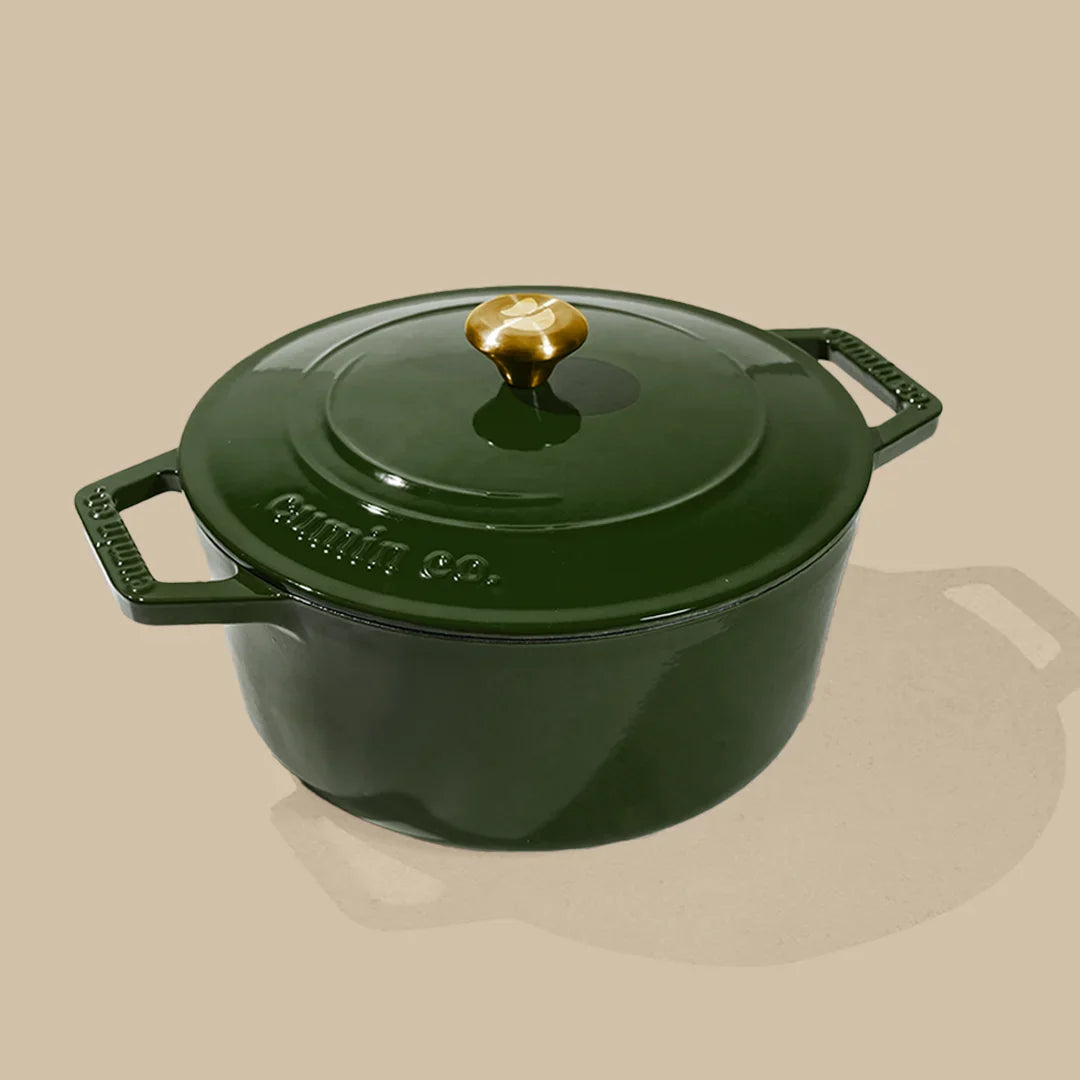
Explore Cumin Co.’s Dutch Oven collection.
5. Toxin Safe Multipurpose Sauce Pan
Nobody buys a saucepan excitedly.
Then suddenly it becomes one of the most-used kitchen utilities in the house.
Boiling milk. Making chai. Heating soup when somebody feels sick. Reheating dal late at night because dinner timings collapsed again.
A 1–1.5L saucepan usually handles most everyday needs comfortably.
Explore Cumin Co.’s Sauce Pan collection.
6. Non Metal Leaching Tadka Pan — Small But Essential
Tiny pan. Constant use.
A tadka pan is one of those small kitchen utensils people underestimate right until they start cooking Indian food regularly.
Garlic sizzling in ghee. Mustard seeds crackling. Curry leaves flying aggressively across the stove.
Most Indian dishes quietly begin here.
A 0.25L pan is enough for most homes, but the material matters because tadka cooking involves very high heat in a very small area.
Explore Cumin Co.’s Tadka Pan collection.
7. Specialty Cookware (For Breakfast Lovers)
Some cookware only starts making sense once you realise how often you’ll actually use it.
A paniyaram pan for weekend breakfasts. A pancake pan for rushed mornings. A braiser for slower Sunday cooking.
These are usually the kitchen cooking items people add gradually instead of buying immediately while moving in.
Explore:
from Cumin Co.
Kitchen Utensils List — Every Cooking Tool You Need Daily
Spatulas — The Most Reached-For Tool in Any Kitchen
People underestimate spatulas constantly.
Until the cheap ones start warping near heat or scratching cookware surfaces after a few months.
Silicone spatulas usually hold up much better during regular cooking, especially with enamel cookware. A set of three different sizes is enough for most kitchens honestly.
BPA-free materials matter too once cooking becomes daily instead of occasional.
Cumin Co.’s BPA-Free Silicone Spatula Set is designed specifically for enamel cast iron cookware.
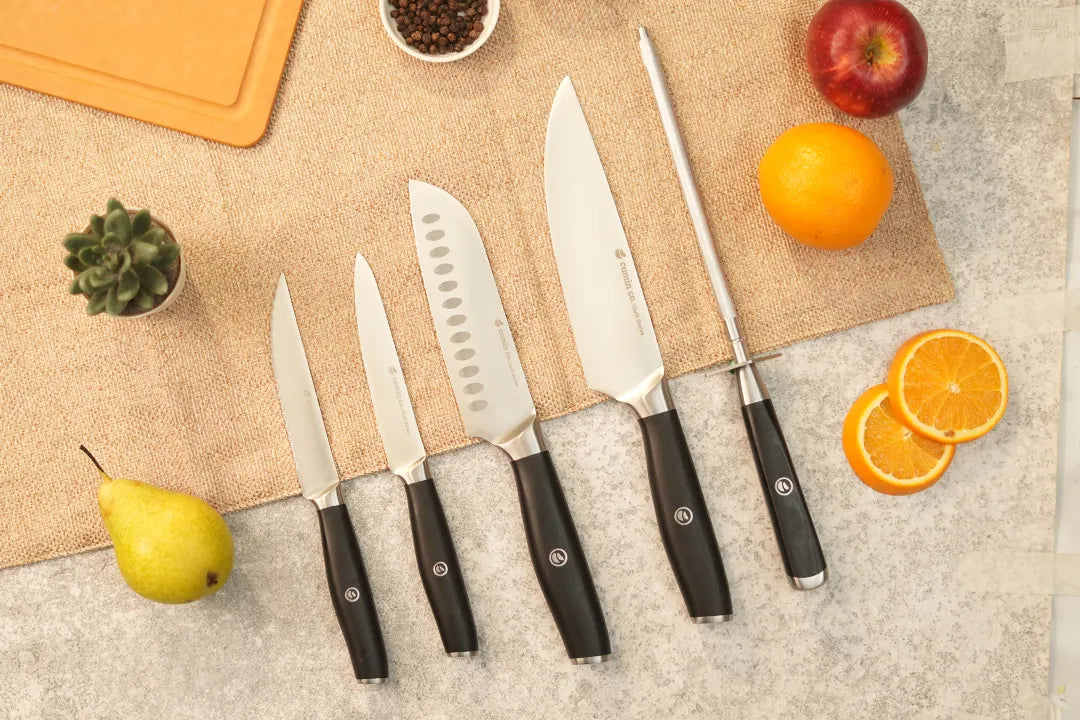
Knives & Cutting Tools — Your Most Important Kitchen Investment
Chopping Board — Non-Negotiable Partner for Every Knife
Please buy a larger chopping board than you think you need.
Tiny boards make cooking weirdly frustrating. Tomatoes sliding off the side. Onion peels everywhere. No room to prep comfortably.
Wooden boards feel gentler on knives but need care. Plastic boards clean easily, though deep grooves eventually trap bacteria over time.
Anti-bacterial composite boards usually feel like the best middle ground for modern kitchens.
And honestly, a board around 40cm or larger changes prep more than most expensive gadgets ever will.
Cumin Co.’s Anti-Bacterial Chopping Board (44cm) is designed for daily Indian meal prep.
Storage & Utility
Wooden Pots & Pan Organizer Rack
Heavy cookware stacked badly inside cabinets becomes annoying very quickly.
A proper pots and pan organiser rack simply makes kitchens feel calmer and less chaotic.
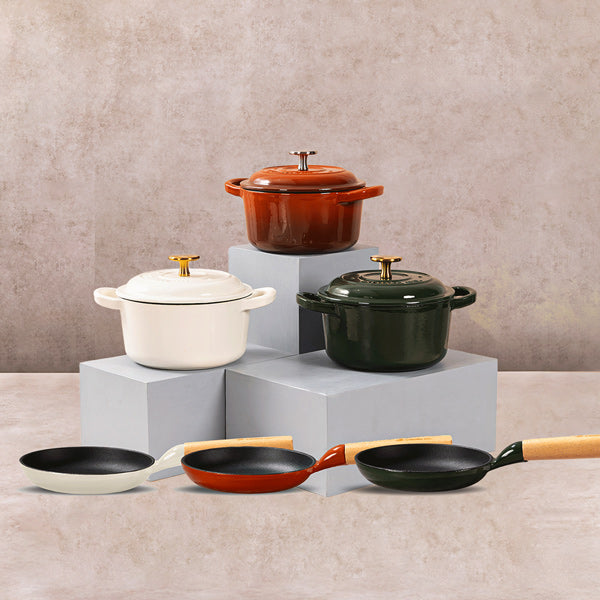
Mini Cocottes
Not necessary. Still lovely to have.
Mini cocottes somehow make hosting feel more thoughtful without trying too hard.
Knife Holder
One of those things people delay buying for too long.
A proper knife holder keeps counters cleaner and blades sharper.
Small difference. Daily improvement.
Kitchen Essentials for a New Home — The Complete Setup List
Phase 1 — Buy First (Day One Essentials)
-
1 medium kadai
-
1 tawa
-
1 frying pan
-
1 knife set
-
1 large chopping board
-
1 spatula set
-
1 organiser
That honestly covers most daily cooking comfortably.
Phase 2 — Add as You Cook More
-
Dutch Oven
-
Sauce Pan
-
Tadka Pan
These are the kinds of necessary kitchen items people slowly realise they use constantly once the kitchen settles into routine.
Phase 3 — Upgrades & Nice-to-Haves
-
Paniyaram Pan
-
Pancake Pan
-
Braiser
The best kitchens usually grow around habits slowly instead of appearing fully finished overnight.
Best Cookware Material for Healthy Cooking in 2026
Traditional non-stick cookware still feels convenient initially. But repeated high heat eventually changes most coatings, especially once metal utensils and daily cooking enter the picture.
Stainless steel lasts forever honestly. Though if you’ve cooked onion masalas in cast iron long enough, the difference in heat retention becomes obvious pretty quickly.
Hard anodized aluminium heats fast and feels lightweight, but deep scratches eventually expose raw aluminium underneath.
Enamel-coated cast iron feels different long term. No synthetic coating. No PFOA or PTFE. Just steadier heat and cookware that survives years of cooking without feeling temporary afterward.
That’s the direction Cumin Co. has focused on across its cookware collections.
Explore Cumin Co.’s full toxin-free cookware collection.
FAQs on Kitchen Essentials
What are the must-have kitchen essentials for a new home?
Honestly, fewer things than people expect.
A kadai, tawa, frying pan, knife, chopping board, spatulas, and saucepan usually cover most everyday cooking comfortably.
What is a basic kitchen utensils list?
Most homes only need a few dependable cooking utensils to begin with. Spatulas, knives, chopping boards, serving spoons, and ladles usually end up getting used constantly.
Which utensil is good for cooking on cast iron?
Silicone or wooden utensils generally work best because they feel gentler on enamel surfaces during daily cooking.
What cookware is safest for daily cooking?
A lot of people now prefer stainless steel or enamel-coated cast iron because they avoid synthetic non-stick coatings that slowly degrade over time.
Is a knife set worth buying as a kitchen essential?
Yes, but you probably don’t need an enormous set immediately.
One good chef’s knife and a smaller utility knife usually handle most daily prep comfortably.
How many kitchen items do I really need?
Far fewer than most online kitchenware products list articles suggest honestly.
Most kitchens slowly settle around the same handful of reliable things people keep reaching for every single day.