



The decision to bring the right cookware to your kitchen has never been an easy one. It is important to make an informed decision because what you cook in, not only affect your health but also the quality of food you serve to your loved ones.
This is why it's important to make comparisons like hard anodized Vs stainless steel cookware or stainless steel Vs non-stick cookware.
All of these materials are known for their unique characteristics that decide how they wear over time and the effect they have on your food. In this guide we will dive into hard anodized, stainless steel, non-stick and enamel cast iron cookware to understand their performance, health implications and longevity so you can choose what’s best for your kitchen.
What Are The Key Differences Between Hard Anodized vs Stainless Steel vs Non Stick vs Cumin Co. 100% Toxin Safe Enamel Cast Iron Cookware?
|
Feature |
Hard Anodized |
Stainless Steel |
Non-Stick (PTFE) |
Cumin Co. Enamel Cast Iron |
|
Toxin safety |
Moderate (often has PTFE layer) |
Good (minor leaching possible) |
Poor (PTFE / PFAS) |
Excellent (zero synthetic coatings) |
|
Heat distribution |
Excellent |
Good (with multi-ply) |
Excellent |
Excellent (superior retention) |
|
Durability |
5–8 years typical |
Decades |
2–5 years |
Lifetime / heirloom |
|
Non-stick performance |
Moderate (some oil needed) |
Low (sticky without technique) |
Excellent (when new) |
Good (develops with use) |
|
High-heat searing |
Moderate |
Excellent |
Poor (coating degrades) |
Excellent |
|
Oven safety |
Varies (check brand) |
Yes (up to 500°C+) |
Limited (max ~180°C) |
Yes (240°C+) |
|
Weight |
Light |
Medium |
Light |
Heavy |
|
Metal utensil safe |
No |
Yes |
No |
Use with care |
|
Requires seasoning |
No |
No |
No |
No (enamel, not raw cast iron) |
|
Induction compatible |
Some models |
Yes |
Some models |
Yes |
|
Price range (India) |
₹800 – ₹3,500 |
₹1,200 – ₹8,000 |
₹500 – ₹3,000 |
₹2,500 – ₹9,000 |
|
Cost per year (lifetime) |
Moderate |
Low |
High (frequent replacement) |
Very low (generational) |
A. What is Hard Anodized Cookware?

Hard anodized cookware is created by putting aluminum through an electrochemical process, which enhances its strength and makes it more resistant to corrosion. It is also often paired with a non-stick coating to enable a stick-free cooking experience. It’s often seen as a practical, mid-range choice.
When aluminum is put through an electrochemical process to enhance its strength and make it resistant to corrosion it turns into hard anodized material. It is usually given a teflon coating for a non-stick cooking experience.
Where it shines
-
Lightweight and easy to use
-
Even heat distribution
-
Great for everyday cooking
Where it struggles
-
Often paired with a coating, which significantly impacts its performance over time
-
The surface can change over time affecting your cooking results
-
Needs to be replaced often
B. What is Stainless Steel Cookware?

Stainless steel cookware is considered to be durable. Most modern stainless steel pieces come with a Triply Construction, where three layers of metal are fused together, generally with an aluminum core. This ensures even heat distribution with a highly stable exterior surface.
Where it shines
-
Keeps flavors intact
-
Built to last over years
-
Versatile for various cooking techniques
Where it struggles
-
Food can stick if the heat or oil isn’t just right
-
It takes a bit of practice to master its use
-
Difficult to maintain
-
Small amounts of metal might leach out with acidic ingredients
C. What is Non-stick Cookware?

Non-stick cookware is made for an easy cooking experience. They mostly come with a Teflon coating made from PTFE. Sometimes, the non-stick coating can also be made of ceramic.
Where it shines
-
Food does not stick to the cookware
-
Requires less oil
-
Easy to clean & maintain
Where it struggles
-
The coating flakes over
-
Needs frequent replacement
-
Not ideal for high heat
-
Leaches chemicals in food once the coating breaks
D. What is Enamel Cast Iron Cookware? 
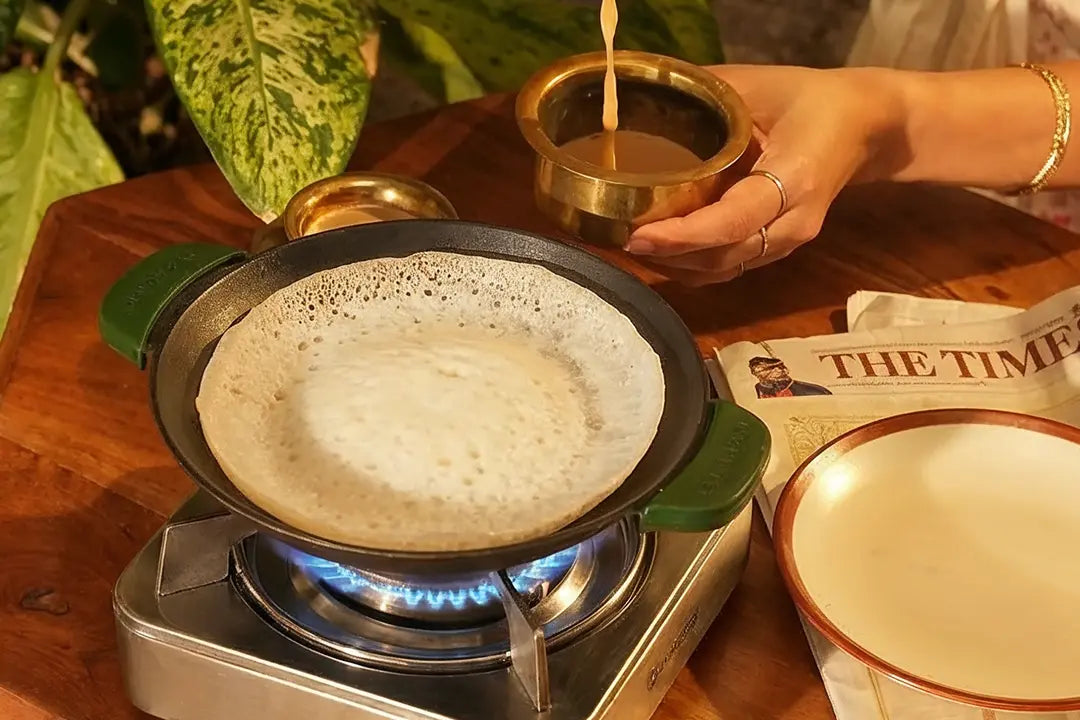
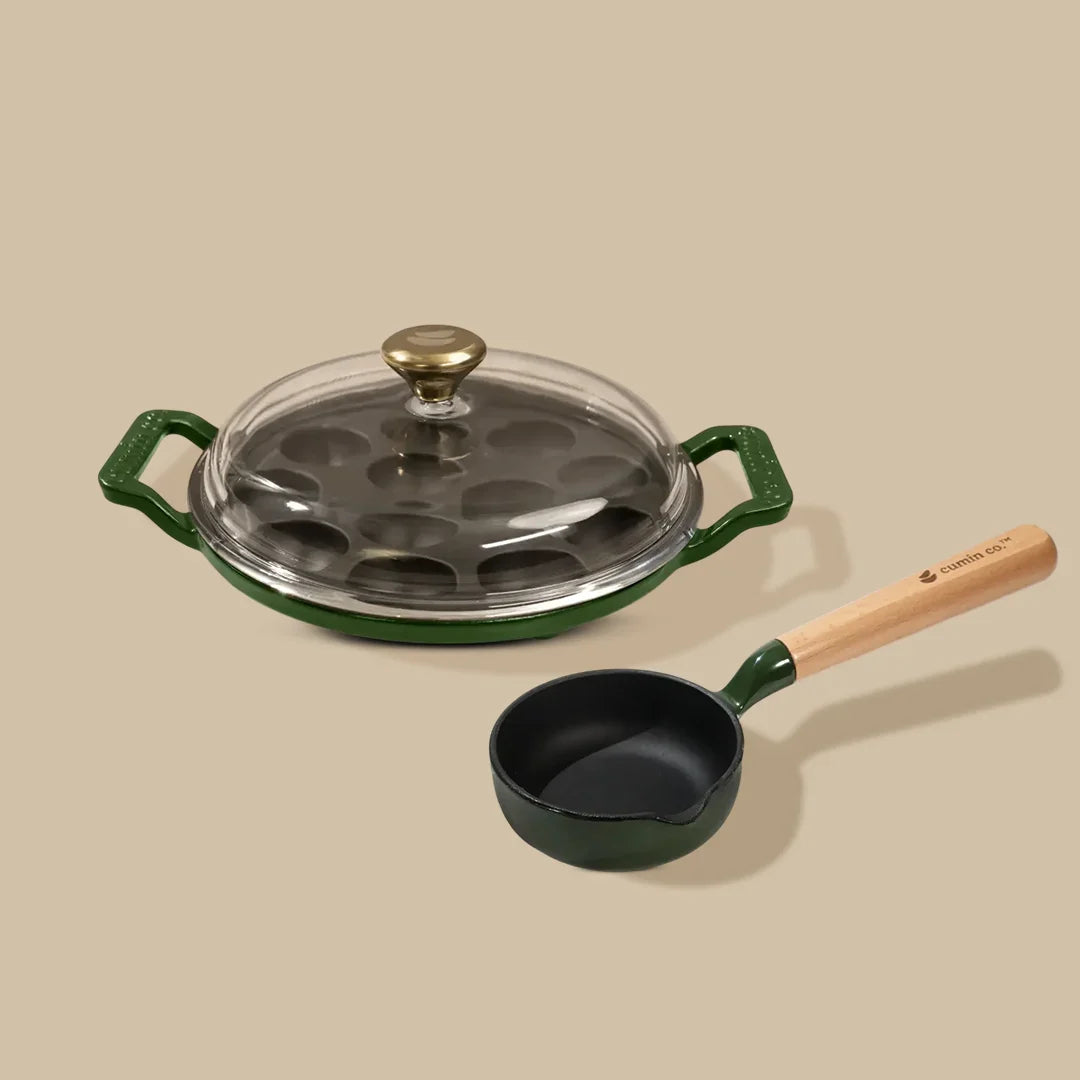
Enamel Cast iron cookware brings together the strength of cast iron with a smooth, glass-like finish. It ensures a naturally non-stick surface without the need of seasoning or any other special care. The cast iron core means even heat distribution that maintains the nutritional value of ingredients while also maintaining their taste.
Where it shines
-
Even heat distribution
-
No seasoning required
-
Non-reactive surface keeps flavors intact
What sets it apart
-
100% toxin-free
-
Suitable for high heat cooking
-
Coating stays intact year after year
Most Loved Cumin Co. Toxin Safe Enamel Cast Iron Cookware
Detailed Cookware Material Comparison
Hard Anodized vs Stainless Steel vs Cumin Co. Enamel Cast Iron
|
Feature |
Hard Anodized |
Stainless Steel |
Cumin Co. Enamel Cast Iron |
|
Toxin Safety |
Depends on coating used |
Generally safe |
100% toxin-free (no synthetic coating) |
|
PFAS / PTFE Exposure |
Possible (if coated) |
Not applicable |
PFAS-free |
|
Lead / Heavy Metal Risk |
Coating dependent |
Minimal, regulated |
No lead-containing alloy |
|
Microplastic Risk |
Possible if coating degrades |
None |
No synthetic coating |
|
Aluminium Exposure |
Possible if surface wears |
Not applicable |
Not applicable |
|
Coating Wear-Off |
Possible over time |
Not applicable |
No coating to wear off |
|
High Heat Safety |
Moderate |
High |
High |
Hard Anodized vs Non Stick vs Cumin Co. Enamel Cast Iron
|
Feature |
Hard Anodized |
Non Stick |
Cumin Co. Enamel Cast Iron |
|
Toxin Safety |
Depends on coating used |
Lower (coating-dependent) |
100% toxin-free (no synthetic coating) |
|
PFAS / PTFE Exposure |
Possible (if coated) |
Present in most PTFE coatings |
PFAS-free |
|
Lead / Heavy Metal Risk |
Coating dependent |
Coating dependent |
No lead-containing alloy |
|
Microplastic Risk |
Possible if coating degrades |
Possible with coating wear |
No synthetic coating |
|
Coating Wear-Off |
Possible over time |
Inevitable over time |
No coating to wear off |
|
High Heat Safety |
Moderate |
Low (coating degrades) |
High |
|
Replacement Cycle |
Occasional |
Frequent |
Rare |
Why Enamel Cast Iron is a Smarter Upgrade
Cookware choices are evolving from what’s convenient to what’s toxin-free, retains food’s nutritional value and is stable to use without the need for constant replacements.
Cumin Co. Enamel Cast Iron cookware not only performs well from day one but also delivers tastier, healthier food year on year. It is also 100% toxin-free and designed to fit every modern Indian kitchen.
FAQs
Is non-stick cookware safe for daily use?
Non-stick cookware is safe for daily usage at low temperatures. Over time the coating disintegrates with everyday use and high heat cooking leading to metal leaching into food.
Is hard anodized cookware safe for health?
Yes, it is generally considered safe. It’s important to consider whether it includes a coating and what the coating is, as safety depends on how that surface holds up over time.
Is stainless steel or non-stick better for health?
While comparing stainless steel Vs non-stick cookware, stainless steel is often preferred for everyday use as it does not require coatings.
Hard anodized vs non-stick which is better?
Hard anodized is better for hassle free cooking in the long run, as non-stick requires frequent replacements.
Which is better: hard anodized or stainless steel?
Hard anodized is easier to use and stainless steel is easier to use and stays stable over time.